
Afenyo-Markin Presses Government Over EOCO's Handling of Frozen Funds and Interest During Budget Debate

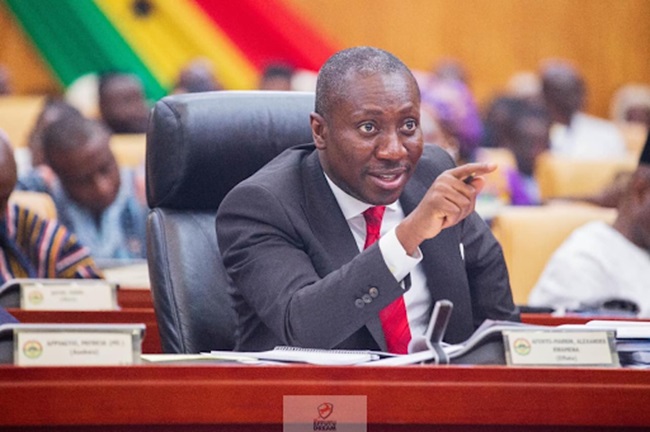
Minority Leader and Effutu Member of Parliament, Alexander Afenyo-Markin, used the closing stages of Parliament's debate on the 2025 Budget Statement to demand urgent answers from the government regarding the Economic and Organised Crime Office's (EOCO) handling of frozen bank funds and any interest that has accrued on those funds.
The pointed questions, raised during Thursday's final exchanges on the budget, signal growing parliamentary concern about transparency within Ghana's key anti-corruption and asset recovery institutions — particularly at a time when the country is under intense scrutiny over public financial management.
What Afenyo-Markin Wants to Know
The Effutu MP directed his questions specifically at the transfer of funds that EOCO has frozen as part of its mandate to investigate economic and organised crime. At the heart of his inquiry is a straightforward but critical question: when frozen funds are eventually transferred, what happens to the interest that accumulates on those funds in the intervening period?
Afenyo-Markin's line of questioning suggests concern that the movement of such funds — and the interest earned on them — may not be subject to sufficient oversight or clear legal procedure, raising the possibility that money meant to be held in trust for the state could be vulnerable to mismanagement or misappropriation.
As Minority Leader, Afenyo-Markin plays a central role in holding the governing National Democratic Congress (NDC) administration to account, and his decision to raise this issue on the floor of Parliament during the high-profile budget debate ensures it now carries significant public weight.
Why It Matters for Ghana
EOCO is one of Ghana's principal agencies tasked with combating financial crime, corruption and economic offences. It has the legal authority to freeze assets and bank accounts linked to suspected criminal activity — powers that are essential to any credible anti-corruption framework.
However, the management of frozen assets has long been a grey area in many jurisdictions, including Ghana. When funds sit in accounts for months or even years during the course of investigations or legal proceedings, they naturally accumulate interest. Without clear rules on who controls that interest and where it ultimately goes, there is a real risk of leakage from the public purse.
Ghana is currently implementing an IMF-supported economic recovery programme that demands rigorous public financial management and accountability. Any perception that state institutions are handling recovered or frozen funds without full transparency could undermine confidence in Ghana's reform efforts, both domestically and among international partners and creditors.
Furthermore, with general elections not far on the horizon, issues of institutional integrity and financial accountability are likely to remain politically charged. The opposition New Patriotic Party (NPP), through Afenyo-Markin, appears keen to establish itself as a watchdog on these matters.
The Broader Context
Ghana's Parliament has in recent years become a more assertive forum for probing the operations of state agencies, particularly those involved in law enforcement and asset recovery. Calls for greater transparency around how bodies like EOCO, the Financial Intelligence Centre (FIC) and the Office of the Special Prosecutor handle recovered funds have grown louder from civil society, the media and opposition lawmakers alike.
The budget debate, while primarily focused on revenue and expenditure projections, often serves as a vehicle for MPs to raise accountability concerns that might otherwise struggle to find airtime — making Afenyo-Markin's intervention particularly strategic.
It remains to be seen whether the government will provide a formal, detailed response to the Minority Leader's questions, or whether the matter will be referred to the relevant parliamentary committee for further scrutiny. Either way, the issue of EOCO's frozen fund transfers is now firmly on the parliamentary record and is unlikely to be easily dismissed.
Source: 3News


Comments (0)
Be the first to comment.