A Patient Dies in a Moving Ambulance: Inside Ghana's Broken Emergency Medical System
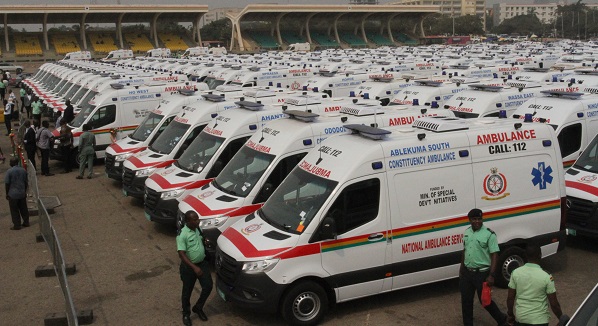
An emergency medical officer's raw, firsthand account of a patient's death during ambulance transfer has laid bare systemic failures in Ghana's ambulance service that demand immediate action. The narrative reveals a healthcare system so underfunded and poorly managed that frontline workers are forced to improvise with personal supplies and makeshift solutions—sometimes fatally.
The tragedy unfolded during a night shift when a critically ill patient with severe respiratory distress required urgent transfer to an ICU. Despite receiving maximum oxygen support in the emergency room, the patient remained in respiratory failure. When the ambulance crew hesitated to transport due to the patient's critical condition, a clinician made the decision to accompany them. Before departure, driven by instinct rather than protocol, the clinician pocketed an ampule of adrenaline, syringes, and gloves—a decision that would later become the difference between attempting resuscitation and having nothing at all.
Mid-transfer, the ambulance's oxygen delivery tubing—the primary lifeline for a gasping patient—tore apart. Attempts to repair it with tape failed repeatedly at different points. The vehicle stopped on a dark road whilst the crew searched for mobile oxygen at a nearby facility, like hunting for treasure rather than accessing basic emergency equipment. Meanwhile, the clinician manually ventilated the patient, watching her deteriorate as the system's failures compounded. By the time oxygen was sourced, the patient had already lost consciousness and a pulse could not be detected.
What followed was a desperate attempt at cardiopulmonary resuscitation. The crew had no adrenaline in their emergency drug supply—the clinician's pocket supply became the only option. When adrenaline was finally available, the crew had no syringe. Again, the clinician's improvisation filled the gap. Then came a question that exposed crew competency gaps: uncertainty about the correct dose of adrenaline during cardiac arrest. An automated external defibrillator on board was non-functional. Despite all efforts, the patient could not be saved.
A System Failing at Every Point
The clinician's account identifies five preventable failures that contributed directly to the tragedy: faulty oxygen tubing that had not been inspected before deployment; absence of backup oxygen supply on the ambulance; no adrenaline in the emergency drug stock; crew uncertainty about basic resuscitation protocols; and no contingency plan when primary oxygen delivery failed mid-transfer.
These are not random equipment failures or isolated incidents. They represent systemic neglect—failures of inspection, maintenance, training, and oversight. The clinician emphasises a critical distinction: "There is a difference between medicine and improvisation." Ghanaian ambulance crews are being asked to perform the latter whilst equipped and trained for neither.
The account also highlights an uncomfortable truth about healthcare in Ghana. Whilst bureaucratic processes functioned smoothly after the patient's death—paperwork moved, the "incident" was reported—the foundational systems that should prevent such deaths remain broken. The clinician's frustration is palpable: how many more will die before this is deemed unacceptable?
Why This Matters for Ghana
Emergency medical services are not luxuries; they are fundamental infrastructure. When a patient reaches the ambulance stage, they have already passed through the primary healthcare system and are in the hands of the last chance for survival. Failures at this point are often fatal and largely preventable.
Ghana's National Ambulance Service serves a population of over 33 million people. The challenges outlined—inadequate equipment, insufficient drug supplies, and gaps in crew training—are likely not isolated to a single vehicle or night shift. If one ambulance lacks adrenaline and backup oxygen, systemic procurement and inventory management failures are probable across the service.
The economic impact is also significant. Preventable deaths erode public trust in the healthcare system, discourage people from seeking emergency care, and ultimately cost the economy in lost productivity and human capital. More immediately, they represent a failure of the healthcare system to fulfil its most basic promise: to help people in life-threatening situations.
The clinician's formal call for an immediate audit of ambulance drug stocks, oxygen equipment, and crew training competency is not an overreach—it is a minimum standard. Ghana's Ministry of Health and the National Ambulance Service management must treat this account not as a single tragedy but as evidence of systemic dysfunction requiring urgent intervention.
What Must Change
The clinician has named specific, actionable failures. These should form the basis of immediate reforms: mandatory pre-deployment equipment inspections, standardised emergency drug inventories with regular audits, functional backup oxygen systems on all ambulances, and comprehensive crew training on drug dosing during cardiac arrest. Additionally, clear protocols must exist for managing equipment failure during patient transport.
The broader lesson is that healthcare workers cannot substitute for systemic preparedness. Relying on clinicians to carry personal supplies "just in case" is not strategy—it is abandonment of duty by administrators and policymakers. Ghana's ambulance service requires investment, oversight, and accountability. Until these are provided, patients will continue to die not from the underlying emergency, but from the failure of the system meant to save them.
Source: The Ghana Report
-1200x675.webp)

Comments (0)
Be the first to comment.