10-Year Stability Essential to Break Ghana's Boom-Bust Cycle, Says MTN Chairman Yamson
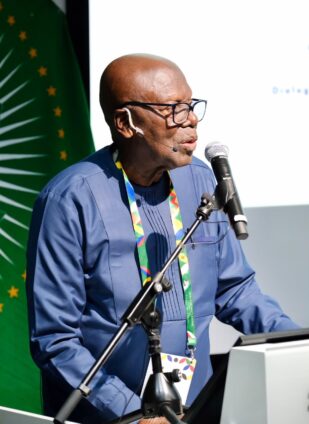
Ghana's persistent struggle with economic cycles demands a fundamental shift in how policymakers approach stability—moving from short-term fixes to decade-long resilience-building, according to Dr Ishmael Yamson, Board Chairman of MTN Ghana and respected economist.
Dr Yamson has challenged the government to extend Ghana's current economic stability beyond the typical four-year political cycle, arguing that investors will only commit significant capital if they believe the country can maintain progress for at least ten years. This challenge strikes at the heart of a recurring problem that has plagued Ghana's development: the alternating pattern of economic growth followed by sharp contraction.
Ghana's Cycle of Boom and Bust
Ghana's economic history reveals a troubling pattern that has made international investors cautious. "We go up, we come down. We take three years to build, and we take another five years to destroy," Dr Yamson explained, capturing the frustration many economists feel about the country's inability to sustain gains across administrations.
This cyclical weakness stems partly from how successive governments have approached economic management. Rather than implementing structural reforms, previous administrations focused on short-term stabilisation measures without creating the underlying institutions and systems needed to protect those gains from future shocks.
Dr Yamson acknowledged that the current government has achieved "dramatic" progress over the past 18 months, a recovery many Ghanaians can attest to given the improvement in currency stability and inflation trends. However, he emphasised that commending short-term achievements is insufficient—the real test lies ahead.
Building Resilience, Not Just Stability
The distinction Dr Yamson draws between stability and resilience is crucial. Stability might mean controlling inflation or managing the exchange rate through restrictive policies, but resilience means creating structural conditions that allow an economy to weather shocks without reverting to crisis mode.
He pointed to two key government initiatives as potential pillars of resilience. First, the Gold for Reserves programme, which aims to achieve 15 months of reserve cover by 2028, would provide a financial cushion against external shocks—something most Ghanaian households instinctively understand when they save money for emergencies. Second, long-term agricultural investment, particularly in oil palm and food production across 250,000 hectares, could address Ghana's chronic food inflation problem that previous programmes like Planting for Food and Jobs failed to solve.
"You won't get sustainability unless you build resilience," Dr Yamson stressed, highlighting why simple expenditure cuts, while necessary, are insufficient for lasting change.
Why It Matters for Ghana: The Investor Confidence Problem
Ghana's inability to maintain economic stability across political transitions has created a vicious cycle. Foreign investors, particularly those in manufacturing and agriculture, think in terms of decades—not election cycles. They establish factories and plantations expecting to operate them for 20, 30, or even 50 years. When they observe that Ghana's macroeconomic environment shifts dramatically with each new administration, they either avoid the country entirely or demand higher returns to compensate for perceived risk.
This investor hesitation directly affects job creation and economic diversification—exactly what Ghana needs to move beyond dependence on cocoa and gold exports. By demonstrating commitment to ten-year stability through concrete institutional reforms, Ghana could unlock substantial private investment in sectors that create employment and reduce structural vulnerabilities.
Dr Yamson's emphasis on political independence for economic policy is particularly relevant in Ghana's context. He cited Unilever's factory, established shortly after President Nkrumah's overthrow, as an example of how international businesses can commit long-term to Ghana when they trust the country's fundamentals. The challenge today is ensuring that current gains aren't reversed when political leadership changes in 2024 or beyond.
Breaking Ghana's boom-bust cycle requires more than one government's efforts—it demands bipartisan commitment to maintaining orthodox economic policies regardless of electoral outcomes. Until Ghana credibly demonstrates this commitment, investors will remain cautious, and the country will struggle to attract the sustained capital inflows necessary for transformative economic growth.
Source: The Ghana Report

Comments (0)
Be the first to comment.