Why Marcel Desailly Turned Down Ghana: The Story Behind a Footballer's Life-Changing Choice
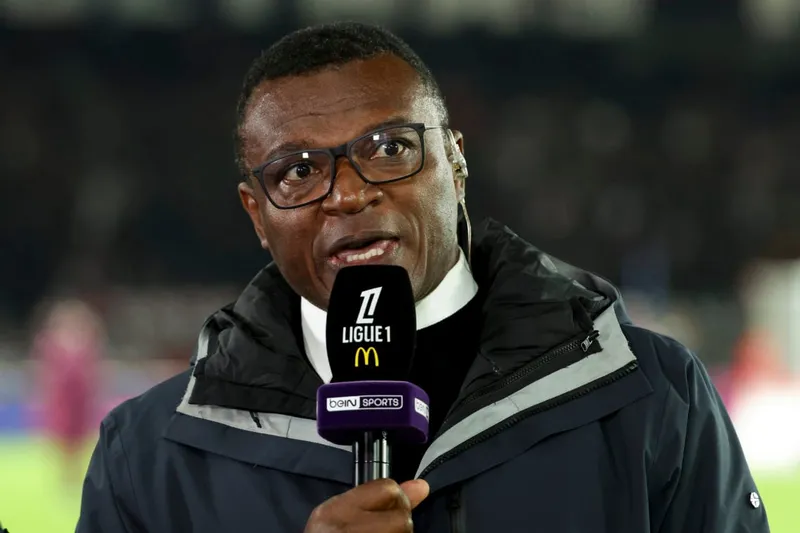
Marcel Desailly, one of Europe's most celebrated defenders, has finally opened up about one of football's most poignant what-ifs: the moment he chose to represent France internationally instead of Ghana, the West African nation where he was born.
The decision, made during his formative years as a footballer, was far more complex than simply picking the stronger football nation. For Desailly, it represented a fundamental choice about identity, opportunity and the direction his career would take—a pressure that few young athletes face with such finality.
The Crossroads of Youth and Ambition
As a teenager developing his talents in French football, Desailly stood at a unique intersection. Ghana, despite its rich football heritage and passionate fanbase, was rebuilding its national team infrastructure during the 1980s. France, meanwhile, was emerging as a global football powerhouse with world-class training facilities, competitive domestic leagues, and pathways to European club football. For an ambitious young defender eager to test himself at the highest levels, the practical advantages of choosing France were considerable.
Yet the choice carried emotional weight. Desailly's connection to Ghana through birth and heritage meant that representing the Black Stars would have been a source of pride for his family and millions of Ghanaian supporters. It would have positioned him as an ambassador for African football during a critical period when continental stars were still breaking through Europe's barriers in significant numbers.
What This Choice Meant for International Football
Desailly's decision ultimately benefited France enormously. He became a cornerstone of the French national team during its golden era, winning the FIFA World Cup in 1998 and the European Championship in 2000. His defensive prowess, leadership and consistency made him one of the most reliable centre-backs of his generation, earning him over 70 caps for France.
For Ghana, the decision represented a lost opportunity. The nation has produced exceptional defenders over the decades, but having a player of Desailly's calibre wearing the black, white and gold could have elevated the team's competitive standing during crucial qualification campaigns and continental tournaments.
The Broader Context for African Talent
Desailly's story reflects a broader pattern in African football: elite young players often face pressure to seek development opportunities in Europe, sometimes at the expense of representing their home nations. While improved infrastructure and investment in African football academies has changed the landscape somewhat since the 1980s and 1990s, the phenomenon persists.
His willingness to discuss this decision decades later is significant. It acknowledges the real sacrifices young African footballers make and the genuine difficulty of choices that outsiders might view as obvious. Desailly's honesty could inspire important conversations about how African nations can better compete for homegrown talent and create pathways that make representing the continent more attractive to emerging stars.
For Ghanaian football fans, Desailly's reflection serves as a reminder of roads not taken—but also as testament to the quality of talent that African nations continue to produce, even when circumstances direct that talent elsewhere.
Source: 3News



.jpg)
Comments (0)
Be the first to comment.