What Ghana's Next Generation Wants From Universities: Beyond Degrees to Real Impact

A generation of Ghanaian secondary school students is redefining what they expect from higher education. In a recent survey of approximately 150 high school attendees at an admissions event, students made clear that degrees alone are no longer enough. They want universities to equip them with knowledge, practical capability, personal growth and the tools to contribute meaningfully to Ghana and Africa's development.
The findings reveal a cohesive set of expectations: rigorous academic foundation paired with hands-on learning, access to modern technology, career pathways, personal and social development, and opportunities to tackle real-world problems. Career prospects and economic security ranked highest, but students were equally emphatic about needing well-resourced, conducive learning environments where theory translates into practice.
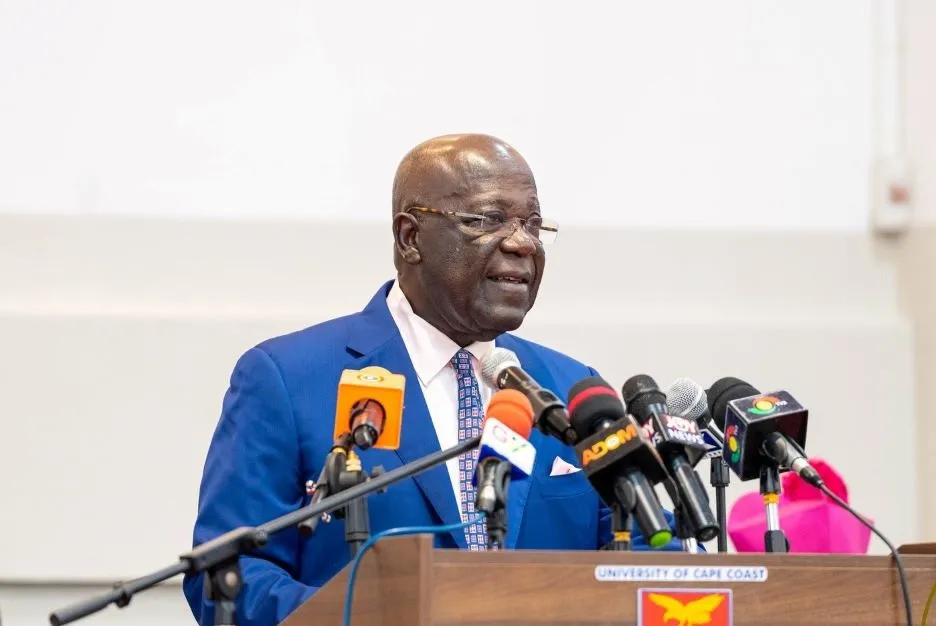
"Students are not asking universities to choose between academic rigour and practical relevance," one academic leader observed. "They want both." This reflects a fundamental shift in how Ghana's youth view tertiary education—not as a credential-collecting exercise, but as a transformative journey that builds confidence, communication, leadership and problem-solving ability.
The Case for Learning That Works
Modern Ghanaian students recognise that knowledge confined to lecture halls has limited value. They want experiential learning—education that moves from the classroom into laboratories, workshops, workplaces and communities. This demand stems from a practical understanding: theoretical knowledge must be testable, applicable and relevant to real constraints.
Universities responding to this expectation are investing in specialised facilities—media labs, artificial intelligence and digital forensics laboratories, biomedical research spaces, and engineering workshops—but critically, these are not locked away after formal classes end. They become spaces for self-directed exploration where students can build, test, question and refine their ideas.
The emphasis on hands-on learning also protects academic rigour. When students must apply concepts to solve real problems, they develop deeper understanding of underlying principles. Theory and practice reinforce each other rather than competing.
Why This Matters for Ghana
Ghana's development depends on a workforce that can do more than consume solutions imported from elsewhere. The country faces challenges in healthcare, agriculture, energy, manufacturing and digital infrastructure—all requiring young professionals who can adapt global technologies and create homegrown solutions tailored to African contexts.
When universities emphasise contextual learning—understanding local systems, conditions and stakeholders before designing responses—they equip students to recognise opportunities and constraints unique to Ghana and the broader continent. Industry partnerships, professional internships and mentorship from government and business leaders help students see how knowledge operates beyond campus walls.
The shift also matters for economic outcomes. Students are explicitly seeking education that translates into employment and entrepreneurship. Universities that bridge the gap between academic preparation and workplace readiness improve graduates' prospects and, by extension, strengthen Ghana's economic competitiveness.
Furthermore, many real-world problems—from water scarcity to financial inclusion to disease prevention—are inherently multidisciplinary. They require engineers, business minds, communicators, policymakers and environmental specialists working together. Universities teaching students to collaborate across disciplines prepare them for this reality.
A Shift in University Culture
What Ghanaian high school students are articulating is a demand for student-centric, innovative education that treats the university experience holistically. They want to grow intellectually, personally and socially—and importantly, they want to enjoy the journey.
This reflects changing global trends in higher education, but it is particularly urgent in Ghana's context. As the country invests in tertiary education expansion, quality institutions must move beyond simply increasing enrolments and graduation rates. The focus should be on equipping young Ghanaians with the capabilities, confidence and contextual understanding to drive meaningful change in their communities and across Africa.
Universities that hear and respond to these expectations will attract the most ambitious students and produce graduates prepared not merely to enter the job market, but to shape it.
Source: MyJoyOnline


Comments (0)
Be the first to comment.