Visa walls holding back African business growth, says Otchere-Darko

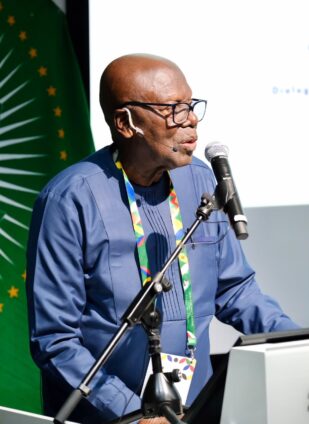
Gabby Otchere-Darko, Founder and Executive Chairman of the Africa Prosperity Network, has raised fresh concerns about how visa restrictions across African countries are hampering business development and stalling the continent's drive toward economic integration. Speaking on JoyNews' The Pulse, he argued that cumbersome visa processes represent a significant, often-overlooked barrier to realising Africa's economic potential.
The challenge extends far beyond inconvenience. Visa applications routinely take days to process, forcing businesspeople to abandon time-sensitive opportunities, miss critical meetings, and lose deals that require rapid travel. Yet Otchere-Darko stressed that the damage ripples across multiple sectors. Students seeking educational exchange, attendees at sporting events and concerts, and organisers of those events all face friction that stifles both personal movement and commercial activity.
Why it matters for Ghana
Ghana, as one of West Africa's more open economies and a key hub for regional commerce, stands to gain significantly from freer movement across Africa. The current visa regime constrains Ghanaian entrepreneurs, traders, and professionals who wish to expand into neighbouring markets. Otchere-Darko's argument highlights a critical gap: whilst Ghana pursues trade partnerships under the African Continental Free Trade Area (AfCFTA), restrictive visa policies undermine those very ambitions. For young Ghanaians seeking employment across the continent, limited mobility locks them out of opportunities in larger regional markets.
The digital economy dimension is equally relevant. Ghana has a growing tech and creative sector that operates across borders, yet visa barriers can impede the movement of talent and delay business operations. Otchere-Darko stressed that the digital economy represents one of Africa's biggest growth sectors, yet it remains constrained by physical border restrictions.
The integration paradox
Otchere-Darko pointed to a strategic contradiction in African policymaking. Whilst AfCFTA aims to create a single continental market, many governments remain protective of limited domestic jobs, citing concerns about foreign competition. South Africa and Kenya were cited as examples where protectionist sentiment is rising. However, he argued that this defensive posture is self-defeating. Rather than shielding fragmented national economies, leaders should recognise that economic integration and free movement generate far more jobs than protectionism.
His case is compelling: an investor considering a factory would naturally look beyond Ghana's 35 million-person market to ECOWAS's 460 million consumers, or Africa's entire 1.5 billion population. Without customs barriers and free movement of people, that calculation becomes far less attractive. Removing trade and travel friction would give industrialists genuine incentive to establish production facilities across the continent, driving manufacturing, employment, and tax revenue in host countries.
The path forward
Otchere-Darko stressed that Africa's job creation crisis cannot be solved through isolation. Instead, continental economic integration—underpinned by visa-free or simplified travel—is essential for growth. The interconnection is direct: freer movement of people enables freer movement of businesses, which attracts investment, which creates employment and expands economic activity.
For Ghana, the implications are clear. Advocating for visa harmonisation and simplified travel protocols across ECOWAS and the African Union is not merely aspirational; it is a practical requirement for capturing the jobs and growth that the continent's young population desperately needs.
Source: MyJoyOnline



Comments (0)
Be the first to comment.