Nkrumah's Vision for Africa Still Guides Ghana's Leaders at the UN
The 81st Session of the United Nations General Assembly brings together world leaders to tackle some of humanity's most pressing challenges. Yet as these discussions unfold, the intellectual shadow of Ghana's founding president, Dr Kwame Nkrumah, looms large over the institution's approach to African development and global inequality. More than five decades after his overthrow in 1966, his arguments about Pan-African unity, economic independence and self-determination continue to shape how contemporary African governments navigate international relations and domestic policy.
The timing of this reflection is significant. Recent remarks by former New Patriotic Party running mate Matthew Opoku Prempeh at Dr Nkrumah's 117th birthday celebration in Nkroful have rekindled national conversation about the founding president's enduring legacy. Dr Prempeh called on Ghanaians to transcend partisan divisions and recognise Nkrumah as a "generational thinker" and liberation icon whose contributions transcended political boundaries. This appeal for a national rather than purely partisan lens offers an opportunity to examine why Nkrumah's ideas remain vital for Ghana and the broader African continent.
Continental Integration: From Vision to Reality
Dr Nkrumah's most visionary contribution was articulating a comprehensive case for African political and economic integration at a time when much of the continent remained under colonial rule. He argued that fragmentary national development would leave African states vulnerable to external manipulation and economic exploitation. His advocacy for collective security, shared markets and coordinated industrial development was ahead of its era.
Today, that vision finds concrete expression in the African Continental Free Trade Area (AfCFTA), headquartered in Accra. The AfCFTA represents a modern realisation of the continental integration project Nkrumah championed over sixty years ago. As African governments work to reduce trade barriers, harmonise standards and create larger integrated markets, they are essentially executing the blueprint Nkrumah outlined. His insistence that Africa's development depended on overcoming fragmentation and building collective economic strength has proven prescient.
Contemporary African policymakers continue to grapple with challenges Nkrumah identified: fragmented markets, trade barriers undermining competitiveness, debt vulnerabilities, over-reliance on commodity exports, and intense geopolitical competition from global powers seeking to influence African affairs. His warnings about economic sovereignty—that political independence meant little without control over one's economic destiny—remain central to debates from Accra to Addis Ababa.
Global Inequality and African Voice at the United Nations
Nkrumah's legacy extends beyond economics to his persistent challenge to global power structures. He was among the first African leaders to systematically critique the international economic order and demand that newly independent African nations receive equal treatment in world affairs. His UN speeches were notable not for rhetorical flourish alone but for their moral insistence that justice and peace were inseparable, and that global prosperity could not be sustained while large portions of humanity remained marginalised and unheard.
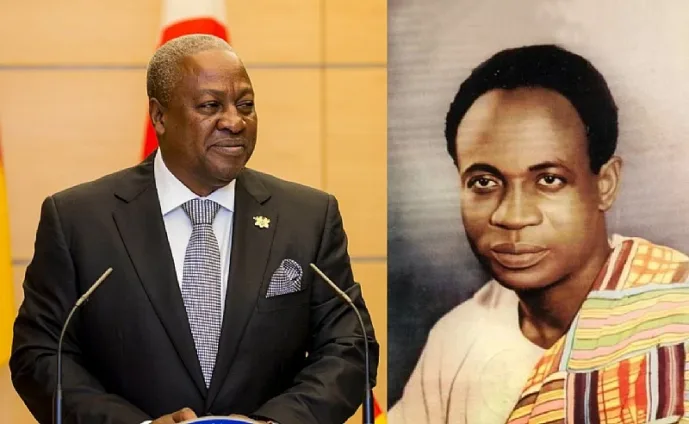
As African leaders gather at this year's UNGA, many pressing agenda items would be familiar to Nkrumah: climate justice, equitable development financing, reform of global governance structures, peace and security challenges, and calls for stronger African representation in the UN Security Council. These demands reflect the very struggle for global equality Nkrumah advocated throughout his career. President John Dramani Mahama and other African leaders advancing African interests at multilateral forums today are, in many respects, continuing arguments Nkrumah pioneered.
Why it Matters for Ghana: Beyond Electoral Cycles
Perhaps Nkrumah's most pressing lesson for contemporary Ghanaian leaders concerns the nature of transformational leadership itself. He believed governance should be driven by long-term national vision rather than short-term political calculation and electoral advantage. While historians debate aspects of his methods and governance record, few dispute his ambition: he was willing to think beyond electoral cycles, focusing instead on industrialisation, infrastructure development, education expansion and continental political influence.
This orientation addresses a fundamental challenge confronting Ghana's political class today. Public frustration often stems not from a scarcity of resources but from a perceived absence of transformational leadership with clear long-term direction. Citizens increasingly expect leaders to articulate coherent national visions, invest deliberately in productive sectors, create meaningful opportunities for young people, and build institutions capable of outlasting individual administrations rather than serving narrow partisan interests.
Dr Nkrumah's call for visionary, nationally-focused leadership—transcending both immediate popularity and short-term political advantage—remains Ghana's most pressing institutional need. As the country prepares for continued development and continental leadership, reconnecting with Nkrumah's emphasis on transformational vision offers a valuable counterweight to the narrow partisanship that often dominates contemporary political discourse.
Source: MyJoyOnline


Comments (0)
Be the first to comment.