Tudu refuse crisis: How Accra's busiest hub became a health hazard
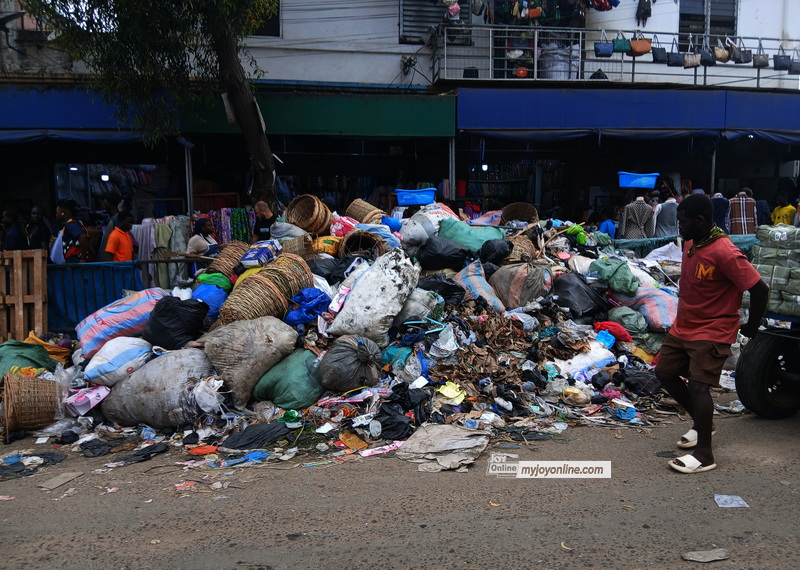
Accra's Central Business District is facing a mounting sanitation crisis as uncollected refuse at the Tudu trotro bus stop has created a public health emergency in one of the city's most congested commercial zones. The waste pile, left uncleared since Monday, has grown significantly over three days and now poses serious risks to the thousands of traders, passengers and pedestrians who pass through daily.
The accumulating rubbish has turned the busy transport hub into an increasingly hazardous environment. Shop owners operating near the dump report that the stench is so overwhelming it is actively damaging their livelihoods, with customers actively avoiding the area. The conditions have deteriorated so badly that some traders are being forced to operate under severely compromised circumstances, with many expressing frustration that their businesses are suffering because of poor waste management.
Growing health and safety concerns
Environmental and public health experts have raised serious alarms about the situation. The combination of rotting waste, flies and stray animals gathering around the dump creates ideal conditions for disease transmission. Cholera, malaria and other sanitation-related illnesses thrive in such environments, particularly in densely populated urban areas like Tudu where thousands of people work and shop daily.
The scale of the problem is underscored by the fact that as of Wednesday afternoon, no action had been taken by city authorities to remove the refuse. The continued presence of the waste heap represents a failure in Accra's basic waste management infrastructure at a critical location in the heart of the capital.
Why it matters for Ghana
This crisis highlights a persistent challenge for Ghana's urban centres: the gap between government commitments to cleanliness and the reality on the ground. The Accra Metropolitan Assembly has been championing efforts to make Accra the cleanest city in Africa, yet the inability to clear a single heap of refuse at one of the most prominent commercial sites in the CBD undermines these ambitions and raises questions about resource allocation and operational effectiveness.
Tudu is not a peripheral location—it is a major economic hub where informal traders, formal retailers and transport operators converge daily. When basic sanitation fails at such a strategic point, it signals broader systemic weaknesses in how the city manages public services. For traders whose livelihoods depend on customers visiting their shops, poor sanitation directly impacts their income and survival. For residents and visitors, it poses genuine health risks in a city where disease outbreaks can spread rapidly through dense populations.
The incident also reflects the ongoing tension between Accra's aspirations as a modern African capital and the practical realities of delivering essential services consistently across all areas of the city.
What happens next
Traders and residents are now appealing urgently to the Accra Metropolitan Assembly and waste management companies to intervene immediately. The longer the refuse remains unclearer, the worse conditions will become—both for public health and for the economic activity that defines Tudu. Swift action is now essential to prevent further deterioration and to restore confidence in the city's sanitation management systems.
Source: MyJoyOnline




Comments (0)
Be the first to comment.