
The breast cancer crisis in Ghana: Why early detection saves lives while breastfeeding protects them

Ghana faces a silent public health crisis. In 2022, the country recorded 5,026 new cases of breast cancer and 2,369 deaths—a devastating mortality rate of nearly one death for every two diagnoses. Breast cancer now accounts for about three in every ten cancers affecting Ghanaian women, yet many arrive for treatment only when the disease has already advanced. Unlike many developed nations where survival rates have climbed, Ghana's late-stage diagnoses mean that what could be treatable early becomes terminal.
What makes this tragedy particularly sharp is that the breast serves a dual purpose in Ghanaian life: it is both the source of a child's earliest and most powerful immune protection, and the site where cancer most commonly strikes women. Understanding both roles—nurturing life and protecting health—is essential for families, workplaces, and policymakers who genuinely want to invest in the next generation.
Breastfeeding: the public health tool we underestimate
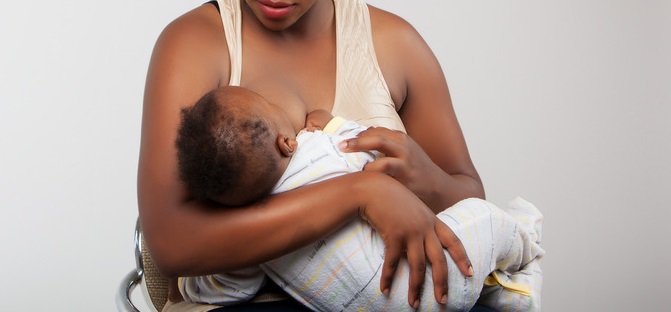
The World Health Organisation and UNICEF recommend that breastfeeding begin within the first hour of life, known as the Golden Hour. In that opening window, colostrum—the mother's first milk—delivers antibodies that coat the baby's gut with protection equivalent to a vaccine. Over the following six months, breastfeeding alone can supply all the nutrition a child needs. WHO estimates that if infants were exclusively breastfed for six months and continued to two years, close to 400,000 deaths in children under five could be prevented annually worldwide.
The benefit runs both directions. For every 12 months a woman breastfeeds, her own breast cancer risk falls by approximately 4.3%. Breastfeeding is also linked to lower cardiovascular risk in mothers and removes the substantial financial burden of formula—a cost that in many Ghanaian households rivals monthly rent. Yet support for breastfeeding has not kept pace with the science. The extended family networks that once supported new mothers have thinned, and many women return to work long before six months postpartum. The International Labour Organisation sets a floor of only 14 weeks' maternity leave, while the global average hovers around 17–18 weeks, falling far short of the six months clinically recommended by WHO.
Making breastfeeding sustainable requires genuine investment: at least six months of paid leave, lactation rooms at workplaces, paid express breaks, and childcare facilities near employment. Employers implementing these measures report lower staff turnover and absenteeism, making the business case clear.
Why it matters for Ghana: late diagnosis, lost mothers
Ghanaian women are diagnosed with breast cancer at an average age of 49—approximately 13 years younger than in Caucasian populations, suggesting a more aggressive disease profile or delayed detection. Reports indicate that between 70% and over 80% of women present with advanced-stage disease, meaning cancer has already spread beyond the breast. These are mothers in their prime, raising children and managing households. A nation cannot genuinely claim to prioritise its future generation while neglecting the organ that feeds infants and the women who bear breast cancer.
When a mother is lost to late diagnosis, the consequences cascade: a baby loses not only milk but also the closeness and immune protection of breastfeeding. Conversely, breastfeeding itself provides protection against breast cancer—though this protection is not absolute. A persistent lump in a lactating breast must never be dismissed as simply oversupply; such lumps demand proper medical evaluation.
Men, lumps, and the hidden risk
Breast cancer is not exclusively a women's disease, yet this reality remains largely unknown in Ghana. Between 0.5% and 1% of breast cancers globally occur in men, though leading Ghanaian specialists estimate the local figure at 1–3%. Because men typically have minimal breast tissue, any cancer present reaches the chest wall more quickly, and men are consequently diagnosed at later stages. Risk factors for men include age, family history, inherited genetic changes such as BRCA1 and BRCA2 mutations, Klinefelter syndrome, obesity, liver disease, and heavy alcohol consumption. A small lump behind a man's nipple, easily overlooked, may represent cancer that has already begun to spread.
Men also play a crucial supportive role: a partner who knows the warning signs can notice changes in his wife's breast, encourage medical evaluation, and provide emotional and practical support through treatment.
Recognising the signs: what every Ghanaian should know
Early breast cancer often produces no symptoms, which is why regular checking is vital. When signs do appear, they include:
- A new lump or thickening in the breast or armpit, typically painless
- A change in the size or shape of the breast
- Dimpling, puckering, or thickened skin resembling orange peel; redness or scaling
- A nipple turning inward or bloodstained discharge from the nipple
Pain is not a reliable indicator of breast cancer. Approximately half of breast cancers occur in women with no identifiable risk factor beyond age and female sex, so the absence of family history provides no reassurance. Risk increases with age, family history, inherited genetic mutations, obesity, alcohol consumption, tobacco use, physical inactivity, and long-term postmenopausal hormone therapy. While no single action guarantees prevention, maintaining a healthy weight, exercising regularly, limiting alcohol, avoiding smoking, and breastfeeding all measurably reduce risk.
For Ghana to turn the tide on breast cancer mortality, three urgent changes are needed: policies and workplaces that genuinely support breastfeeding; public awareness campaigns teaching women and men the signs of breast cancer; and investment in early detection systems so that more diagnoses are caught when treatment can save lives.
Source: MyJoyOnline



Comments (0)
Be the first to comment.