Teacher unions reject latest government proposal; industrial action persists into next week

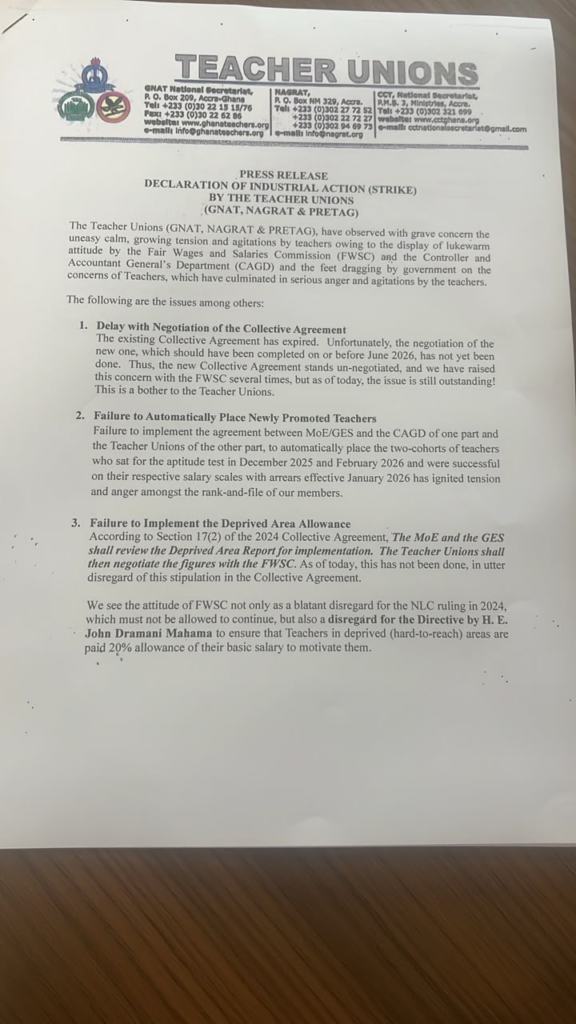
Talks between Ghana's government and striking teacher unions have reached an impasse, with both parties unable to find common ground on the educators' demands. The meeting, held to resolve the ongoing industrial action that has disrupted classes nationwide, concluded without agreement, prompting unions to defer their response to the government's latest proposal until Monday, October 5.
State of the strike and classroom impact
The continued strike means thousands of students across Ghana's public schools remain out of classrooms, raising concerns about curriculum delivery and the academic calendar. Teachers have cited grievances including salary discrepancies, poor working conditions, and inadequate professional support. The union's decision to delay their formal response suggests internal consultation is underway, but signals that the government's current offer falls short of their expectations.
This stalemate comes at a critical juncture in the academic year. Prolonged industrial action historically disrupts Ghana's examination schedules and puts pressure on the Education Ministry to accelerate learning programmes once classes resume. Parents, school administrators, and civil society groups have expressed frustration over the deadlock.
Why it matters for Ghana
Teacher strikes have become recurring challenges in Ghana's education sector, reflecting systemic tensions between educator expectations and government budgetary constraints. The education sector employs hundreds of thousands of workers, making it one of the largest public service workforces. When negotiations fail, the ripple effects extend beyond classrooms—parents struggle with childcare, the informal economy loses productivity, and disadvantaged students fall further behind.
Ghana's education quality has long been a priority for policymakers aiming to develop human capital for economic growth. However, teacher dissatisfaction—rooted in real concerns about compensation and working environments—undermines systemic improvements. Previous strikes have lasted weeks or months, creating significant academic loss. The government faces pressure to balance fiscal responsibility with fair remuneration for essential workers.
The Monday deadline represents a crucial moment. A breakthrough could restore normalcy quickly; another deadlock risks escalating the dispute and drawing in other public sector unions watching the outcome.
What happens next
Both parties have agreed to reconvene after the unions formally respond on Monday. The coming days will determine whether compromise is possible or whether the strike intensifies. Education stakeholders—including parents, school boards, and the National Education Committee—are likely to intensify calls for swift resolution.
The government has signalled willingness to negotiate, but the stalemate suggests a significant gap remains between its offer and union demands. How both sides navigate the next round of talks will shape not only the immediate return to schooling but also labour relations in Ghana's public sector for years ahead.
Source: 3News


Comments (0)
Be the first to comment.