Rethink MMDCE Elections: Expert Proposes MP-Led Appointment Model to Resolve Ghana's Local Governance Puzzle
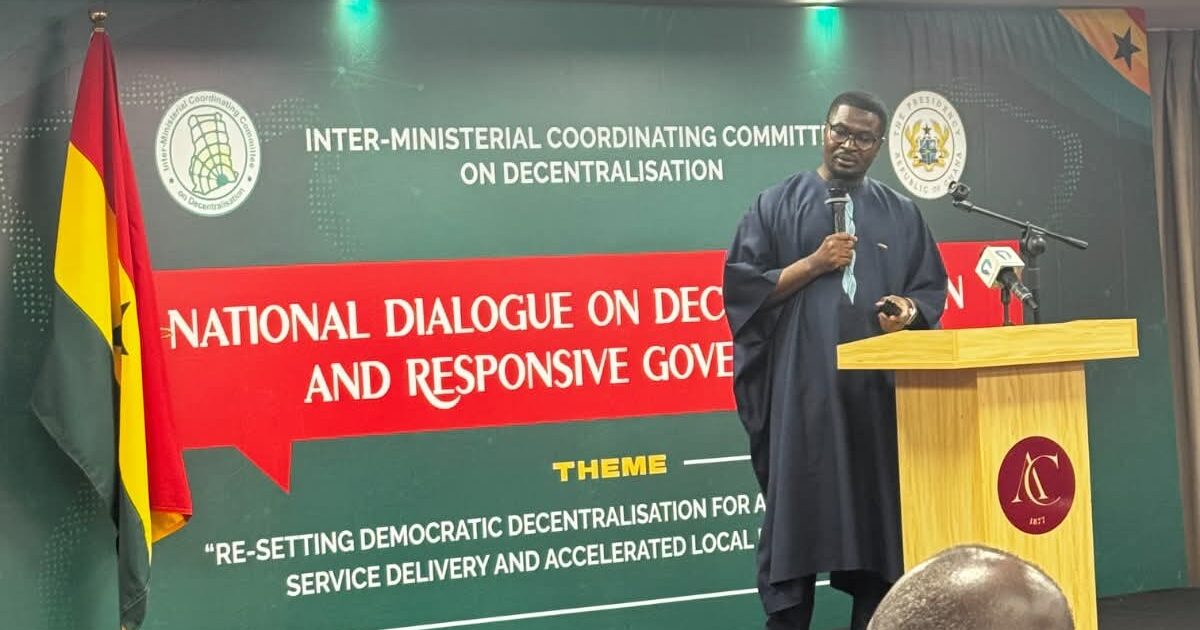
Ghana's longstanding debate over how to elect Metropolitan, Municipal and District Chief Executives (MMDCEs) took a fresh turn this week when governance expert Dr Solahudeen Tando proposed scrapping elections altogether in favour of a regulated appointment model controlled by Members of Parliament. The proposal challenges the conventional wisdom that more elections automatically mean stronger democracy, instead questioning whether Ghana should first resolve deeper institutional tensions within its decentralisation system.
Speaking at the National Dialogue on Decentralisation and Responsive Governance in Accra, Dr Tando presented a detailed discussion paper outlining how MPs could appoint MMDCEs within a professional framework safeguarded by institutions like the Public Services Commission. The model would replace the current presidential appointment system whilst avoiding the complications of creating another independently elected political office within the same constituency.
The Core Problem: Accountability Without Authority
Dr Tando's central argument exposes a contradiction at the heart of Ghana's current local governance structure. Constituents routinely hold their MPs accountable for development outcomes—roads, schools, health facilities, sanitation and job creation—even though MPs lack formal responsibility for local development. That authority technically rests with District Assemblies and their MMDCEs. Yet MPs campaign on these issues, and voters judge them accordingly.
This reality, acknowledged even in Government's own 2026 Position Paper on constitutional reform, creates what Dr Tando calls a "development agent by default" scenario. MPs have become de facto local development representatives without the formal tools or legitimacy to match. The proposal to elect MMDCEs separately would only compound the problem by creating two independently elected politicians competing for legitimacy within substantially overlapping development spaces.
"If both the MP and MMDCE acquire separate democratic legitimacy within substantially the same development space, who ultimately bears political accountability for constituency development when things go right or wrong?" Dr Tando asked, highlighting a fundamental question that proponents of direct MMDCE elections have yet to adequately address.
Why It Matters for Ghana's Governance Debate
This proposal arrives at a critical juncture in Ghana's constitutional reform process. The country has wrestled with MMDCE elections for years, with successive governments and stakeholders divided over whether elected MMDCEs would strengthen or weaken local democracy. The discourse has often treated elections as a proxy for genuine decentralisation, assuming that the method of selecting officials automatically translates into better governance.
Dr Tando's intervention reframes the conversation entirely. He argues that effective decentralisation requires far more than elections—it demands adequate authority, sufficient resources, administrative capacity, professional planning, coordination mechanisms and clear accountability lines. Elected MMDCEs without these foundations might create new problems rather than solve existing ones.
The MP-appointment model he proposes would institutionalise an existing political reality rather than create an artificial new arrangement. By shifting appointment authority from the Presidency to MPs, it places responsibility closer to already-elected constituency representatives. Critically, it proposes safeguards: the Public Services Commission would establish professional qualifications and competence standards, preventing the appointments becoming pure patronage exercises. Performance expectations would align with district development frameworks and national planning architecture.
For Ghana, this matters because it offers a pragmatic pathway through a deadlocked debate. Rather than choosing between presidential appointment (seen as anti-democratic) or contested popular elections (which risk institutional confusion), the MP-led model attempts to balance democratic legitimacy, institutional clarity and competence.
Wider Implications for Local Governance Reform
The proposal fundamentally challenges assumptions that have dominated Ghana's decentralisation debate. It suggests that more elections do not automatically equal better democracy if they create overlapping jurisdictions and conflicting accountabilities. Instead, it advocates clarifying relationships between existing elected representatives and refining how they exercise authority.
The National Dialogue brought together government officials, local government practitioners, academics, civil society and development partners—a broad coalition whose views will likely shape forthcoming constitutional reforms. Dr Tando's intervention, backed by detailed institutional analysis, adds intellectual weight to arguments that Ghana should proceed carefully with major reforms to local government structures.
Whether Parliament and the broader governance community embrace this proposal remains uncertain. But it has succeeded in reframing a stale debate: the question is no longer simply "Should MMDCEs be elected?" but rather "How can we align Ghana's formal institutional structure with its political reality and strengthen accountability?". That shift alone may prove valuable as Ghana continues its decentralisation journey.
Source: MyJoyOnline


Comments (0)
Be the first to comment.