Receiver challenges High Court order to surrender Oxford Street Hotel to Cheddar's firm
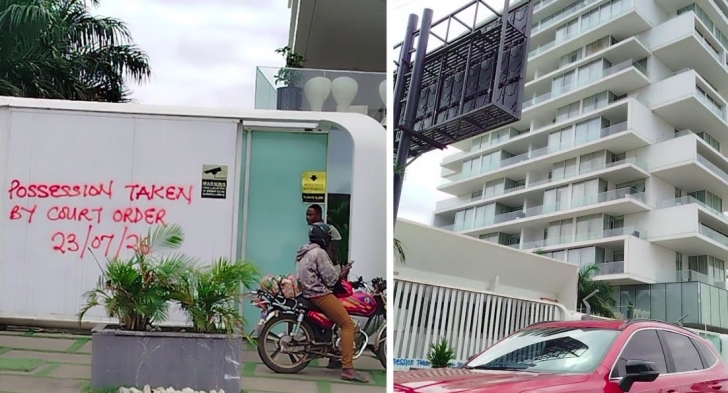
A significant property dispute in Accra has intensified, with the Receiver/Manager of the prominent No.1 Oxford Street Hotel filing an appeal against a High Court order that would require him to return the asset to businessman Nana Kwame Bediako's company, Kensington Residential Partners 1 Ltd. The vacation court ruling on Friday, August 21, 2026, has triggered a multi-pronged legal challenge that raises important questions about judicial jurisdiction, lending law interpretation, and the enforcement of security interests in Ghana's commercial property sector.
The Receiver, Nii Amanor Dodoo, appointed by Cola Holdings Ltd to enforce its security rights over the hotel, has filed an appeal alongside a request to stay the execution of the court order pending resolution. The case represents a critical test of how Ghana's courts will apply the Borrowers and Lenders Act, 2020 (Act 1052), landmark legislation designed to clarify and strengthen the rights of creditors securing loans against property.
The core dispute and legal arguments
At the heart of the conflict lies disagreement over whether the Receiver was legally entitled to take possession of the hotel in the first place, and whether the vacation court had authority to overturn that possession. The Receiver's legal team argues that the High Court decision contains fundamental errors and violates statutory provisions governing the enforcement of security interests when borrowers default on loans.
The Receiver maintains that under Act 1052, when a borrower defaults on a secured loan, the lender has explicit legal rights to take possession and realise the asset. According to his affidavit, the court's ruling effectively restored conduct that the law criminalises—specifically, a borrower in default obstructing a lender's right to possession. This interpretation could have far-reaching implications for the lending market in Ghana, potentially affecting how banks and other creditors enforce security over collateralised property.
The Receiver also challenges the ruling on constitutional grounds, citing Article 296 of the 1992 Constitution, which governs discretionary powers exercised by public authorities. Additionally, the appeal argues that Justice John-Mark Nuku Alifo misinterpreted a warrant for police assistance issued under Section 64 of Act 1052, suggesting the judge conflated different legal concepts.
Why jurisdiction questions matter for Ghana's courts
A critical element of the appeal centres on judicial jurisdiction—whether the vacation judge who heard the case had the authority to do so. According to the Receiver's affidavit, the substantive matter was assigned to Commercial Court 6, and the Judicial Service's published vacation court schedule indicated such cases should be heard in Commercial Court 8. However, the application was instead heard in Commercial Court 2, a deviation the Receiver's team says was irregular and unexplained.
This procedural question is significant because it potentially undermines the entire ruling. If the court lacked jurisdiction to hear the matter, the order it issued may be legally void, regardless of its merits. The Receiver's lawyers note that when counsel for the Receiver attempted to locate the case file at Commercial Court 8 as expected, they were informed it was unavailable there. The file had mysteriously been transferred to Commercial Court 2, and court staff could not explain why.
Another related application involving an injunction request was similarly placed before Commercial Court 2 but was deferred rather than decided by the vacation judge, scheduled instead for October 22, 2026, before the substantive judge. This inconsistency raises questions about how applications in connected disputes were handled and whether procedural rules were uniformly applied.
What this means for commercial property and lending in Ghana
The Oxford Street Hotel dispute touches on fundamental questions about how Ghana's financial system protects creditor rights. The Borrowers and Lenders Act was introduced to strengthen the position of lenders by clarifying enforcement mechanisms and reducing litigation uncertainty. If courts interpret this law narrowly or find grounds to override lender protections on procedural or other grounds, it could chill lending activity and increase the cost of credit in Ghana.
For businesses, property owners, and investors, the outcome will signal how reliably creditors can enforce security interests over valuable assets. Accra's commercial property market, which includes prominent hotels and office buildings, depends on clear legal rules governing collateralised transactions. Uncertainty about enforcement rights makes lenders more cautious, potentially reducing available credit for property developers and expansion.
The case is also noteworthy because of the individuals involved. Nana Kwame Bediako, known as Cheddar, is a prominent businessman with interests spanning media and real estate. The public nature of the dispute and the visibility of the Oxford Street Hotel as a landmark Accra property add public interest to what might otherwise be a routine commercial dispute.
The High Court appeal will now proceed, with the Receiver seeking to overturn the vacation court ruling. The outcome will likely influence how future disputes involving security enforcement and judicial jurisdiction are handled in Ghana's commercial courts.
Source: MyJoyOnline




Comments (0)
Be the first to comment.