
Parliament Divided Over 2027 Budget as Majority Touts Gains, Minority Demands Private Sector Push
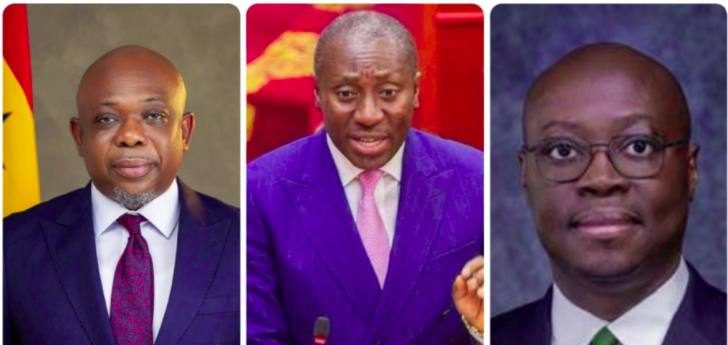

Ghana's Parliament concluded its debate on the 2027 Budget Statement amid pointed exchanges between the Majority and Minority caucuses, with both sides presenting starkly different readings of the country's economic health and future direction. The debate laid bare fundamental disagreements about how best to grow the economy, support businesses and reduce unemployment.
Majority Defends Economic Progress
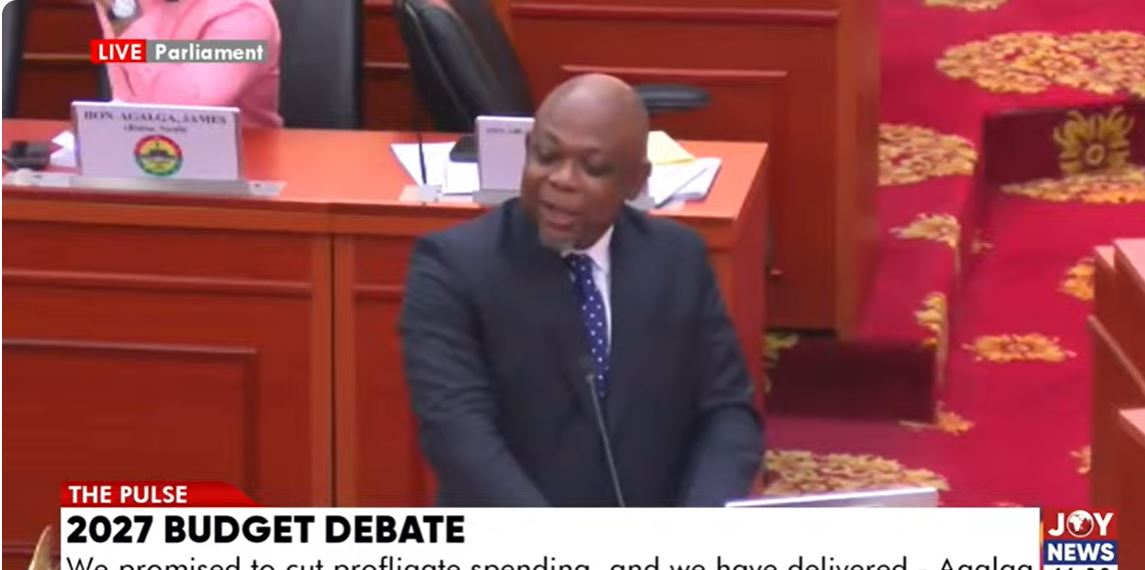
Majority Leader James Agalga mounted a robust defence of the budget, framing it as a disciplined and forward-looking financial plan designed to entrench stability and wean Ghana off excessive borrowing. He pointed to what the government considers tangible improvements in key macroeconomic indicators as proof that its approach is working.
According to Mr Agalga, inflation dropped to 5.5 per cent in October 2026, down from 8 per cent during the same month in 2025 — a significant decline for a country that grappled with runaway price increases in recent years. He also cited Ghana's public debt figure of GH¢759.3 billion, representing 47.5 per cent of GDP, alongside gross international reserves of $12.7 billion — equivalent to 4.5 months of import cover — as further evidence of a strengthening economy. The Majority's position is that fiscal prudence, rather than expansionary spending, is the surest path to sustainable growth.
Minority Pushes Back on Jobs and Private Sector
Minority Leader Alexander Afenyo-Markin took direct aim at what he described as the budget's failure to offer meaningful incentives to businesses and job seekers. His central argument was that headline macroeconomic figures, however encouraging, do not translate into real economic relief unless the private sector is actively supported to invest, expand and hire.
Mr Afenyo-Markin focused particular attention on the government's flagship 24-Hour Economy initiative, arguing that the policy would remain largely aspirational without concrete support measures such as electricity tariff rebates for businesses operating night shifts, tax concessions and reduced import costs for raw materials. He contended that asking businesses to operate around the clock without reducing their cost burden sets the initiative up to underperform.
The Minority Leader also raised concerns about plans for the Social Security and National Insurance Trust (SSNIT) to invest in hotels, questioning whether this represented the most prudent use of workers' pension contributions. Additionally, he criticised the government for abandoning the One District, One Factory programme — which aimed to establish at least one factory in each of Ghana's districts — without putting a credible alternative in its place.
Why It Matters for Ghana
The 2027 Budget debate is not merely a parliamentary formality — it reflects the choices that will shape the daily lives of Ghanaians over the coming year. After years of economic turbulence, including a painful debt restructuring process and a costly IMF bailout programme, many citizens and businesses are eager to see whether Ghana's recovery will translate into lower prices, more jobs and improved public services.
The inflation figures cited by the Majority, if sustained, would represent a remarkable turnaround from the crisis highs of recent years, when prices for food, fuel and utilities soared beyond the reach of ordinary households. However, the Minority's concerns resonate with many in the business community who argue that a stable macroeconomic environment alone is insufficient if businesses cannot access affordable energy, credit and inputs.
The debate over SSNIT's investment plans also touches on a sensitive issue for millions of Ghanaian workers whose retirement security depends on how the Trust manages its funds. Any perception that pension money is being directed into risky or politically motivated ventures is likely to attract public scrutiny.
- Inflation fell to 5.5% in October 2026, down from 8% a year earlier.
- Ghana's public debt stands at GH¢759.3 billion, or 47.5% of GDP.
- Minority questions 24-Hour Economy viability without business incentives.
Source: The Ghana Report




Comments (0)
Be the first to comment.