
Paper Economy vs Pocket Economy: Minority Slams 2027 Budget for Ignoring Unemployment and Cost of Living


Ghana's Minority in Parliament has delivered a sharp rebuke of the 2027 Budget Statement, arguing that while the government is busy trumpeting improvements in headline economic figures, millions of Ghanaians remain trapped in financial hardship — unable to afford food, transport and utilities. The criticism, led by Dr Mohammed Amin Adam, Ranking Member on Parliament's Finance Committee, cuts to the heart of a tension that has defined economic debate in Ghana for years: the gap between what the numbers say and what people actually feel.
A tale of two economies
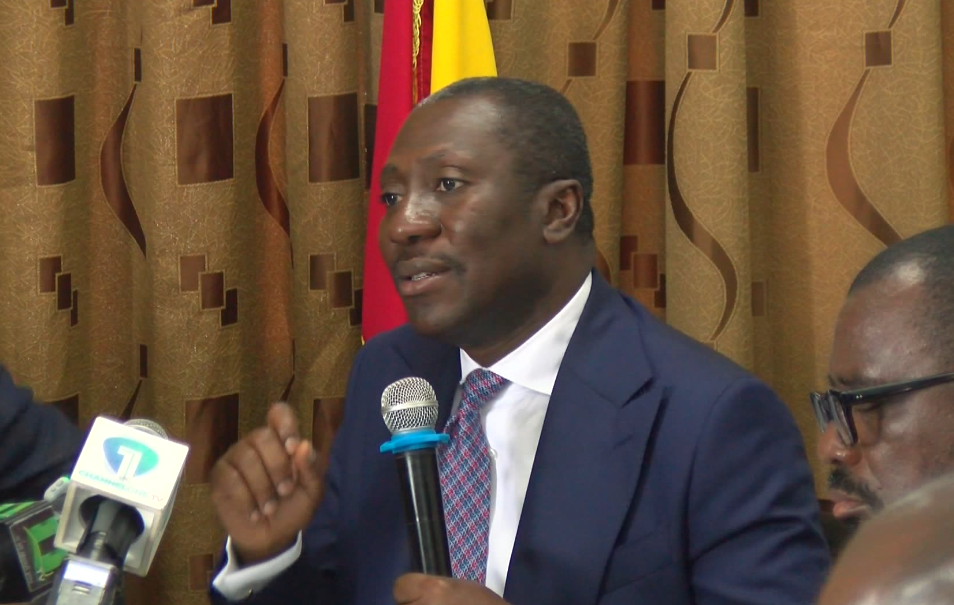
Dr Amin Adam, speaking at a press conference in Parliament on Friday, 13th November, drew a pointed distinction between what he called the paper economy and the pocket economy. On paper, Ghana's economic indicators have shown genuine improvement — inflation has eased to 5.5 per cent, Treasury bill rates have declined, and the country's credit ratings have been upgraded. These are not trivial achievements, and the Minority acknowledged them.
But the Ranking Member argued that these gains have not filtered down to ordinary households. Ghanaians are still spending more than they can afford on basic necessities, and young people continue to struggle to find meaningful work. "The paper economy has been celebrated, and we acknowledge it. But Ghanaians do not live on paper," Dr Amin Adam said, insisting that real economic progress must be felt in people's purchasing power and employment prospects — not just in statistics presented to international lenders and credit rating agencies.
Jobs, the 24-Hour Economy, and unanswered questions
One of the Minority's sharpest criticisms concerns the government's flagship 24-Hour Economy programme. The opposition had anticipated that Finance Minister Dr Cassiel Ato Forson's budget statement, delivered on 12th November, would include a detailed account of how many jobs the programme has created since its launch, as well as concrete plans to tackle youth unemployment more broadly.
Instead, Dr Amin Adam said the budget offered little in the way of evidence or accountability on those fronts. He argued that before announcing any new economic initiatives, the government had an obligation to show Ghanaians what the 24-Hour Economy has actually delivered. The absence of that reckoning, he said, undermines public confidence in bold policy promises.
- Inflation has fallen to 5.5 per cent, but households say everyday costs remain punishing.
- The opposition wants a full jobs audit of the 24-Hour Economy programme before new initiatives are launched.
- Youth unemployment remains a critical and largely unaddressed challenge in the budget.
Why it matters for Ghana
The debate over the 2027 Budget reflects a broader and deeply familiar challenge for Ghana: translating macroeconomic stabilisation into tangible improvements for working people. The country has been navigating a difficult recovery path following a debt restructuring process that began in 2023, and the government has worked hard to restore credibility with international financial institutions. Those efforts appear to be bearing fruit at the macro level.
However, economic recovery programmes often take time to reach the man on the street in Accra, the market woman in Kumasi, or the graduate in Tamale who cannot find a job. The Minority's critique reflects a concern shared across the political divide — and indeed among many ordinary citizens — that stabilisation must eventually translate into tangible relief and opportunity.
With unemployment, particularly among the youth, remaining one of Ghana's most pressing structural challenges, the pressure on the government to demonstrate real-world results will only intensify heading into an election cycle. Dr Amin Adam's remarks signal that the opposition intends to hold the administration accountable not just on the figures it presents, but on the lived experiences of the people those figures are supposed to represent.
Finance Minister Dr Cassiel Ato Forson and the ruling administration are yet to formally respond to the Minority's specific criticisms of the budget statement.
Source: MyJoyOnline

Comments (0)
Be the first to comment.