
Over 200 Akyem Asene Farmers Demand Urgent Compensation for Expressway Land Loss
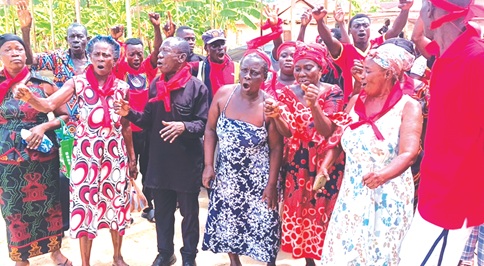

More than 200 farmers in Akyem Asene, a community near Oda in the Eastern Region, have launched a public appeal demanding that the government provide fair compensation for their destroyed farms and plantations. The affected landholdings—primarily cocoa farms, food crop farms, and oil palm plantations—represented the primary income sources for these agricultural families, and their loss has created severe financial hardship across the community.
On Wednesday, the farmers staged a visible demonstration through key streets in Asene, with many wearing red cloth around their heads, necks, and arms as a symbol of their distress. The protest culminated at the Asene durbar ground, where community leaders addressed media representatives and called on government officials to act immediately on their compensation claims.
The Scale of Loss and Ongoing Hardship
According to farmer representatives including Kofi Koranteng Sarpong, Yaw Peprah, Da Costa Asamoah, and Yaw Ampomah Asiedu, the farms were destroyed more than eight months ago, yet no meaningful compensation has been forthcoming. The impact has been devastating at the household level. Da Costa Asamoah lost an eight-acre cocoa farm in February 2026 that had previously generated approximately GH¢40,000 annually—income he relied upon to support his family and pay school fees for children attending tertiary institutions.
The delayed compensation has left many families struggling to meet basic daily expenses, with ripple effects extending to education and healthcare access. Asamoah's situation is representative of dozens of affected farmers who face complete loss of livelihood with no financial safety net or alternative income prospects.
A particularly troubling concern raised by Koranteng Sarpong is that farms belonging to more than 20 affected farmers, including his own, have not yet been surveyed to measure damage or determine appropriate compensation levels. This administrative delay compounds the uncertainty and frustration felt across the community.
Route Changes and Survey Complications
When contacted by journalists, Samuel Tieku, Head of the Ghana Highway Authority survey team for the project, acknowledged that some destroyed farms remain unmeasured. He explained a significant complication: the original expressway design specified a width of 120 metres, but this was later increased to 150 metres—a 30-metre widening that affected additional farmers beyond the original impact zone.
This design change means that some farmers who initially believed their properties might be spared ultimately experienced loss, and the expanded footprint has complicated the compensation process. Tieku's confirmation that measurements remain outstanding suggests systematic delays in the assessment phase, preventing farmers from receiving compensation they are legally entitled to receive.
Why It Matters for Ghana
The Accra-Kumasi expressway represents a major national infrastructure project designed to improve transportation efficiency and economic connectivity between Ghana's two largest cities. However, the compensation crisis at Akyem Asene raises critical questions about how the government manages the social costs of development projects.
Ghana's cocoa sector remains central to the national economy and rural livelihoods, particularly in the Eastern Region. When cocoa farmers lose productive land to infrastructure projects, the government has both a legal and moral obligation to ensure fair compensation that enables farmers to rebuild. Delays in surveying and payment undermine farmer confidence in government commitments and may create precedent concerns for future development-induced displacement across the country.
For the affected communities, swift resolution of compensation claims is essential not only for economic recovery but also for maintaining social cohesion and public support for national infrastructure programmes. Without transparent, timely compensation processes, infrastructure projects risk generating community tensions and damaging government-citizen relations in rural areas.
Source: MyJoyOnline





Comments (0)
Be the first to comment.