Kyerematen questions government financing model for Accra-Kumasi Expressway project

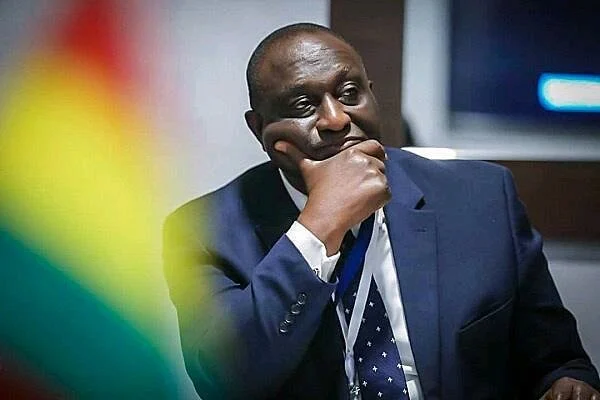
Alan Kyerematen, the opposition Progressive People's Party (PPP) flagbearer and former Trade and Industry Minister, has thrown his weight behind the Accra-Kumasi Expressway project but called on the government to fundamentally reconsider how it finances the ambitious infrastructure initiative.
The US$4 billion expressway, designed to reduce travel time between Ghana's two largest cities from over four hours to approximately 90 minutes, has been prioritised by the John Dramani Mahama administration as a cornerstone of its development agenda. However, Kyerematen's intervention highlights growing scrutiny of how Ghana will fund such mega-projects in an environment of fiscal constraints and rising public debt.
Support with significant caveats
In his statement, Kyerematen acknowledged the merits of the Mahama government's commitment to advancing the expressway, recognising its potential to transform connectivity, boost commerce, and reduce transport costs across the West African subregion. However, his key concern centres on the financing structure. Rather than relying solely on public funds—which would place additional burden on the government's budget—Kyerematen suggested exploring alternative financing models that could distribute risk and reduce the strain on national resources.
The former minister's position reflects broader economic concerns within Ghana's policy circles about the sustainability of funding large-scale infrastructure projects during periods of constrained fiscal space. With Ghana's debt-to-GDP ratio and ongoing commitments to International Monetary Fund (IMF) programmes, discussions about project financing have become increasingly prominent among political and economic stakeholders.
Alternative financing approaches
Kyerematen's implicit suggestion aligns with models utilised elsewhere in Africa and globally, where governments have leveraged public-private partnerships (PPPs), toll-based revenue schemes, and concessional financing from development banks to deliver major infrastructure. Such approaches can accelerate project delivery whilst preserving fiscal headroom for other critical investments in health, education, and social services.
The expressway itself represents a significant undertaking, intended to create a modern, four-lane highway corridor connecting Accra's commercial and political hub with Kumasi, the cultural and economic centre of the Ashanti Region. Beyond the two cities, the project is positioned as part of a broader ECOWAS infrastructure vision that could eventually link multiple West African capitals.
Why it matters for Ghana
Infrastructure financing has emerged as a defining challenge for Ghana's development trajectory. The country has ambitious targets for roads, rail, ports, and energy infrastructure, yet domestic resources remain limited. How Ghana funds the Accra-Kumasi Expressway could set a precedent for future mega-projects and signal to investors whether the government is willing to embrace innovative financing structures.
The debate also reflects a deeper tension between the urgency of infrastructure development and fiscal prudence. While rapid transport corridors can unlock economic potential and improve living standards, public-financed projects that strain the budget risk crowding out other essential spending and constraining the government's policy flexibility.
Kyerematen's intervention, despite coming from the opposition, underscores that infrastructure financing is not inherently partisan—it is a practical governance question with long-term implications for Ghana's economic competitiveness and fiscal health. As the Mahama administration finalises its approach to the expressway, the government will likely need to address these concerns and detail how financing will be structured to balance ambition with sustainability.
Source: 3News

-800x450.webp)

Comments (0)
Be the first to comment.