
Oppong Nkrumah challenges government over farm input delays as food prices surge
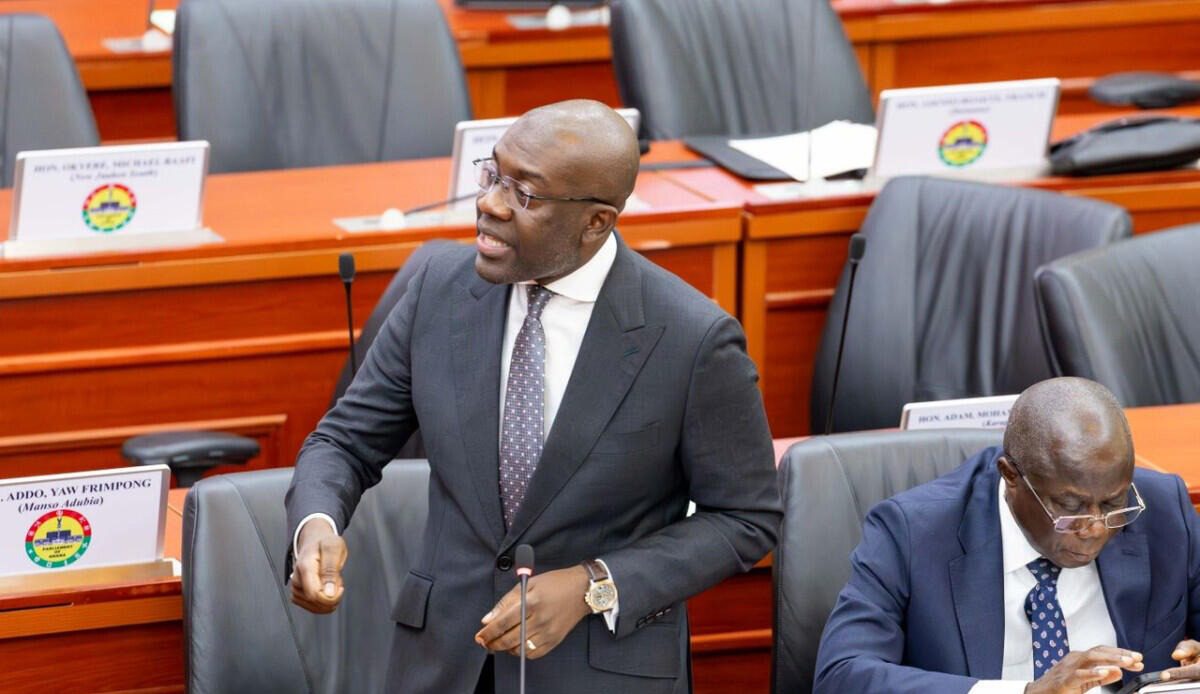

Member of Parliament for Ofoase-Ayirebi Kojo Oppong Nkrumah has publicly challenged the government's claims of adequate fertilizer and farm input distribution during parliamentary debate on the 2026 Mid-Year Budget Review, arguing that delays are directly fuelling Ghana's food price crisis and deepening economic hardship for ordinary citizens.
The former Information Minister highlighted contradictions in official statements about agricultural input availability, stating that despite government assurances, countless farmers nationwide remain without essential materials needed for the current growing season. Oppong Nkrumah warned that these distribution delays carry serious implications for national food production and household budgets, as reduced fertilizer access inevitably leads to lower crop yields and continued inflation in local markets.
In a pointed intervention during debate, he drew Parliament's attention to the visible impact on consumers, noting that even basic items like tomatoes now command prices that reveal the scale of the problem. The MP stressed that timely provision of fertilizer and comprehensive farming support services are non-negotiable investments in agricultural productivity, food security and price stabilisation.
Healthcare and education staffing crisis compounds economic pressures
Beyond agriculture, Oppong Nkrumah expanded his criticism to encompass what he termed chronic delays in government recruitment across critical sectors. He revealed that thousands of qualified graduates remain jobless despite acknowledged vacancies and persistent shortages in education and health services. The Education and Health Ministers have reportedly admitted the need for additional personnel, yet recruitment approvals remain stuck in bureaucratic limbo.
According to the MP, this inaction suggests the government is prioritising improved fiscal metrics over addressing genuine staffing needs that directly affect service quality. When trained teachers and healthcare professionals cannot be deployed due to administrative delays, he argued, the entire system suffers—and ordinary Ghanaians bear the cost through inferior education and healthcare provision.
Why it matters for Ghana
This parliamentary intervention strikes at the heart of three interconnected crises affecting ordinary Ghanaians: food inflation, agricultural productivity and public service delivery. When farmers lack timely access to fertilizer, domestic food production falters, pushing prices higher and consuming larger portions of household budgets already under strain from broader inflation. For families in rural and urban areas alike, rising tomato and staple food costs translate directly into reduced purchasing power and increased poverty risk.
The staffing delays in health and education represent another layer of economic pressure. When hospitals lack adequate doctors and nurses, and schools operate with teacher shortages, the quality of human capital development—essential for Ghana's long-term competitiveness—deteriorates. Young people unable to find work despite qualifications face frustration and limited prospects, whilst public services struggle to function effectively.
These issues also reflect broader governance questions about resource allocation and implementation capacity. If the government lacks either the political will or administrative machinery to deliver fertilizer on schedule and process recruitment approvals timeously, Ghanaians may reasonably question whether larger policy ambitions can be realised.
The Minority parliamentary caucus has called on government to act immediately: ensuring farmers receive agricultural inputs on time and fast-tracking the employment of teachers and health workers. Such action, if implemented, could modestly ease food price pressures and begin addressing documented skill gaps in essential services.
Source: The Ghana Report



Comments (0)
Be the first to comment.