NPP First Vice Chair Hopeful Ahiagbah Dismisses Poll as 'Transactional', Backs Delegate Verdict
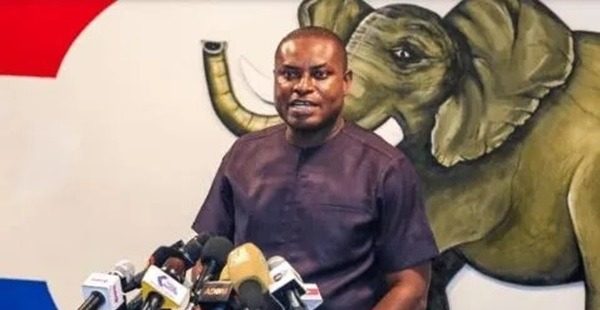
Richard Ahiagbah, the New Patriotic Party's Director of Communications and aspirant for National First Vice Chairman, has dismissed a recent opinion poll that ranked him behind four rivals in the closely watched internal party election scheduled for this Saturday in Kumasi.
The Global InfoAnalytics survey positioned Nana Akomea, Mustapha Abdul-Hamid, Henry Nana Boakye and Kodjo Fosu Boadu ahead of Ahiagbah in the keenly contested position, but the candidate has pushed back forcefully against the findings. Ahiagbah characterised the poll as a tactical campaign tool rather than a reliable predictor, arguing that pre-election surveys hold no bearing on the actual democratic process within the party.
"The real poll will be what we are going to get on Saturday," Ahiagbah stated, effectively challenging the credibility of pollster Mussa Dankwah's methodology. He described Global InfoAnalytics' work as "transactional"—a pointed critique suggesting the survey serves particular interests rather than providing objective analysis.
What Saturday's Election Entails
The NPP national officers' election will take place on October 3 at the Baba Yara Sports Stadium in Kumasi, with approximately 7,163 accredited delegates casting votes across 31 polling stations. Nine national executive positions are contested, making this a significant moment for the party's internal power dynamics as it positions itself for the 2028 general election campaign.
Beyond the First Vice Chairman race, other candidates are also mobilising their support bases. Clement Opoku Gyamfi, known as CID, who is running for National Youth Organiser, revealed that the poll results have actually galvanised his campaign efforts rather than discouraged him. He plans to intensify delegate engagement in the coming days before the vote.
Why It Matters for Ghana's Political Landscape
The NPP leadership election carries weight beyond internal party management. As one of Ghana's two major political parties and the ruling outfit under President Nana Akufo-Addo, the orientation and composition of its national executive will influence the party's strategy, messaging and candidate selection as it prepares for the 2028 presidential and parliamentary contests. The individuals elected to lead the party will shape campaign direction, party discipline and internal cohesion in the coming years.
Ahiagbah's emphasis on "regional balance and strategic leadership" as selection criteria reflects broader party tensions around representation and decision-making authority. His argument that the party must think strategically about 2028 suggests that factional considerations are at play—a pattern common in Ghanaian party politics where regional, generational and ideological alignments influence electoral outcomes.
The dismissal of polling data by a major candidate also speaks to the limitations of pre-election surveys in Ghana's political context. While opinion polls are increasingly used to gauge public sentiment, intra-party elections depend heavily on delegate mobilisation, loyalty structures and on-the-ground campaign intensity—variables that polls may not fully capture.
Delegates will have the final say on Saturday, and the outcome will reveal which candidates successfully built coalitions and maintained support within their respective regions and constituencies ahead of the crucial 2028 election cycle.
Source: The Ghana Report

Comments (0)
Be the first to comment.