NAIMOS Intensifies War on Illegal Mining: 40 Arrested, Equipment Seized Across Six Regions
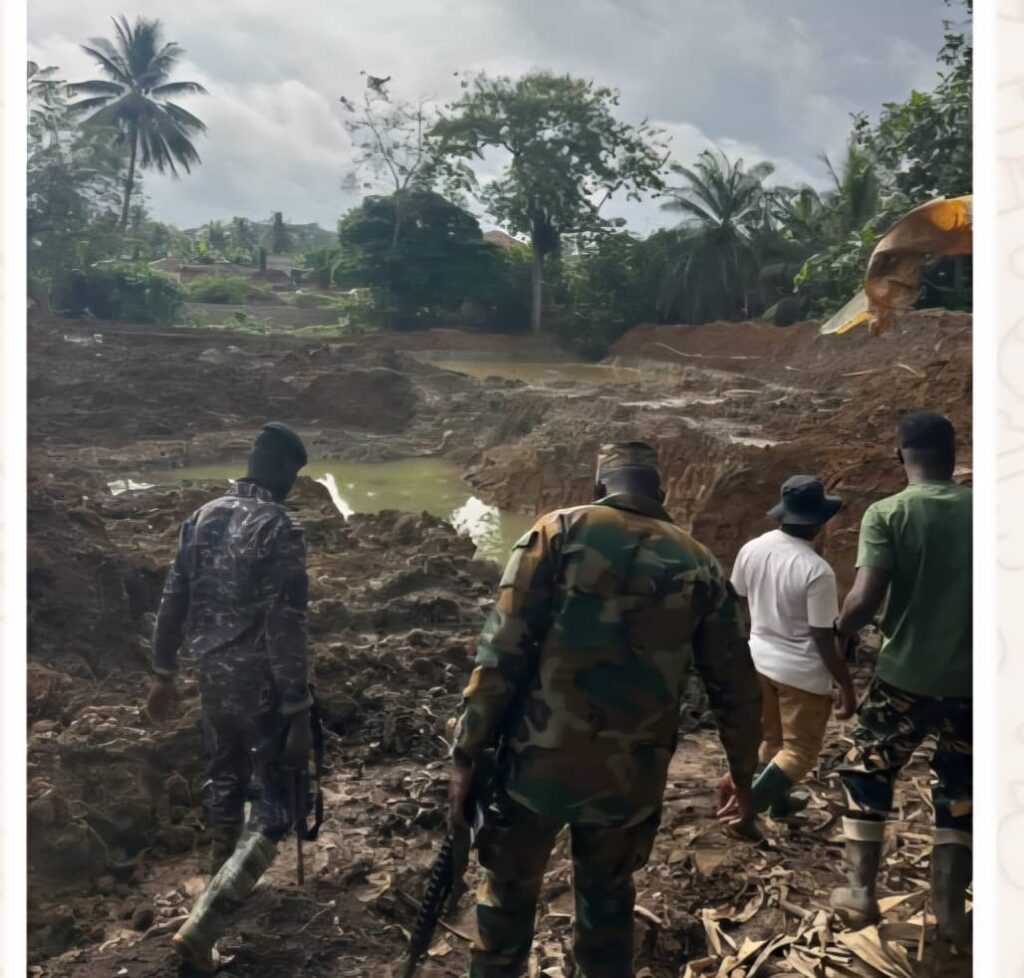
Ghana's National Anti-Illegal Mining Operations Secretariat (NAIMOS) has ramped up enforcement efforts against galamsey operations, arresting 40 suspects and seizing substantial mining equipment during a week-long coordinated operation across six major mining regions between 27 July and 2 August 2026.
The operation, conducted in Western North, Western, Ashanti, Ahafo, Savannah and Eastern Regions, targeted illegal mining activities along key river systems including the Ankobra, Bia, Torya, Tano and Butre, as well as reclaimed mining sites in the Desire Forest Reserve and around the Birim River. NAIMOS stated that intelligence-led joint operations proved crucial in identifying and dismantling illegal mining networks.
Arrests and Equipment Seizures
The most significant arrests came on 29 July at Sikaniasem, where NAIMOS apprehended eight individuals including two Chinese nationals—Luo Xiaoqiang, 47, and Fuxue Qiang, 48—alongside six Ghanaian suspects. The operation seized one excavator, one Toyota Land Cruiser, three motorbikes, nine water pumps, one excavator monitor, one generator and one firearm. Additionally, troops destroyed 14 water pumps, seven chanfang machines, four generators and five makeshift structures used to support mining operations.
In the Western Region, authorities arrested 19 Ghanaian suspects in Tarkwa Nsuaem, Mpohor and Ellembelle areas, with all suspects handed to Esiama Police Station for investigation.
NAIMOS also identified three financiers allegedly backing illegal mining destruction: Nana Osei Bonsu, Ezana Kasei Awudu and Emmanuel Amoah. The crackdown exposed a broader network of collaborators and financiers sustaining galamsey operations across the regions.
Community Intelligence Challenges and Ongoing Surveillance
Despite the operation's success, NAIMOS acknowledged significant obstacles in gathering community intelligence. During reconnaissance missions in Dadieso, Sefwi Ahibenso, Sefwi Dwenase, Kramokrom and surrounding cocoa-farming areas, community members largely refused to provide information about illegal mining activities, citing fear of intimidation and reprisals by mining gangs. The patrols did confirm evidence of prospecting and test excavations, identifying potential financiers and collaborators supporting these operations.
Why This Matters for Ghana
Illegal mining remains one of Ghana's most pressing environmental and economic challenges. The activity devastates water bodies, contaminates agricultural land, and undermines Ghana's legitimate mining sector. These operations are particularly damaging to cocoa-farming communities, which form the backbone of Ghana's export economy and rural livelihoods. The presence of firearms among illegal miners also raises security concerns for local residents and enforcement personnel.
The involvement of foreign nationals in galamsey operations underscores how these networks operate at transnational scales, requiring sustained international cooperation. NAIMOS's focus on identifying financiers is crucial—disrupting funding networks strikes at the heart of these criminal enterprises more effectively than targeting individual miners.
However, the reluctance of community members to cooperate reflects a critical vulnerability in enforcement efforts. Without grassroots intelligence and community support, even well-resourced operations struggle to achieve lasting impact. Building trust and providing protection mechanisms for whistleblowers will be essential for scaling up anti-galamsey efforts.
The continued crackdown demonstrates government commitment to tackling illegal mining, but sustainable progress will require addressing both immediate enforcement and longer-term factors including poverty, limited economic opportunities in mining regions, and corruption within supply chains.
Source: MyJoyOnline




Comments (0)
Be the first to comment.