NACOC Leadership Leads Staff in National Sanitation Drive Across Ghana
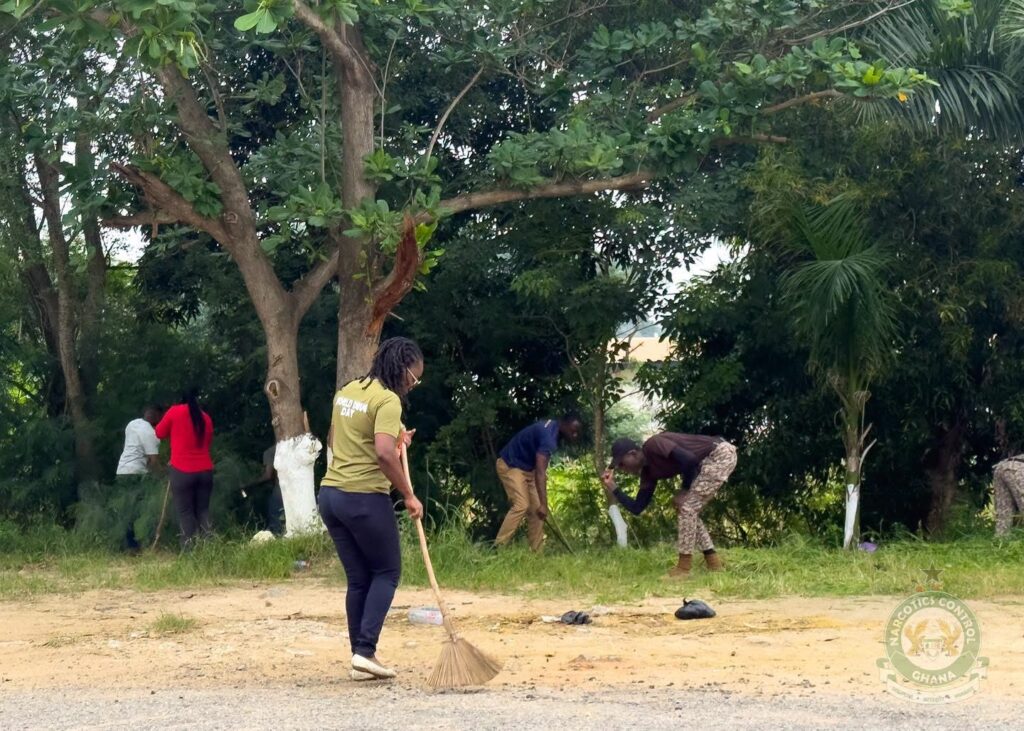
The Narcotics Control Commission (NACOC) has demonstrated its commitment to national environmental stewardship by mobilising its entire workforce to participate in Ghana's coordinated sanitation campaign. Led by Director-General Major General Maxwell Obuba Mantey and senior leadership, the agency combined operational duties with civic responsibility, sending a clear message that public health extends beyond drug enforcement.
On Friday, July 10, NACOC management and staff set aside regular administrative work to engage in hands-on cleaning activities. The effort was not confined to the organisation's Accra headquarters and annex buildings; all regional commands and border posts across the country simultaneously undertook complementary sanitation work within their operational areas, creating a unified national response to environmental hygiene concerns.
Coordinated effort across all divisions
The clean-up operation involved practical, labour-intensive work. Armed with basic tools—shovels, brooms, wheelbarrows and Wellington boots—NACOC personnel tackled gutters clogged with debris, cleared drains of accumulated sediment and swept surrounding streets. The regional commands and border posts focused on public spaces, removing overgrown vegetation and plastic waste from their respective jurisdictions.
The participation of top leadership proved inspirational. Deputy Directors-General Lawyer Alexander Twum-Barimah (Enforcement, Control and Elimination) and Stephen Yeboah (General Services) worked alongside directors and junior staff, reinforcing organisational values and demonstrating that environmental responsibility is a leadership priority rather than a task delegated downward.
Why it matters for Ghana
NACOC's participation in the national clean-up exercise carries significance beyond symbolic gestures. Ghana faces persistent sanitation challenges in urban and rural areas, with improper waste management contributing to public health risks and environmental degradation. When government agencies actively demonstrate commitment to these national priorities, it strengthens civic culture and reinforces public expectations that institutional leaders should model responsible behaviour.
The Commission's involvement also reframes its public role. While NACOC's primary mandate remains combating drug trafficking and narcotic-related offences, the organisation's engagement in sanitation campaigns underscores that government agencies have broader responsibilities to citizen welfare. Environmental cleanliness directly impacts public health—reducing disease vectors, improving air quality and preventing waterborne illnesses—areas where NACOC's participation sends institutional support for preventive public health measures.
Additionally, the coordinated participation of border posts and regional commands demonstrates institutional reach. These decentralised operations often work with minimal external oversight; their simultaneous engagement in national sanitation campaigns strengthens institutional cohesion and extends national development initiatives into remote and less-serviced areas where environmental challenges may be acute but often overlooked.
Broader institutional messaging
NACOC's statement emphasising that public safety encompasses environmental health reflects evolving governance philosophy in Ghana. Rather than viewing agencies through narrow sectoral lenses, the Commission positions itself as contributing to holistic national development. This approach aligns with broader sustainable development goals emphasising that citizen wellbeing requires coordinated action across multiple sectors.
The exercise also recognised officer dedication and professionalism, acknowledging that law enforcement personnel often operate under challenging conditions. Inclusive participation in national campaigns can boost morale and reinforce that their contributions matter beyond specialist enforcement roles.
As Ghana continues efforts to improve environmental sanitation across regions and communities, visible commitment from major government institutions like NACOC demonstrates institutional seriousness and may encourage similar engagement from other agencies and private sector organisations.
Source: MyJoyOnline



Comments (0)
Be the first to comment.