Mahama leads massive seven-region cleanup drive as Ghana battles flood aftermath and sanitation crisis
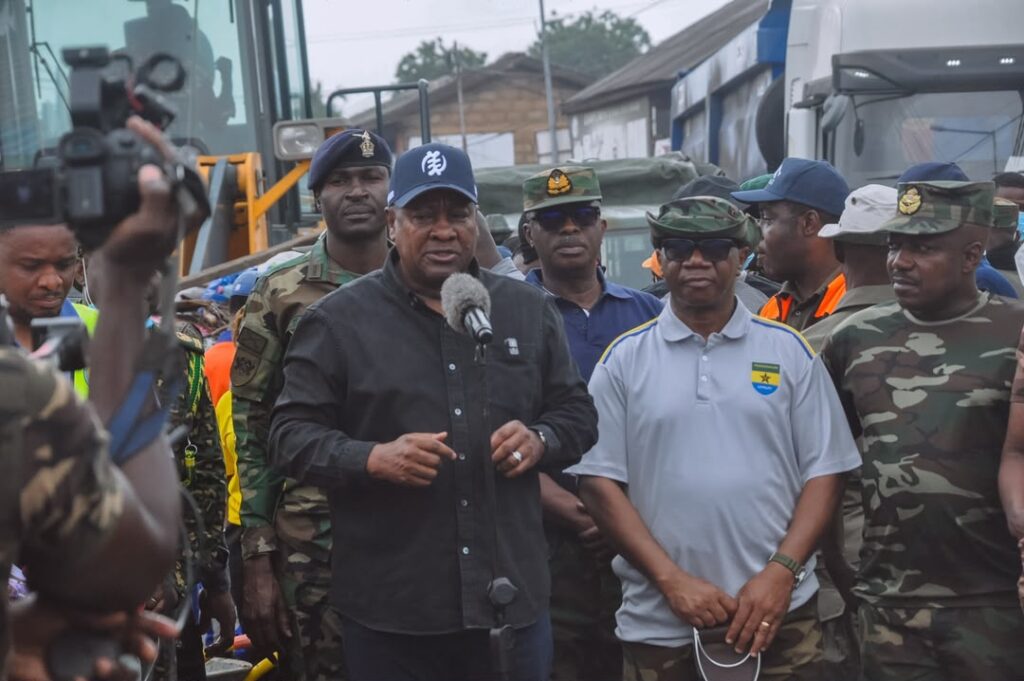
Ghana's leadership mobilised across seven regions on Friday, July 10, 2026, for a coordinated cleanup operation following devastating floods that struck the country on June 29. President John Dramani Mahama and Vice President Professor Naana Jane Opoku-Agyemang led the effort, joined by government ministers, Members of Parliament, local authorities, security agencies, and thousands of residents determined to restore affected communities and address underlying sanitation failures.
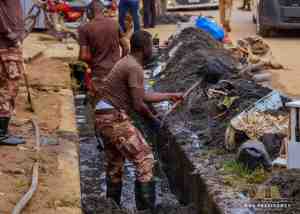
The scale of the exercise underscored the severity of Ghana's flooding challenge. Greater Accra Region and six other affected areas became hives of activity as teams worked to remove accumulated waste, desilt gutters, clear drainage channels, and clean public spaces. The operation extended beyond simple refuse collection—authorities demolished unauthorised structures blocking waterways and conducted aggressive desilting of critical drainage systems, particularly the problematic Alajo drain section of the Odaw stream.
Private sector involvement proved crucial to operations. Dr. Joseph Siaw Agyepong, Executive Chairman of the Jospong Group, deployed significant logistics through his flagship company Zoomlion Ghana Limited, demonstrating what government officials framed as critical collaboration between state and commercial entities in tackling national infrastructure challenges.
What the floods revealed about Ghana's sanitation systems
President Mahama's observations at the Alajo drain site proved sobering. Beyond typical flood debris, workers uncovered engine blocks, old furniture, dining tables, and alarming quantities of plastic waste—evidence of systematic environmental abuse. The President characterised the June 29 floods as a "wake-up call," warning citizens that changing behaviour and accepting environmental responsibility were non-negotiable.
"The drains are not garbage instruments," Mahama stated bluntly, addressing a cultural problem that extends beyond infrastructure deficiencies. His message reflected frustration that despite periodic cleanup exercises, fundamental attitudes toward waste disposal remain problematic across many communities.
The government designated Friday, July 10, and Saturday, July 11, as National General Cleaning Days specifically to manage the scale of recovery required. Security personnel were deployed citywide to ensure business closures and encourage participation, signalling that the cleanup was treated as a national priority rather than voluntary activity.
Why this matters for Ghana: Long-term solutions beyond emergency response
While the visible cleanup exercise generated impressive optics—with top leadership participating alongside ordinary citizens—deeper challenges remain unaddressed. Ghana's flooding problem reflects structural deficiencies: inadequate drainage infrastructure in rapidly expanding urban areas, lack of proper waste management systems, illegal settlement patterns in flood-prone zones, and widespread disregard for environmental regulations.
The recurring nature of these disasters suggests that single cleanup exercises, however high-profile, cannot substitute for systematic reform. The government must demonstrate commitment to permanent solutions: investment in modern drainage systems, enforcement of building codes that prevent structures in waterways, expansion of waste management capacity, and sustained public education about environmental stewardship.
For Ghanaians, particularly urban residents in vulnerable areas, the immediate concern is practical: will these cleanup efforts meaningfully reduce flooding risk before the next heavy rains arrive? The government's acknowledgement that improved sanitation and drainage are essential precedes the anticipated intense rainfall season, but implementation timelines remain unclear.
The exercise also reflects the government's broader sanitation agenda. With Zoomlion's involvement, expectations exist that similar large-scale operations may become regular features of Ghana's environmental management strategy, particularly following natural disasters.
Looking ahead
The seven-region cleanup represents a significant mobilisation of resources and personnel. Success will be measured not merely by the tonnes of waste removed, but by whether government translates this momentum into sustained infrastructure investment and whether citizens internalise the environmental responsibility message. Ghana's flooding challenge demands answers that extend far beyond cleanup exercise participation, however enthusiastically executed.
Source: Ameyaw Debrah



Comments (0)
Be the first to comment.