
Mahama Charges New National Labour Commission Board to Rebuild Trust and Secure Industrial Peace


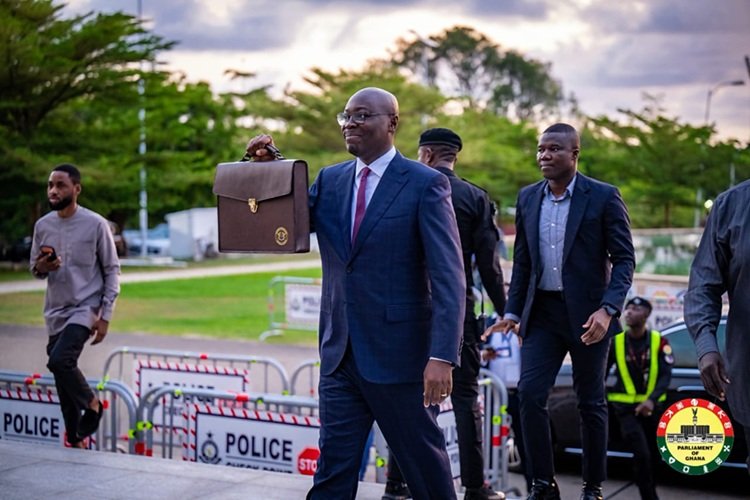
President John Mahama has called on the newly inaugurated seven-member board of the National Labour Commission (NLC) to make restoring public confidence their foremost priority, stressing that the body's credibility is the bedrock upon which Ghana's industrial peace and economic stability must be built.
A Clear Mandate from the President
Speaking at the inauguration of the new board, President Mahama emphasised that the commission's standing in the eyes of workers, employers and the broader public is not merely a reputational concern — it is a practical necessity. Without genuine trust from all social partners, he argued, the NLC cannot effectively carry out its core mandate of mediating labour disputes, preventing strikes, and protecting the livelihoods of Ghanaian workers.
The President reminded the incoming board members that their work sits at a critical intersection between the rights of workers and the confidence of investors. A commission seen as impartial and effective, he said, reassures businesses — both local and foreign — that disputes will be resolved fairly and efficiently, making Ghana a more attractive destination for investment. Conversely, a weakened or discredited NLC creates uncertainty that can ripple through the entire economy.
Mahama also underscored the importance of safeguarding workers' livelihoods, noting that behind every labour dispute are real people whose families depend on fair and timely resolution of grievances. He urged the board to approach their responsibilities with seriousness, professionalism and a genuine commitment to equity.
What This Means for Ghana's Labour Landscape
The National Labour Commission was established under the Labour Act, 2003 (Act 651) as an independent body responsible for settling industrial disputes and promoting harmonious relations between employers and organised labour. Over the years, its effectiveness has at times been questioned, particularly during periods of prolonged strikes in the public sector — including actions by teachers, health workers and other essential service providers — that have disrupted service delivery and strained the economy.
Ghana's labour environment has seen notable tension in recent years, with trade unions raising concerns about cost-of-living pressures, delayed salary negotiations and conditions of service disputes. The reconstitution of the NLC board therefore comes at a moment when robust, credible mediation is especially needed. A well-functioning commission can serve as an early warning system, helping to de-escalate tensions before they erupt into full-blown industrial action.
For ordinary Ghanaians, the stakes are tangible. Strikes in education and health, for instance, directly affect students and patients. Ensuring that the NLC commands the respect of both labour unions and employer associations is therefore not an abstract governance goal — it has direct consequences for everyday life.
The Road Ahead for the New Board
The seven-member board inherits both an opportunity and a responsibility. Analysts have long argued that the NLC must improve its turnaround time on cases, increase transparency in its processes and engage more proactively with social partners rather than waiting for disputes to escalate before intervening.
President Mahama's directive to restore public confidence signals that the government is aware of these concerns and expects measurable improvement. The board will need to demonstrate independence from political influence, consistency in applying labour law, and a willingness to engage constructively with both the Ghana Trades Union Congress and employer bodies such as the Ghana Employers Association.
- Building reliable channels of communication with all social partners will be essential.
- Faster, more transparent dispute resolution processes could significantly reduce the frequency of strikes.
- Strengthening the commission's public outreach will help workers and employers better understand their rights and obligations under Ghanaian labour law.
If the new board rises to the challenge, it has the potential to transform the NLC into a genuinely trusted institution — one capable of anchoring industrial peace at a time when Ghana's economic recovery depends on stability, productivity and investor confidence.
Source: 3News



Comments (0)
Be the first to comment.