Mahama Calls on Ghanaians to Embrace Nkrumah's Pan-African Vision for Modern Nation-Building
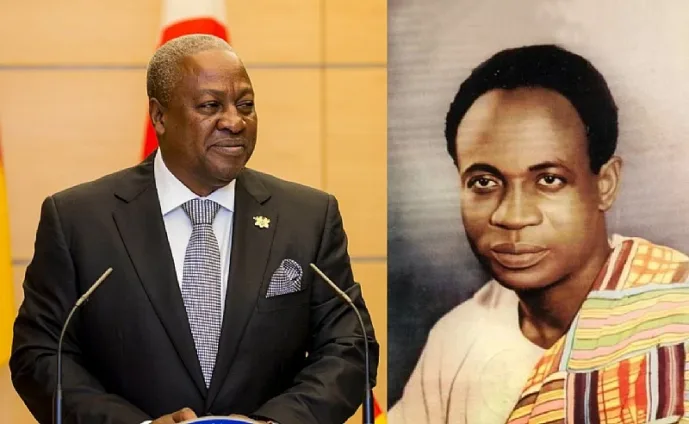
President John Dramani Mahama has challenged Ghanaians to draw on the foundational ideals of Ghana's first President, Osagyefo Dr Kwame Nkrumah, as the nation marks Founder's Day on September 21. In his message, Mahama positioned Nkrumah's historical legacy not as a relic of the independence era, but as a blueprint for addressing contemporary challenges of economic development and social equity.
Speaking on the occasion of Nkrumah's birthday, Mahama highlighted three pillars of the founding president's philosophy: the pursuit of liberty, commitment to Pan-African unity, and the principle of self-reliance. He emphasised that Nkrumah's declaration that "the black man is capable of managing his own affairs" remains central to Ghana's national identity, particularly as the country navigates post-colonial development.
From Political to Economic Independence
Mahama's framing of Founder's Day carries a significant message about unfinished business. While acknowledging Ghana's achievement of political independence under Nkrumah's leadership, the President stressed that nation-building remains incomplete. He drew a deliberate parallel between Nkrumah's struggle for political freedom and the current imperative for economic independence and social development.
The President linked these aspirations to his administration's "Resetting Ghana Agenda," suggesting that Nkrumah's visionary approach to liberation can inform contemporary efforts to transform Ghana into a prosperous and equitable society. This framing invites Ghanaians to see development challenges through the lens of self-determination—a core Nkrumahist principle.
Why It Matters for Ghana
Founder's Day commemorations carry particular weight in Ghana's political discourse, as Nkrumah's legacy remains contested and evolving. Different administrations and citizens emphasise different aspects of his record: some celebrate his anti-colonial leadership and Pan-African vision, while others criticise his authoritarian governance in his later years. Mahama's invocation of Nkrumah's ideals, without dwelling on controversial periods, reflects a broader national consensus that his foundational contributions merit remembrance.
For contemporary Ghana, Mahama's message signals that the country's development challenges—poverty, unemployment, inequality—are framed not merely as technical problems requiring foreign expertise, but as extensions of the sovereignty question. By connecting Nkrumah's self-reliance doctrine to current priorities, Mahama appeals to a sense of agency and collective responsibility among Ghanaians at home and in the diaspora.
The timing and emphasis also matter politically. Mahama's call for Ghanaians to "rise above division, embrace selfless patriotism, and work tirelessly toward economic freedom and social justice" carries implicit appeals for national unity and citizen participation in development efforts—themes critical to governance messaging in a multi-party democratic context.
The Broader Pan-African Dimension
Mahama's reference to Nkrumah's Pan-African vision is equally significant. Under Nkrumah, Ghana became the first sub-Saharan nation to gain independence and a leading voice for African liberation and continental integration. While Nkrumah's ambitious dreams for African unity largely faced obstacles, his intellectual and diplomatic legacy continues to influence regional discourse within ECOWAS and the African Union.
By invoking this dimension on Founder's Day, Mahama positions Ghana within a broader continental narrative of self-determination and cooperation—a message with implications for Ghana's engagement with regional security, trade, and diplomatic initiatives.
Founder's Day remains one of Ghana's key national occasions, offering political and civic leaders a platform to reflect on national identity and direction. Mahama's emphasis on applying historical ideals to present challenges suggests that Ghana's leadership sees Nkrumah's vision not as nostalgic, but as enduringly relevant to the work of building a truly independent and prosperous nation.
Source: Today GH


Comments (0)
Be the first to comment.