
Lawyers Mark 30 Years at the Bar with GH¢60,000 Gift to Expand Legal Aid to All Ghanaians
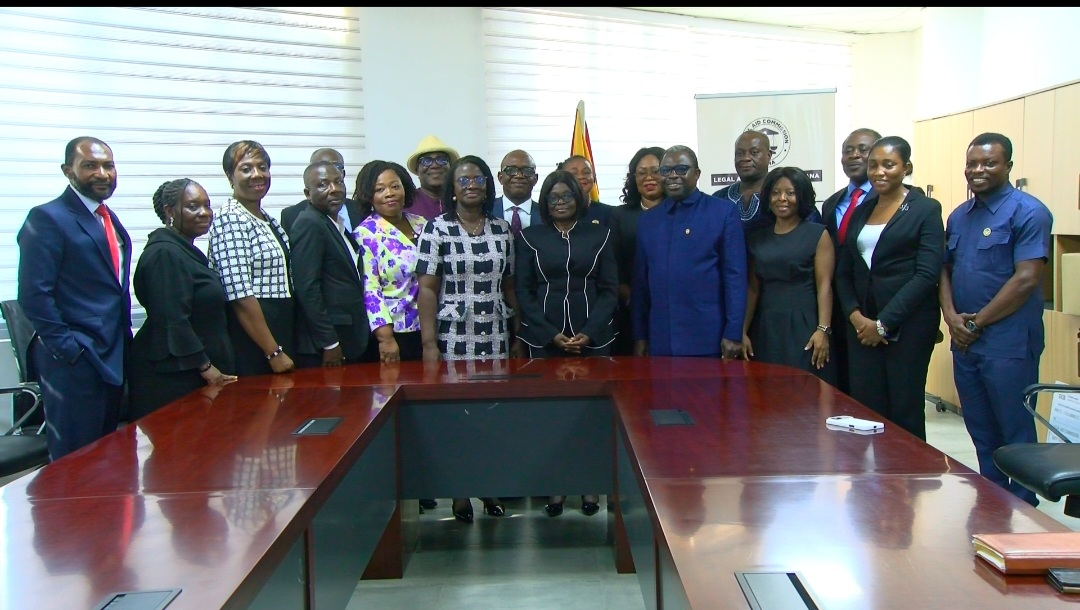

A group of approximately 80 Ghanaian lawyers has marked three decades of legal practice with a meaningful act of service — donating GH¢60,000 and two desktop computers to the Legal Aid Commission to support the creation of a round-the-clock call centre that could transform how ordinary Ghanaians access legal help.
The Law Class of 1994/96, whose members began their journey together at the University of Ghana's Faculty of Law in 1991 before proceeding to the Ghana School of Law in 1994, presented the donation as the centrepiece of their 30th anniversary celebrations at the Bar. The funds are earmarked specifically for the purchase of specialised software that will power the proposed call centre, with the computers providing additional operational support.
A Call Centre Designed to Reach the Unreached
The Legal Aid Commission's planned 24-hour call centre is intended to be far more than a telephone hotline. According to the Commission's Executive Director, Edmund Amarkwei Foley, the service will be accessible from every part of the country and delivered in multiple Ghanaian languages alongside English — a deliberate move to dismantle the language and literacy barriers that often shut out vulnerable people from legal processes.
Mr Foley also disclosed plans for mobile legal aid offices that would travel directly into communities, particularly in areas where setting up a permanent office is not immediately viable. The scale of the challenge is stark: the Commission currently operates in only 10 of Ghana's 16 administrative regions and covers just 45 of the country's 261 districts, leaving the majority of communities without direct access to its services.
"We have re-conceptualised access to justice, to bring justice to their doorstep rather than to facilitate justice to them," Mr Foley said at the presentation ceremony.
Why It Matters for Ghana
Access to legal aid has long been recognised as a cornerstone of a functioning justice system, yet for millions of Ghanaians — particularly the poor, the elderly, persons with disabilities, and those in rural areas — the Legal Aid Commission has remained out of reach, either geographically or practically. The Commission was established as the Legal Aid Board back in 1987 and has since evolved into a body with functional independence, though it continues to operate under significant resource constraints despite its critical mandate.
With the institution preparing to mark 40 years of organised legal aid delivery in Ghana in 2027, the pressure to expand coverage has never been more pronounced. A 24-hour call centre would represent a generational leap in service delivery — allowing a farmer in the Upper East Region or a market trader in the Bono Region to seek legal guidance without travelling hours to a regional capital.
The donation by the Law Class of 1994/96 also signals a growing culture of professional responsibility among Ghana's legal community. Daniyal Abdul-Karim, Chairman of the class's planning committee, explained that when members were briefed on the call centre project, there was virtually no debate about which institution deserved their support.
"There was really no debate about the central position of the Legal Aid Commission. We're very much interested in looking at your Commission because of the key role you play in providing access to justice and bringing justice very close to people who are in need, people who are vulnerable in society," Mr Abdul-Karim said.
Building on a Legacy of Giving Back
The class has a track record of charitable action tied to its milestone anniversaries. At its 20th anniversary celebrations a decade ago, members directed contributions to the Ghana School of Law — the institution that trained them. This time around, the class deliberately looked outward, choosing to support an agency serving the broader public rather than their own professional alma mater.
Mr Abdul-Karim noted that the class reviewed the Commission's project budget and chose to fund what it considered the most critical element — the software infrastructure — while also providing the two desktop computers to complement the system.
Mr Foley received the donation warmly, acknowledging that partnerships with private individuals and organisations have become essential to bridging the Commission's funding gaps. For the thousands of Ghanaians who currently have no meaningful access to legal representation, the 24-hour call centre — when it comes — could be a lifeline.
Source: MyJoyOnline



Comments (0)
Be the first to comment.