
Lands Ministry Defends Anti-Galamsey Steps Against Catholic Bishops' Criticism, Citing 14 Cooperatives and Gold Board
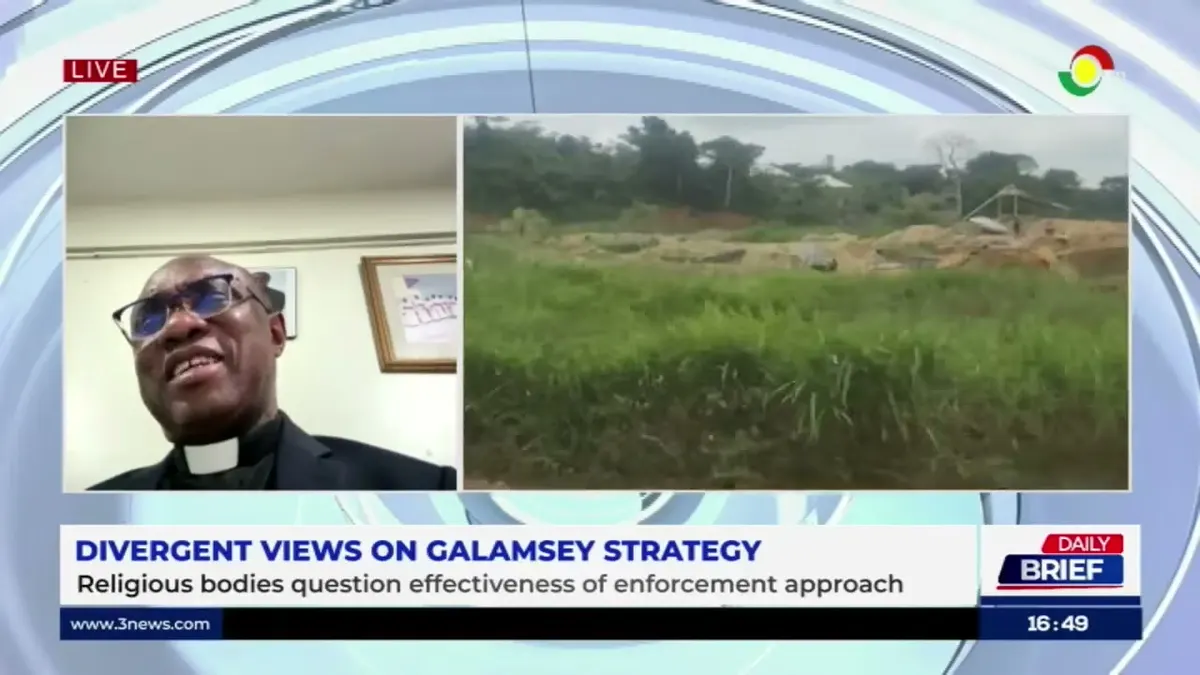

Ghana's Lands Ministry has pushed back against sharp criticism from the Catholic Bishops' Conference over the government's efforts to tackle illegal small-scale mining — commonly known as galamsey — insisting that concrete steps have already been taken to bring the sector under control. The ministry's defence came during an appearance on TV3's Daily Brief, where spokesperson Zambaga Rufai Saminu outlined what the ministry considers a credible record of action.
What the Ministry is pointing to
Zambaga Rufai Saminu told TV3 that the government's approach includes the establishment of 14 mining cooperatives and the operationalisation of the Gold Board as key pillars of a broader strategy to formalise and regulate small-scale gold mining across the country. The ministry's position is that formalisation — bringing illegal miners into a structured, legally accountable framework — is a more sustainable solution than enforcement alone.
The Gold Board, which was set up to provide oversight of Ghana's artisanal and small-scale mining sector, is intended to serve as the central body through which licensed miners sell their gold, thereby reducing smuggling, environmental destruction and the involvement of criminal networks. The cooperative system, meanwhile, is designed to organise individual miners into regulated groups that can be monitored and held to environmental and safety standards.
Why it matters for Ghana
Galamsey remains one of Ghana's most damaging and politically charged crises. The destruction of water bodies, farmlands and forest reserves by illegal miners has reached alarming levels over the past decade, threatening the country's food security, drinking water supply and biodiversity. Major rivers — including the Pra, Birim and Offin — have been severely polluted, affecting millions of Ghanaians who depend on them.
The Catholic Bishops' Conference has been among the most consistent and vocal critics of successive governments' failure to bring the menace under control. The conference's secretary made clear on TV3 that, in the church's view, the measures cited by the ministry remain insufficient given the scale and urgency of the problem. The bishops have long argued that political will, rather than policy frameworks on paper, is what has been lacking.
This tension reflects a wider frustration in Ghanaian civil society. Many environmental advocates, traditional rulers and community leaders feel that formalisation efforts, however well-intentioned, have repeatedly been undermined by weak enforcement, corruption and the sheer economic desperation that drives people into illegal mining in the first place.
The bigger picture
The exchange between the Lands Ministry and the Catholic Bishops' Conference is a microcosm of a long-running national debate about how best to address galamsey. Critics of the formalisation approach argue that it can inadvertently legitimise destructive practices if not paired with strict environmental oversight. Supporters contend that criminalisation without alternatives simply pushes miners underground and makes the situation harder to manage.
Ghana has attempted various crackdowns over the years, including the deployment of military task forces and the introduction of community mining schemes, with mixed results. The current administration faces pressure from both international partners — who tie certain financing and trade arrangements to environmental governance — and domestic constituencies who rely on small-scale mining for their livelihoods.
As both sides continue to exchange positions publicly, Ghanaians watching the debate will be hoping that the conversation translates into measurable improvements on the ground — cleaner rivers, restored farmlands and a mining sector that serves the national interest rather than undermining it.
Source: 3News





Comments (0)
Be the first to comment.