
Kantamanto's Cast-offs Become Art: Ghanaian Designer Transforms Fashion Waste Into a Bold Environmental Statement
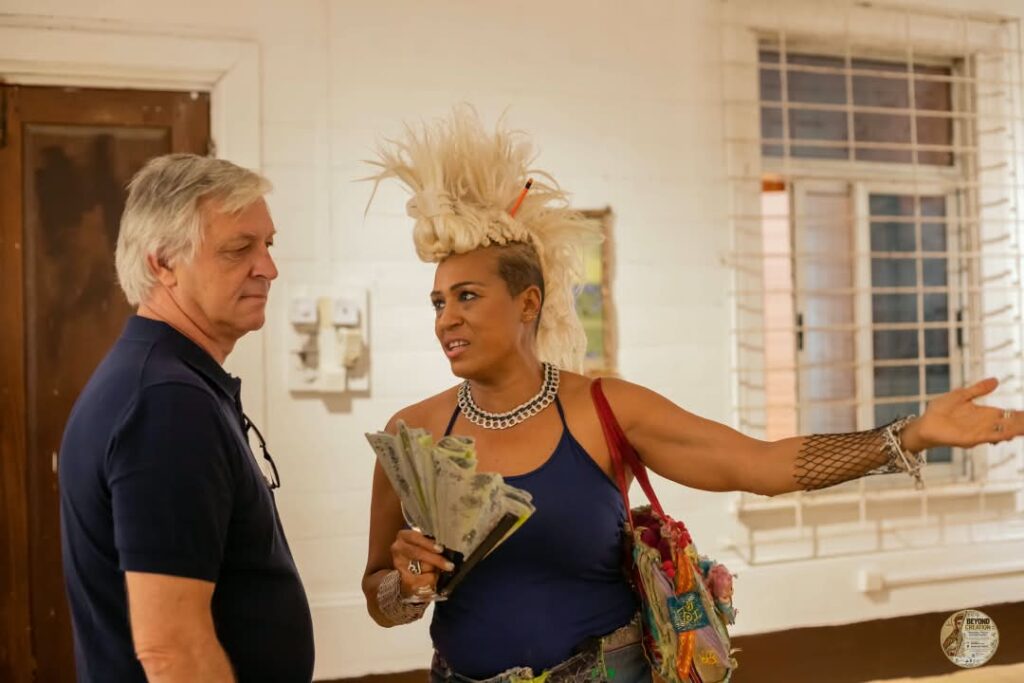

Every week, roughly 15 million garments pour into Kantamanto Market in Accra. Approximately 40 per cent of them will never be worn again — ending up in drains, dumpsites and on Ghana's beaches. Ghanaian fashion curator Beatrice "Bee" Arthur has taken that uncomfortable reality and transformed it into a powerful work of art that is now on display at the Accra Art Centre.
Her installation, titled JEAN-ESIS: Chapter One, brings together discarded denim from Kantamanto, used tyres from neighbourhood vulcanisers, dead tree branches collected from a cemetery, rubber gloves, textile offcuts and ageing mannequins. Together, these objects form a visually arresting critique of the global fashion industry and the environmental burden it places on countries like Ghana that sit at the receiving end of the world's second-hand clothing trade.
What the installation is saying
The work forms part of a larger exhibition — BEYOND CREATION: Humanity, Nature and Spirituality, a Universal Message — organised in collaboration with the Embassy of Italy. The exhibition opened on 4 October and runs until 4 November 2026. It features approximately 40 artists, around 90 per cent of whom are Ghanaian, and is curated by Nuna Adisenu-Doe and Andrea Walter Ghia.
Arthur spent four weeks assembling JEAN-ESIS: Chapter One, drawing her materials from various corners of Accra. The mannequins — some nearly 20 years old — are used deliberately. They represent garment workers in denim factories across Asia who are routinely exposed to the dyes, bleaches and chemicals used in the production of jeans, linking the global supply chain to individual human cost.
A hand-stitched and hand-painted serpent sits at the heart of the installation. Arthur deliberately reframes the serpent's symbolism — rather than temptation or danger, it stands here for wisdom, regeneration, fertility and hope. The choice signals that the work is not simply a lament; it is also a call to reconsider our relationship with consumption and waste.
Why it matters for Ghana
The second-hand clothing trade — known in Ghana as obroni wawu, loosely translated as "dead white man's clothes" — is deeply woven into the country's economic and cultural fabric. Thousands of traders, tailors and repair artisans depend on Kantamanto for their livelihoods. The market is one of the largest of its kind in West Africa, drawing bales of used clothing imported from Europe, North America and Asia.
But the sheer volume of imports means Ghana absorbs not only the usable garments but also an enormous quantity of waste that was never meant to stay. According to estimates by The Or Foundation, a non-profit active in Kantamanto, the roughly 40 per cent of weekly arrivals that cannot be resold creates a waste crisis that strains drainage systems, beaches and landfill sites across Accra and beyond.
Arthur's installation makes this contradiction visible and impossible to ignore. By physically placing Kantamanto's discards inside a formal art space alongside diplomatic and cultural figures — Italy's Ambassador to Ghana and Togo, Laura Ranalli, and Dr Fio Richardson Commey, Special Aide to the Minister for Tourism, Culture and Creative Arts, both attended the opening — it forces a conversation that typically stays confined to environmental advocacy circles into the realm of culture and public dialogue.
Recognition and collaboration
The project reflects a growing willingness among Ghanaian creatives to use art as a vehicle for social and environmental commentary. Arthur acknowledged the role of Wakefield Wisdom Ackuaku, Acting Executive Director of the National Commission on Culture, and Eric Ohene-Larbi, Greater Accra Regional Director of the Centre for National Culture, in making the collaboration with the Italian Embassy possible.
- JEAN-ESIS: Chapter One uses only reclaimed and discarded materials sourced across Accra.
- The broader exhibition runs at the Accra Art Centre until 4 November 2026.
- The work challenges audiences to connect everyday clothing choices to global environmental consequences.
For Ghanaians who pass through Kantamanto daily — whether as buyers, sellers or observers — Arthur's installation offers something rare: a mirror held up to a familiar scene, asking what responsibility the world shares for the waste it ships across oceans.
Source: MyJoyOnline




Comments (0)
Be the first to comment.