
Nico Wayo's 'Apampam Store' Puts Accra's Street Hawkers Centre Stage in Powerful New Exhibition


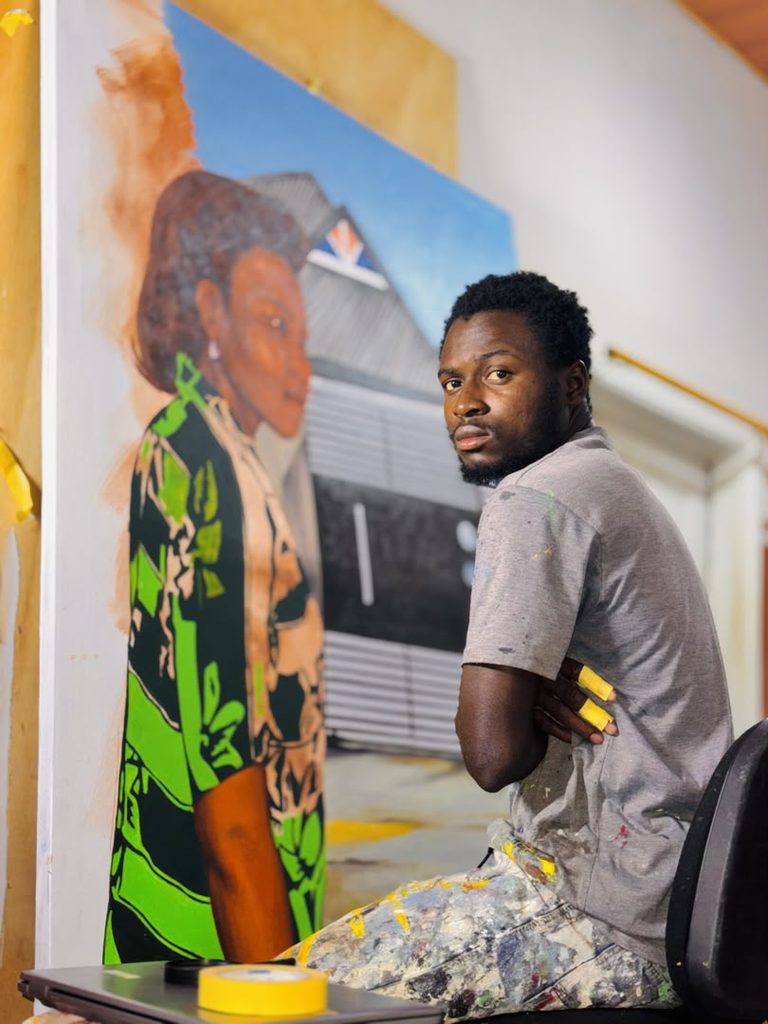
They weave between vehicles in gridlocked traffic, balancing trays of sobolo, kelewele, bofrot and plantain chips on their heads — and for years, many Accra residents have barely given them a second glance. Now, a Ghanaian artist is demanding that they do exactly that. Nicholas Tettey Wayo, widely known as Nico Wayo, has opened a striking new solo exhibition that transforms the everyday hustle of street hawkers into compelling, thought-provoking art.
Inside Apampam Store
The exhibition, titled Apampam Store — a phrase that translates roughly as "shop on the head" — is currently running for one month at the Christiansborg Archaeological Heritage Project (CAHP) Centre in Osu, Accra. It marks Wayo's first solo show at the prestigious venue.
The works on display are paintings that capture the daily reality of vendors who navigate Accra's chaotic streets, moving through stalled traffic to sell food, drinks and other essentials to motorists and passengers. The title is a deliberate nod to the ingenuity of these traders: with no fixed premises, their entire shop travels with them, balanced atop their heads.
The range of goods depicted in the paintings is itself a portrait of Accra street culture — from chilled FanYogo and fresh pawpaw to popcorn, meat pies, groundnuts and freshly fried kelewele. These vendors are, as any regular commuter knows, as much a part of the city's identity as its landmarks.
Wayo has spoken candidly about what drives the work. "We call them hawkers. I call them life savers. This work archives their hustle as art. They don't just sell in traffic. They save us in traffic," he said at the opening. The sentiment challenges the prevailing narrative that often frames street hawking as a problem to be managed rather than a livelihood worthy of dignity and recognition.
Why it matters for Ghana
Street hawking occupies a complex space in Ghana's urban landscape. Accra's informal economy is vast, and hawkers represent one of its most visible layers — providing an essential service to millions of commuters who rely on them for quick, affordable meals and refreshments during long commutes. Yet these traders frequently face harassment, periodic crackdowns by city authorities, and a broader social stigma that dismisses their work as low-status or disruptive.
Wayo's exhibition arrives at a moment when conversations about Ghana's informal economy, urban development and the livelihoods of ordinary workers are particularly relevant. Rapid city expansion, changing traffic patterns and ongoing debates about the regulation of street trading mean that the futures of thousands of hawkers remain uncertain. By placing their stories within a gallery setting — an environment typically associated with formal, high-status culture — the artist is making a deliberate statement about whose labour deserves to be celebrated.
Beyond the social commentary, the exhibition also highlights the role that contemporary Ghanaian art can play in documenting everyday life. Paintings that archive the specific foods, routines and faces of street traders serve as a cultural record, capturing a dimension of Accra that rarely features in formal historical accounts.
A conversation worth having
Art exhibitions that engage directly with social realities are increasingly gaining prominence in Ghana's creative scene, and Apampam Store fits squarely within that tradition. The CAHP Centre in Osu — itself a space dedicated to preserving and interpreting heritage — provides an apt setting for work that asks viewers to reconsider what counts as part of the city's living culture.
For Nico Wayo, the message is straightforward: the people who keep Accra fed during its infamous traffic jams deserve more than a fleeting glance through a car window. They deserve a frame on the wall.
- The exhibition runs for one month at the CAHP Centre in Osu, Accra.
- Apampam Store means "shop on the head," reflecting how vendors carry goods.
- Wayo describes street hawkers as "life savers" rather than a nuisance.
Source: The Ghanaian Times




Comments (0)
Be the first to comment.