
Jospong Group Takes Ghana's Waste Solutions to Global Stage at COP31 in Türkiye
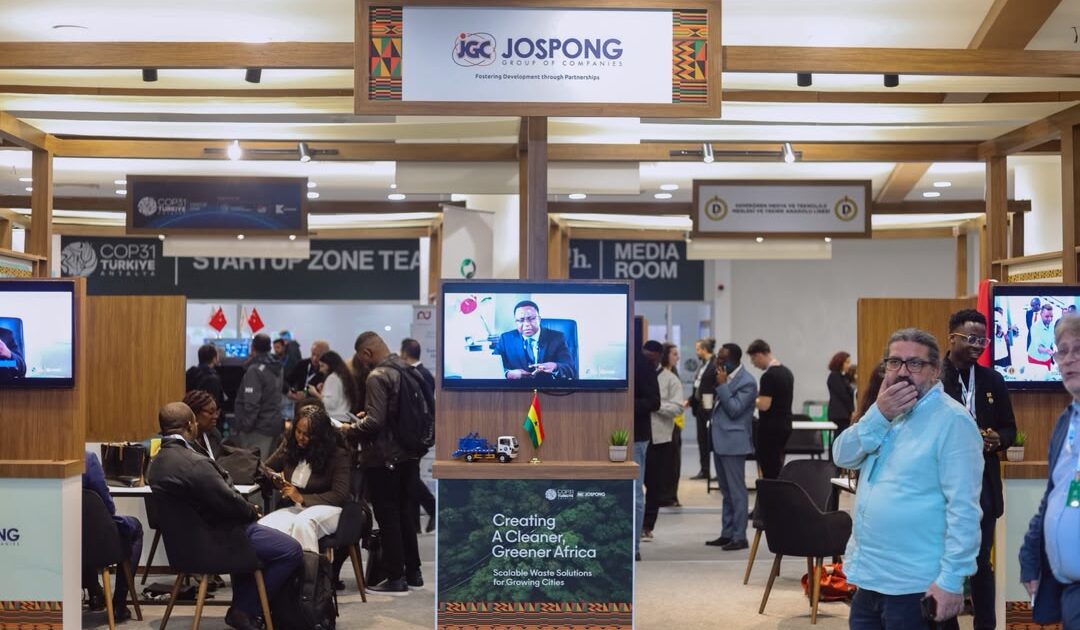

One of Ghana's most prominent conglomerates, the Jospong Group of Companies, is flying the flag for African-developed environmental solutions at the 31st United Nations Climate Change Conference (COP31), currently under way in Antalya, Türkiye. Led by Executive Chairman Dr Joseph Siaw Agyepong, the Group's delegation is engaging governments, investors and development institutions on the case for investing in integrated waste management infrastructure across the continent.
What Jospong is putting on the table
At the heart of Jospong's exhibition is its Integrated Recycling and Compost Plant model, known as IRECOP — a system designed to handle municipal solid waste through sorting, material recovery, recycling and compost production. Rather than routing waste to landfills, the approach seeks to extract value from discarded materials, returning nutrients to agricultural land through compost and recovering recyclable resources for reuse.
The Group argues this model delivers multiple benefits simultaneously: reducing greenhouse gas emissions that arise from poorly managed waste, generating employment along the waste value chain and supporting food production through affordable compost supply. Representatives from Zoomlion Ghana Limited, the Accra Compost and Recycling Plant (ACARP), the Asian African Consortium and other businesses within Jospong's green portfolio are all part of the delegation presenting these solutions to prospective partners.
COP31, which opened on 9 November and is scheduled to run until 20 November 2026, has drawn together climate policymakers, private sector organisations, development finance institutions and technical experts to advance commitments on sustainable development and climate action. For Jospong, the conference represents a platform to position Ghana-developed expertise within that global conversation.
Why it matters for Ghana
Ghana, like many rapidly urbanising African nations, faces serious and growing challenges around solid waste management. Cities including Accra generate significant volumes of municipal waste daily, much of which ends up in overflowing landfills or is disposed of informally, contributing to public health risks and environmental degradation. The economic cost — in healthcare, flooding exacerbated by blocked drainage, and lost agricultural productivity — is substantial.
Jospong's international push carries potential benefits for the domestic picture as well. Securing foreign investment and development finance for waste infrastructure could accelerate the expansion and improvement of sanitation services within Ghana itself, while partnerships formed at COP31 may bring in technical expertise and capital that complement local government efforts.
There is also a broader reputational dimension. When Ghanaian companies demonstrate scalable, commercially viable solutions to global environmental problems on a stage like COP31, it strengthens the argument that Africa need not be solely a recipient of climate finance but can be a source of practical innovation. Jospong has previously engaged at COP28 in Dubai in 2023, where discussions with Switzerland's Federal Office for the Environment centred on a reported €20 million arrangement linked to internationally transferred mitigation outcomes from its recycling facilities — signalling that international interest in its model is not new.
Ambitions across the continent
Beyond Ghana, Jospong has stated expansion ambitions spanning close to 30 African countries. The Group is already engaged in markets including Nigeria, Kenya, Angola, Liberia, Guinea, The Gambia and Togo, and is using COP31 to pursue partnerships that could support the development of integrated waste recovery facilities in those and other markets.
The Group frames this expansion explicitly around job creation, improved urban sanitation and circular economy development — goals that align closely with the priorities of African governments and international development finance institutions. Whether the discussions in Antalya translate into concrete investment commitments and signed agreements remains to be seen, but the ambition is clear: to establish Ghanaian private-sector capability as a credible and bankable partner in Africa's environmental transformation.
- Jospong's IRECOP model processes waste through sorting, recycling and compost production.
- The Group is targeting expansion into nearly 30 African countries from its Ghana base.
- Earlier COP28 talks involved a reported €20 million mitigation outcomes arrangement with Switzerland.
Source: MyJoyOnline


Comments (0)
Be the first to comment.