GNAT demands presidential intervention as salary row between unions and Education Ministry intensifies

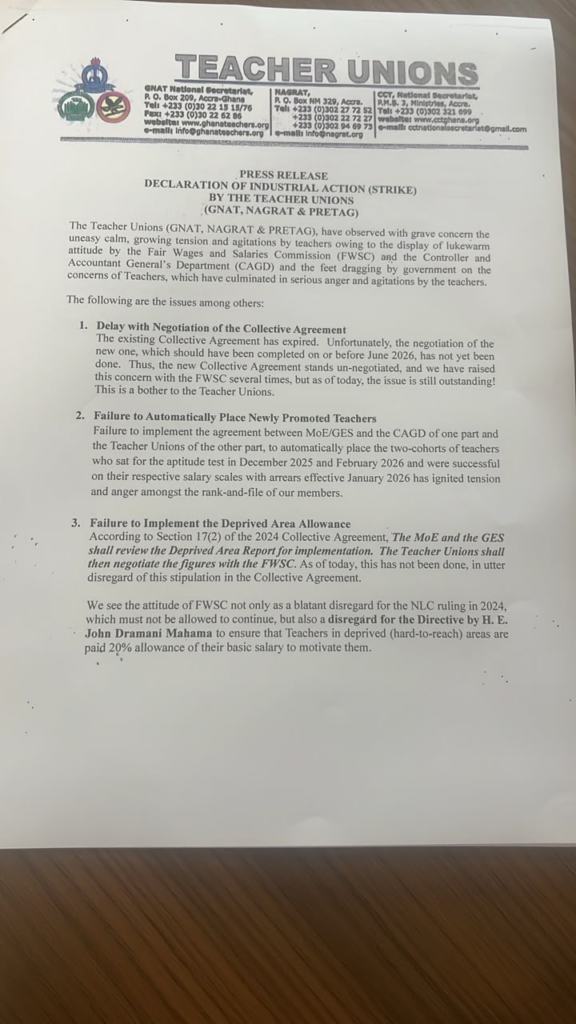
The General Secretary of the Ghana National Association of Teachers (GNAT), Thomas Musah Tanko, has escalated pressure on the government by appealing directly to President John Mahama to intervene in the ongoing salary crisis affecting newly promoted teachers. The call represents a significant hardening of GNAT's position and signals deepening frustration over what the union describes as unresolved payment delays.
Tanko's statement reflects mounting tensions between the Education Ministry and Ghana's teaching workforce, with GNAT suggesting that the Education Minister's authority may be insufficient to resolve the impasse. The appeal to presidential intervention underscores the gravity of the situation and the union's willingness to escalate disputes beyond ministerial level if immediate action is not forthcoming.
The salary dispute and its scope
Newly promoted teachers in Ghana have faced significant delays in receiving salary adjustments following their promotions, creating financial hardship for educators and their families. The delays have prompted GNAT to mount increasing pressure on government, with the union positioning itself as the primary advocate for affected teachers. The dispute centres on the implementation of promotion-related salary enhancements, which should have been processed promptly following official announcements of teacher advancement.
This is not an isolated grievance but part of broader concerns about teacher remuneration and the government's commitment to honouring public sector salary obligations. The fact that GNAT has felt compelled to seek presidential intervention suggests that routine channels of communication between the union and the Education Ministry have proven ineffective.
Why this matters for Ghana
Teacher morale and retention remain critical challenges for Ghana's education system. Delayed salary payments to promoted teachers risk further demoralising the profession at a time when the country requires sustained investment in human capital development. When educators face payment uncertainty, it can trigger industrial action that disrupts the academic calendar and affects millions of students nationwide.
The escalation to presidential level also reflects broader questions about government responsiveness and public sector management. If the Education Ministry cannot resolve internal salary disputes without presidential intervention, it raises concerns about administrative capacity and the government's ability to manage its commitments to public workers efficiently. For parents and students, any strike action could mean lost school days and interrupted learning at a crucial time in the academic year.
Additionally, the dispute has implications for Ghana's teaching profession as a whole. Competitive and timely remuneration is essential for attracting and retaining quality educators, particularly as Ghana competes with international opportunities and other professional sectors for talented individuals. If newly promoted teachers face delays in receiving deserved salary increases, it sends a demoralising message about career progression and government commitment to rewarding excellence in the classroom.
What comes next
The ball is now in the court of the presidency. GNAT's appeal represents both an opportunity for swift resolution and a potential flashpoint if the government fails to respond decisively. Should President Mahama's office choose to engage, it will signal to public sector workers that sufficiently coordinated pressure can escalate disputes upward. Conversely, if the appeal goes unheeded, GNAT and other teacher unions may feel compelled to call industrial action.
The coming days will be crucial in determining whether government prioritises quick resolution or allows the dispute to fester, potentially triggering strikes that would harm Ghana's students and undermine public confidence in the administration's capacity to manage its own workforce.
Source: 3News



Comments (0)
Be the first to comment.