
GH¢50,000 Private Donation Puts Obuasi East's Ambulance Back on the Road After Five Years
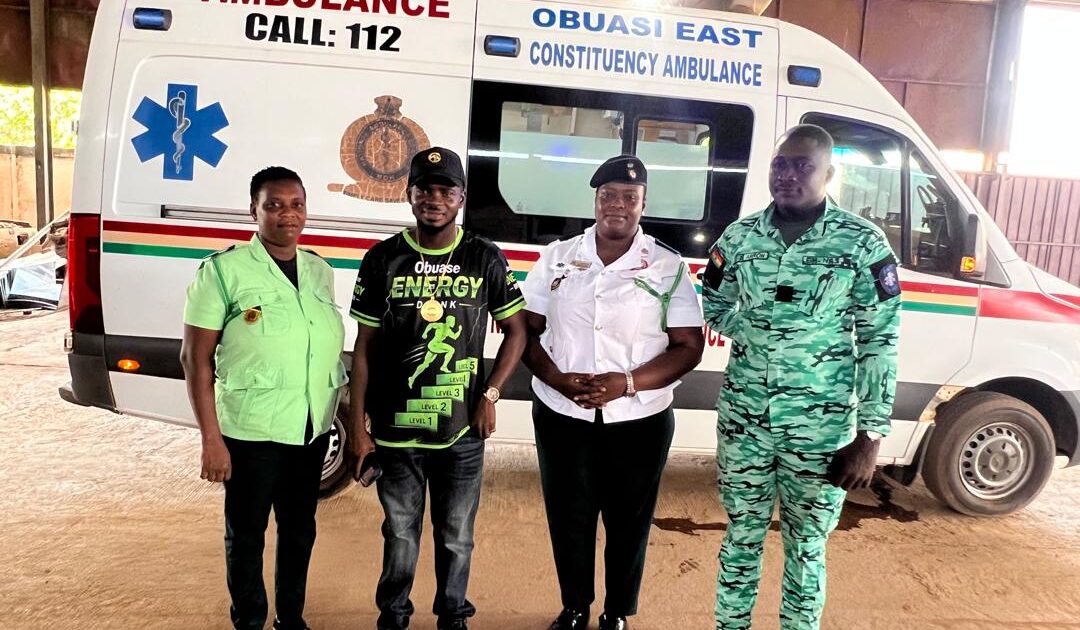

Emergency healthcare in the Obuasi East Municipality has received a significant boost after a privately funded repair brought the area's ambulance back into operation — ending a nearly five-year wait that had left residents without dedicated emergency transportation. The GH¢50,000 that made it possible came not from government coffers, but from Dr Collins Amo, the Chief Executive Officer of Obuasi Beverages, whose donation covered the cost of replacing a faulty engine and carrying out the repairs needed to return the vehicle to road-worthy condition.
How the Restoration Came About
The ambulance had been sitting idle for close to five years, leaving the Obuasi East Municipality without its own dedicated emergency response vehicle. As far back as 2024, the Obuasi Municipal Assembly acknowledged that the ambulance had been off the road for roughly three years following an accident, meaning the surrounding communities were left to depend heavily on the single ambulance serving the broader Obuasi area — a situation that stretched emergency response capacity considerably.
The repaired vehicle was formally handed over to Dr Amo by the Obuasi East Municipal Ambulance Director, SAEMT Irene Cynthia Akornor, in a presentation that acknowledged both the urgency of the need and the significance of the private contribution. SAEMT Akornor noted that a functional ambulance is indispensable for transporting accident victims, critically ill patients and pregnant women requiring urgent care — groups who cannot afford delays when emergencies arise.
The Municipal Chief Executive, William Kofi Adzowu, also praised Dr Amo's intervention, stating that the prolonged absence of the ambulance had created real hardship for residents requiring emergency medical transportation. He used the occasion to appeal to other businesses and individuals in the area to follow suit and invest in essential public services.
Why It Matters for Ghana
Ghana's ambulance service has long struggled with inadequate coverage, ageing vehicles and underfunding — problems that disproportionately affect communities outside the major cities. In rural and peri-urban municipalities like Obuasi East, a single non-functional ambulance can mean the difference between life and death for someone suffering a medical emergency several kilometres from the nearest hospital.
This restoration is a reminder of how critical private-sector participation has become in plugging gaps within Ghana's public health infrastructure. Dr Amo made that point directly, calling on corporate institutions and individuals to see themselves as partners in complementing government efforts rather than passive bystanders. His track record in the Obuasi area supports that message: in 2024, he donated GH¢200,000 towards the Heal Komfo Anokye Project, which is raising funds to renovate the Komfo Anokye Teaching Hospital in Kumasi — one of Ghana's busiest referral hospitals. Earlier in 2025, he also donated locally produced baby diapers to health facilities in both the Obuasi East and Obuasi West municipalities to support maternity and child-welfare services.
Taken together, these contributions point to an emerging model of community-centred corporate responsibility that health authorities across the country may well look to as a template, particularly as government budgets remain under pressure.
What Comes Next
With the ambulance now operational, the Obuasi East Municipality is better positioned to respond to medical emergencies across its communities. SAEMT Akornor expressed confidence that the restored vehicle would strengthen the municipality's overall emergency healthcare delivery, especially for vulnerable residents who rely most on public services.
Nonetheless, the episode raises broader questions about the sustainability of relying on philanthropic donations to keep essential public health infrastructure running. While private generosity has provided a timely solution in this instance, sustained investment and maintenance funding from official sources will be necessary to ensure the ambulance — and others like it across Ghana — do not fall into disrepair again.
Source: MyJoyOnline





Comments (0)
Be the first to comment.