Ghana's Road Death Toll Demands Urgent Behaviour Change, Says DVLA Boss
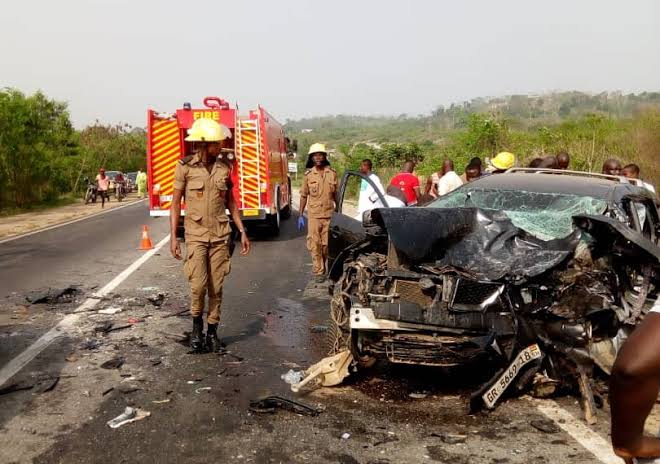
Ghana is confronting a deepening road safety emergency that threatens thousands of lives annually. New figures paint a stark picture: the country recorded 14,743 road crashes in 2025, killing 2,949 people and injuring 16,714 others. The crisis has intensified in 2026, with 4,899 crashes between January and April claiming 1,009 lives and leaving 5,982 injured. Behind these numbers lie grieving families, orphaned children, and communities stripped of productive citizens.
Speaking as Chairman of the Driver and Vehicle Licensing Authority (DVLA) Governing Board, George Spencer Quaye has identified human behaviour as the critical missing piece in Ghana's road safety puzzle. While infrastructure deficits and enforcement gaps remain serious concerns, Quaye argues that a fundamental shift in driver attitudes represents the single most powerful intervention available to the nation right now.
The Multi-Layered Problem
Road accidents in Ghana stem from interconnected failures across multiple systems. Poor road maintenance, inadequate lighting, missing signage, and faded lane markings create hazardous conditions. Corruption within enforcement agencies—where traffic violations can reportedly be negotiated away—undermines the deterrent effect of regulations. Yet these systemic issues mask a deeper cultural problem: widespread driver indiscipline.
Quaye describes a troubling pattern of behaviour on Ghanaian roads. Drivers accelerate through amber lights rather than slowing down. Many increase speed approaching junctions instead of exercising caution. Lane discipline is routinely ignored, right-of-way rules disregarded, and basic principles of traffic order abandoned. This culture of indiscipline, the DVLA chief argues, is directly costing lives.
Why It Matters for Ghana
Road accidents represent an invisible public health crisis in Ghana, yet their economic and social impact rivals major disease outbreaks. Each fatality removes a wage earner from a household, removes a taxpayer from the economy, and removes a potential contributor to Ghana's development. The burden falls disproportionately on productive-age adults and skilled workers—precisely those Ghana needs most.
The crisis also reflects wider governance challenges around compliance, accountability, and institutional coordination. If Ghanaians cannot follow basic traffic rules, questions arise about civic discipline more broadly. Conversely, successfully improving road safety would demonstrate that coordinated institutional effort backed by behaviour change can address even entrenched national problems.
For ordinary Ghanaians, these statistics translate to personal risk every time they enter traffic—whether as drivers, passengers, motorcyclists, or pedestrians. Improving road safety directly affects quality of life, family security, and economic participation.
The DVLA's Multi-Pronged Response
The DVLA, alongside the National Road Safety Authority, Ghana Police Service Motor Traffic and Transport Department, and the National Insurance Commission, is implementing a coordinated strategy combining technology, regulation, and enforcement.
Planned initiatives include:
- RFID-enabled vehicle number plates (rolling out next year) for enhanced vehicle identification and traceability
- A driver demerit point system to hold repeat violators accountable
- Enhanced roadworthiness certification using integrated technology and live vehicle inspection
- A new driver licence acquisition regime to eliminate fraud, prevent fake licences, and strengthen driver testing
- Risk-based insurance models linking premiums to driver behaviour—rewarding safe driving and penalising repeat accidents
- Automated speed enforcement, commercial driver retraining, expanded school-based road safety education, and a national road safety database
However, Quaye emphasises that technology and enforcement cannot succeed alone. Legislation means nothing if attitudes do not change. Automated systems will fail if drivers view them as obstacles to circumvent rather than safety measures to respect. The missing ingredient—and the most powerful safety device ever created—remains the human attitude.
Road safety is positioned as a shared national responsibility. Success will be measured not by revenue increases or digital transformation alone, but by whether Ghana reverses its lethal statistics, ensures only qualified drivers operate vehicles, and ultimately saves lives. That transformation begins the moment each driver grips the steering wheel.
Source: MyJoyOnline




Comments (0)
Be the first to comment.