Ghana's resource wealth wasted by poor governance, warns University of Ghana economist
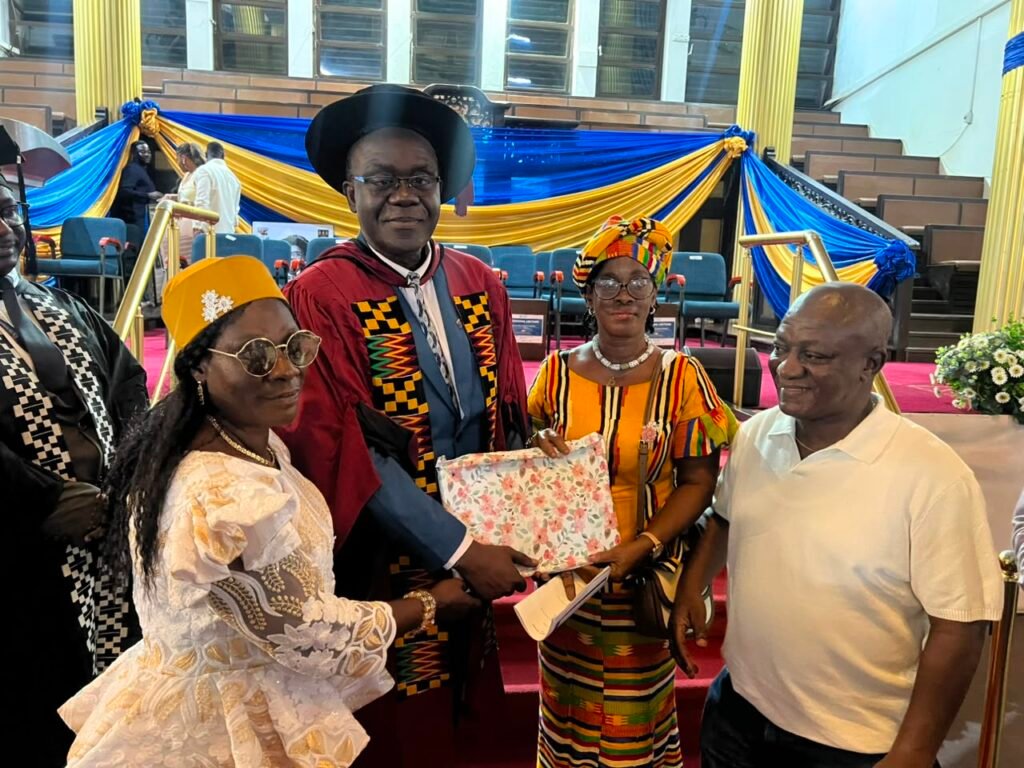
Ghana's abundant natural wealth is being squandered through weak governance and accountability, according to Professor Daniel Kwabena Twerefou, Director of the Academic Quality Assurance Directorate at the University of Ghana. Speaking at his inaugural lecture on Thursday, 30 July 2026, the economics professor warned that without decisive action, the country's long-term development prospects remain severely compromised by ongoing environmental degradation.
The lecture, held at the University of Ghana's Great Hall and titled "Ghana's Stewardship Paradox: Rich in Resources, Poor in Governance," highlighted a troubling contradiction: whilst Ghana possesses substantial forests, fisheries, fertile agricultural lands, mineral deposits and biodiversity, successive governments have failed to convert these assets into sustainable prosperity. Instead, critical environmental systems—rivers, farmlands and forests—continue to deteriorate under pressure from illegal mining, deforestation and pollution.
The environmental crisis threatening Ghana's future
Prof. Twerefou emphasised that Ghana's natural resources should be treated as productive capital requiring careful stewardship rather than disposable commodities. The destruction of riparian vegetation, pollution of water sources by illegal small-scale mining operations, and degradation of agricultural land directly threaten food security, drinking water availability and public health across the country. These issues are not merely environmental; they strike at the foundation of economic development itself, as every productive activity depends on healthy natural systems.
The professor advocated for several practical reforms: applying the "polluter pays" principle to hold environmental offenders financially accountable; adding value to minerals before export to generate greater revenue; and integrating indigenous knowledge systems that historically promoted sustainable resource management. He also criticised the current enforcement environment, noting that Ghana has expanded its environmental laws and institutions considerably, yet weak implementation, overlapping mandates, insufficient resources and poor accountability continue to undermine effectiveness.
Institutional weakness behind governance failures
Whilst Ghana has established numerous environmental agencies and passed legislation in recent decades, the actual stewardship of natural resources has weakened rather than improved. Vice Chancellor Professor Nana Aba Appiah Amfo, who chaired the event, described this as a shift from "stewardship without bureaucracy" to "bureaucracy without sufficient stewardship." Creating institutions and laws alone cannot solve environmental problems without genuine commitment, integrity and transparent accountability from government officials and stakeholders.
Why it matters for Ghana
Ghana's natural resource sector remains central to national revenue and employment, yet current management patterns are unsustainable. Illegal mining continues to poison water supplies serving millions of Ghanaians, whilst forest loss accelerates climate vulnerability and threatens cocoa production—the country's largest export. The lecture signals growing concern among academic and institutional leaders that Ghana risks inheriting a degraded resource base within the next generation unless governance improves immediately. Policy-makers, civil society and citizens must engage with these warnings seriously, as the alternative is an economy unable to support its growing population. The challenge now is converting such advocacy into concrete political action, institutional reform and enforcement.
Source: The Ghanaian Times

Comments (0)
Be the first to comment.