
Ghana's Next Chief Justice: What We Know As The Search Continues
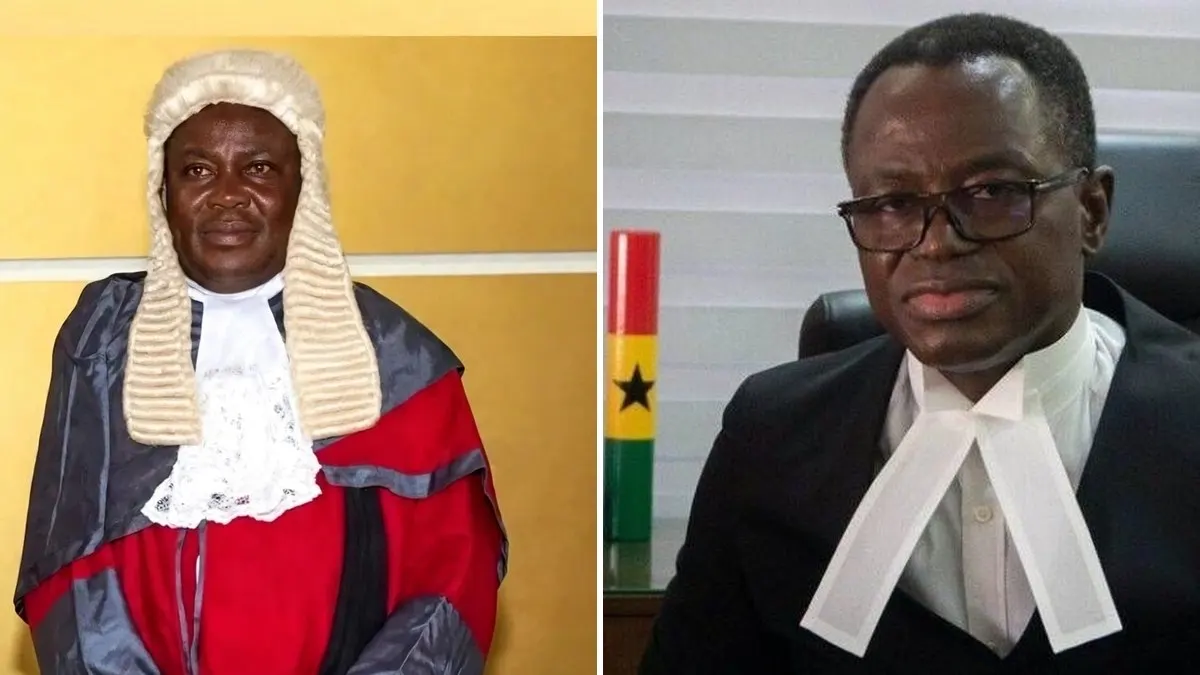

Ghana remains without a confirmed substantive Chief Justice nominee as the Presidency has yet to make an official announcement, even as Justice Emmanuel Yonny Pwamang's tenure as Acting Chief Justice approaches its Wednesday deadline. Reports circulating in the media have named two Supreme Court justices — Justice Pwamang and Justice Kulendi — as frontrunners for the position, but neither name has been formally put forward by the Office of the President.
Where things stand
Justice Pwamang has been serving in an acting capacity following the removal of former Chief Justice Gertrude Torkornoo, who was dismissed after a successful petition process under the constitutional provisions governing the conduct of superior court judges. His acting mandate is set to expire this Wednesday, creating urgency around the appointment of either a substantive nominee or a new acting head for the judiciary.
Published media accounts have pointed to two names — Justice Pwamang and Justice Kulendi — as the individuals most likely to be put forward by President John Mahama. However, the Presidency has not confirmed either name, and no formal nomination has been transmitted to the Council of State or Parliament as required under Ghana's 1992 Constitution.
Under the Constitution, the President nominates a Chief Justice in consultation with the Council of State, and the nominee must be approved by Parliament before assuming office. The process is therefore not simply a presidential decision — it requires consultation, vetting and legislative endorsement, which means even once a name is announced, there are further steps before a new Chief Justice can be sworn in.
Why it matters for Ghana
The Chief Justice is not merely the head of Ghana's court system — the office carries enormous constitutional weight. The Chief Justice chairs the Supreme Court, plays a pivotal role in electoral dispute adjudication, and is central to the functioning of Ghana's democracy. With the country still navigating the political and institutional aftermath of the previous Chief Justice's removal — itself a deeply contested process — the identity and credibility of the next occupant of that office will be closely watched by lawyers, civil society, opposition politicians and ordinary Ghanaians alike.
The timing also matters. Any prolonged uncertainty at the top of the judiciary risks undermining public confidence in the independence and stability of the courts. Legal practitioners and governance advocates have stressed the importance of a transparent and constitutionally sound nomination process, particularly given the controversy that surrounded the removal of Justice Torkornoo.
What to watch next
The coming days are critical. With the acting mandate expiring on Wednesday, the Presidency faces pressure to either extend an acting arrangement or move decisively toward a substantive nomination. Any nominee will then face scrutiny before the Council of State and, ultimately, Parliament — a process that could take additional weeks depending on the political temperature.
Ghanaians across the political spectrum will be watching closely to see whether the eventual nominee commands broad respect within the legal community and whether the confirmation process is handled transparently. The Chief Justice appointment is one of the most consequential decisions a sitting president can make, and President Mahama's choice will shape the character of Ghana's judiciary for years to come.
- Justice Pwamang's acting Chief Justice mandate expires this Wednesday.
- Both Justice Pwamang and Justice Kulendi have been named in media speculation, without confirmation.
- Ghana's Constitution requires Council of State consultation and parliamentary approval for the appointment.
Source: 3News


Comments (0)
Be the first to comment.