Ghana's Language Policy Clarified: Mother Tongue Instruction from KG, Foreign Languages Stay Optional
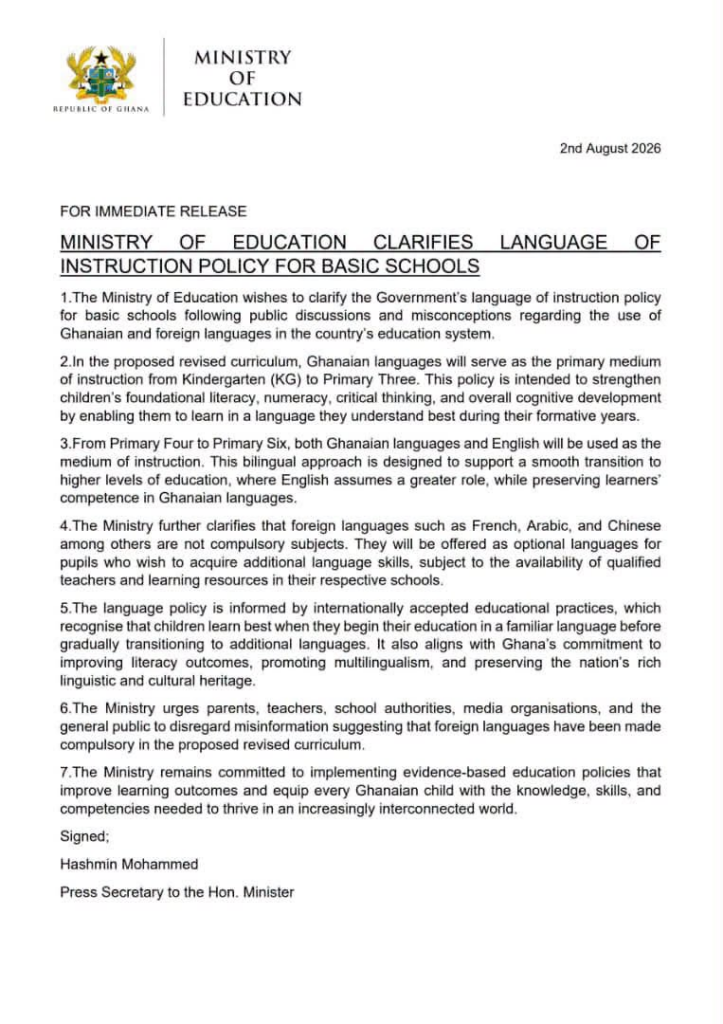
Ghana's Ministry of Education has moved swiftly to quash widespread public anxiety over proposed changes to the country's language of instruction policy, issuing a formal clarification that categorically denies claims that foreign languages would become compulsory in basic schools.
The statement comes after weeks of intense debate on social media and public platforms, with many Ghanaians expressing concern that pupils would be forced to study languages such as French, Arabic and Chinese from the early years of primary education. The Ministry has now firmly rejected these claims, emphasising that the revised curriculum places Ghanaian languages at the centre of early learning, whilst foreign languages remain optional.
How the New Language Policy Will Work
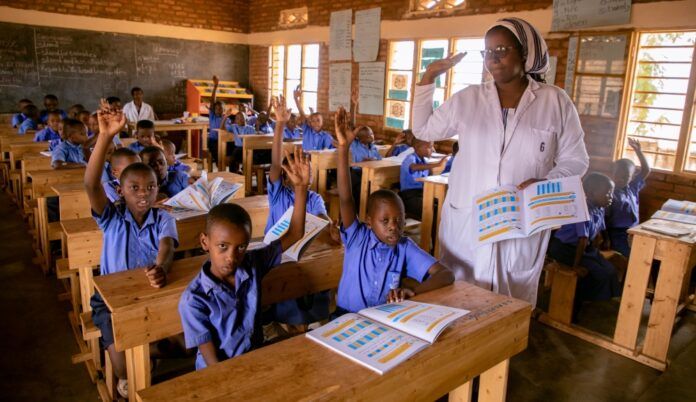
Under the proposed revised curriculum, Ghanaian languages will serve as the principal medium of instruction from Kindergarten through to Primary Three. This approach, the Ministry explains, is designed to ensure children begin their education in a language they understand fluently, allowing them to grasp concepts more quickly and participate confidently in the classroom.
Starting in Primary Four, the policy introduces a bilingual model where both Ghanaian languages and English will be used as mediums of instruction, continuing until the end of Primary Six. This gradual transition is intended to prepare pupils adequately for secondary education, where English becomes increasingly dominant, whilst simultaneously preserving their proficiency in mother tongues.
According to education authorities, foreign languages—including French, Arabic and Chinese—will only be offered as optional subjects to pupils who wish to develop additional language skills and where schools possess adequate teaching staff and learning resources. The Ministry stressed that no pupil will be compelled to study these languages under the new framework.
The Educational Research Behind the Policy
The Ministry's position aligns with internationally recognised educational principles. Research from educational institutions and international organisations consistently demonstrates that children achieve superior literacy outcomes, stronger comprehension, and better classroom participation when taught in their first language during formative years. This evidence-based approach, officials argue, supports stronger long-term academic performance.
The revised policy also addresses a broader national concern: the gradual erosion of Ghana's indigenous languages. By maintaining Ghanaian languages alongside English throughout primary education, the Government aims to foster genuine multilingualism whilst ensuring learners remain culturally connected to their heritage.
Why This Matters for Ghana
The clarification reflects growing tension between modernising Ghana's education system and preserving its linguistic diversity. Ghana is home to multiple language groups, and concerns about the dominance of English in schools have long been voiced by cultural advocates and education researchers. This policy attempts to balance both imperatives: equipping children with strong English proficiency for higher education and economic participation, whilst embedding mother-tongue learning as a foundation.
The Ministry's emphasis on relying on official government channels rather than social media reports also signals frustration with misinformation spreading during education debates. As Ghana continues to implement curriculum reforms, clarity from education authorities becomes essential to building public confidence among parents, teachers and communities.
Officials have urged all stakeholders—parents, educators, school administrators and media organisations—to disregard circulating misinformation and seek official clarification directly from the Ministry of Education before forming judgments about the proposed reforms. The Government reaffirmed its commitment to implementing evidence-based policies designed to strengthen teaching and learning standards across Ghana's basic education system.
Source: MyJoyOnline

Comments (0)
Be the first to comment.