
Ghana's Jubilee Oil Bounces Back as Cheap Shipping and Chinese Demand Drive Strong Price Recovery


Ghana's flagship Jubilee crude oil has staged a notable comeback in international markets, with prices rising by between $4.55 and $5.75 per barrel following a difficult October. The recovery has been driven by a sharp fall in global shipping costs and a return of buying interest from Chinese refiners — developments that together have made West African crude significantly more attractive to Asian buyers.
What happened and why prices moved
The price gains were reported by commodity pricing specialists Argus Media, whose head of West African crude pricing, Sanjana Shivdas, confirmed the improvement across both Ghana's Jubilee and Congo's Djeno grades. The rebound comes after October proved a tough month for West African oil producers, when elevated tanker freight rates made it more expensive to ship cargoes to both Asian and European destinations, squeezing the competitiveness of Ghanaian and other regional crude on the world market.
Two key factors have now reversed that trend. First, a surge in tanker availability across the Atlantic has pushed shipping costs sharply lower. According to John Ollett, Argus's head of European freight pricing, key tanker rates have fallen by roughly two-thirds from their October peak. On the major Nigeria-to-Europe route alone, the daily cost of hiring a suitable vessel has dropped from more than $500,000 at its height to below $140,000. Lower marine fuel prices have contributed to that fall as well.
Second, Chinese demand has returned in a meaningful way. Both state-owned Chinese refineries and independent refiners based in Shandong province have re-entered the market for West African crude, providing the buying pressure needed to push differentials higher. The logic is straightforward: when shipping costs fall, a Chinese refiner can afford to pay more for the crude itself — such as Jubilee — without the total delivered cost becoming uncompetitive compared with supplies from other regions.
Why it matters for Ghana
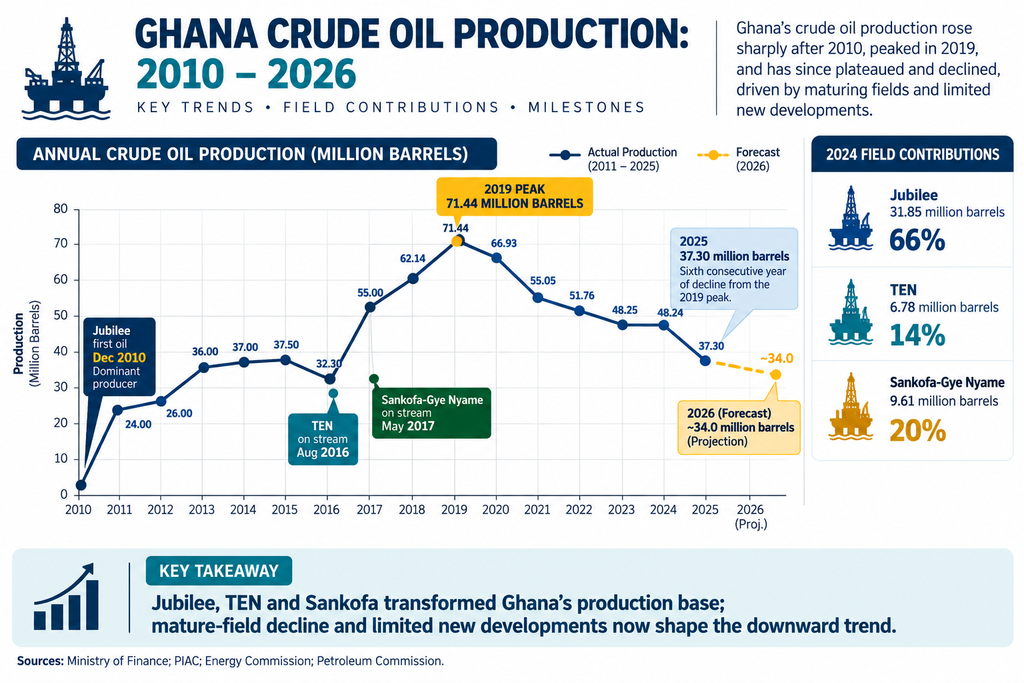
Crude oil exports remain the single largest source of foreign exchange for Ghana. The Jubilee field, operated by a consortium that includes Tullow Oil and Ghana National Petroleum Corporation (GNPC), is the centrepiece of the country's upstream oil sector. Price movements of several dollars per barrel may seem technical, but they translate directly into revenue for the Ghanaian state, which depends heavily on oil receipts to fund public spending and service its debt obligations.
Ghana has been navigating a demanding economic environment, including an International Monetary Fund-supported debt restructuring programme aimed at restoring fiscal stability. In that context, stronger oil prices and improved export competitiveness are genuinely welcome news. Every additional dollar earned per barrel exported contributes to foreign exchange reserves and government revenues at a time when both remain under close scrutiny.
The wider West African oil market also benefited. Nigerian grades gained an average of $2.50 per barrel against the Argus North Sea Dated benchmark, while Angolan grade differentials rose by between $1.50 and $8.25 per barrel. Stronger interest from Nigeria's Dangote refinery and independent European and Chinese buyers added further support to the regional market.
The outlook ahead
While the current recovery is encouraging, analysts and traders will be watching whether the conditions that produced it hold. Shipping markets can shift quickly depending on geopolitical developments, vessel availability and fuel prices. Chinese refinery demand, which has shown signs of volatility through 2024, also remains a variable. Independent refiners in Shandong in particular have at times pulled back from West African purchases when alternative supplies become cheaper or domestic demand softens.
For Ghana, the immediate picture is positive. Jubilee crude is once again priced competitively on the world stage, buyers are actively seeking cargoes, and the structural advantage of lower freight costs is working in Accra's favour. Whether that translates into sustained higher revenues will depend on how long these market dynamics persist — and how quickly the next shift arrives.
Source: The Ghana Report



Comments (0)
Be the first to comment.