Ghana's infrastructure push stalls as capital spending falls 40% short, ISSER warns of development risks
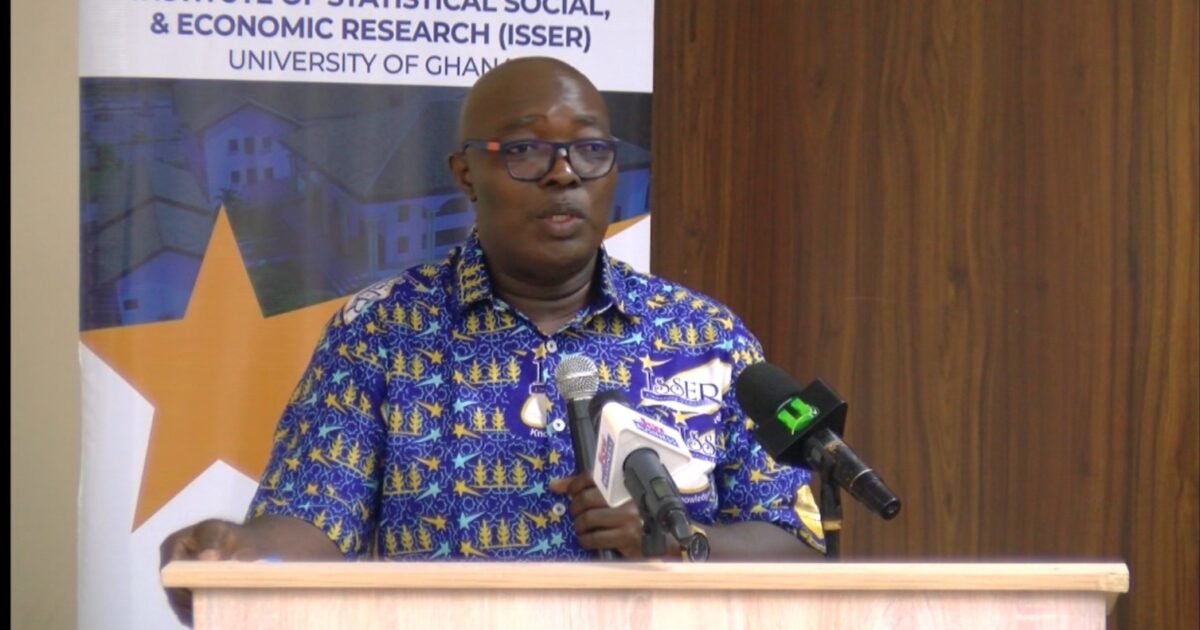
Ghana faces a critical balancing act between fiscal stability and economic growth, with infrastructure investment taking a backseat in the first half of 2026, according to a new assessment by the Institute of Statistical, Social and Economic Research (ISSER).
The research institute's review of the government's Mid-Year Budget Statement reveals a stark shortfall in capital expenditure—the cornerstone of Ghana's development agenda. Despite government pledges to increase infrastructure spending as part of fiscal consolidation, actual capital outlays fell nearly 40 per cent below programmed levels, making it the weakest-performing budget category during the period.
Professor Robert Darko Osei, ISSER's Director, acknowledged the government's success in stabilising macroeconomic conditions but cautioned against prioritising fiscal targets over growth-enabling investments. The delays and bottlenecks affecting the government's "Big Push" infrastructure programme have left many projects stuck at planning stages, contributing little to economic activity.
The construction sector and immediate impact
The effects are already visible in the construction sector, Ghana's engine for employment and industrial development. The sector expanded by just 1.3 per cent in the first quarter of 2026—a disappointing result given expectations that major public works would drive meaningful growth. This subdued performance underscores how infrastructure delays ripple through the broader economy, affecting related industries and dampening job creation prospects.
Prof. Osei emphasised that capital expenditure remains essential for building productive capacity, attracting private investment and diversifying the economy. Without adequate public infrastructure—roads, ports, energy facilities and digital networks—Ghana cannot achieve the industrial transformation and productivity gains needed to compete regionally and globally.
Why it matters for Ghana
This infrastructure squeeze presents a fundamental policy dilemma facing Ghana's leadership. The country is locked in fiscal consolidation efforts to restore economic credibility and manage debt—steps necessary to maintain investor confidence and currency stability. However, these stabilisation measures cannot come at the cost of the investments that drive long-term prosperity.
Ghana's development trajectory depends on building world-class infrastructure to support manufacturing, agriculture, tourism and technology sectors. Public investment in ports, railways, electricity generation and telecommunications is essential before private capital will flow into productive ventures. When government cuts corners on infrastructure to meet fiscal targets, it defers the structural transformation Ghana desperately needs.
The ISSER review highlights two interrelated challenges: first, the execution gap—government programmes remain difficult to implement efficiently due to poor project sequencing and management. Second, the policy tension between short-term financial stability and long-term growth investment, where stabilisation efforts are inadvertently sacrificing growth prospects.
Path forward
ISSER called for policymakers to pursue a carefully calibrated approach that does not pit growth against stability. The institute urges government to improve project efficiency and execution to ensure limited resources deliver maximum developmental impact. Better sequencing of investments, clearer prioritisation of high-impact projects and streamlined approval processes could unlock infrastructure spending without abandoning fiscal discipline.
The underlying message is clear: Ghana cannot afford to defer its infrastructure agenda indefinitely in pursuit of fiscal targets. The cost of delayed development—in terms of lost competitiveness, foregone jobs and slower poverty reduction—may ultimately prove far higher than the fiscal space gained through expenditure restraint.
Source: MyJoyOnline

Comments (0)
Be the first to comment.