Ghana's bond market slows sharply as investors shift focus to COCOBOD's massive issuance
Activity in Ghana's secondary bond market contracted significantly this week, with turnover plummeting to GH¢1.56 billion—a sharp 28.56% decline from the previous week. The slowdown reflects investor caution ahead of a major government financing initiative and suggests market participants are repositioning ahead of anticipated shifts in liquidity and yield dynamics.
The weakness was broad-based, with trading concentrated in longer-dated securities. The 2031-2034 maturity segment dominated activity, capturing 71.30% of all turnover at an average yield of 13.93%. The 2027-2030 segment accounted for 23.05% of trades at an average yield of 12.37%, whilst post-2035 bonds represented just 5.65% at an average yield of 15.34%. A newly launched September 2030 bond managed only GH¢5.45 million in trades at a weighted-average yield of 11.85%, suggesting limited investor appetite for fresh issuances.
What's driving the slowdown?
Market analysts at Databank Research expect modest improvement in secondary bond activity this week, primarily driven by month-end portfolio rebalancing activities typical of fund managers adjusting their holdings. However, this upside may face significant headwinds.
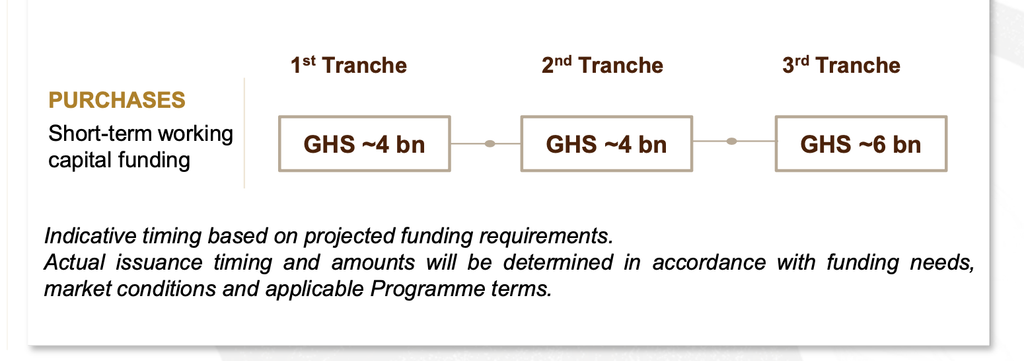
The primary catalyst for the current caution is the anticipated Cocoa Marketing Board (COCOBOD) bond issuance programme. The sizeable GH¢16.3 billion financing drive begins its book-building phase on 28-29 September, with allotment scheduled for 30 September and official issuance on 1 October 2026. This offering comprises two tranches: GH¢2.3 billion in five-year senior unsecured amortising bonds and GH¢14.0 billion in 270-day commercial paper.
Given the scale of COCOBOD's programme, many market participants are expected to redirect available liquidity toward this government-backed opportunity, likely capping gains in secondary market turnover during the coming days.
Why it matters for Ghana
The dynamics reflected in this bond market data reveal important truths about Ghana's domestic debt capital market and investor behaviour. First, the substantial size of the COCOBOD issuance underscores the government's reliance on domestic borrowing to finance critical sectors—cocoa production and export remain central to Ghana's economy and forex earnings.
Second, the shift in investor focus illustrates how major public issuances can disrupt secondary market liquidity. When large portions of available capital are mobilised toward new government debt offerings, existing bondholders may find fewer counterparties willing to trade, potentially widening bid-ask spreads and reducing market efficiency.
Third, the yield curve data suggests investor confidence remains selective. The higher average yields on longer-dated bonds (15.34% on post-2035 securities versus 11.85% on the new September 2030 bond) indicate investors demand substantial risk premiums for extended exposure, reflecting underlying concerns about inflation, currency depreciation, or debt sustainability over extended horizons.
For ordinary Ghanaians, these market movements matter indirectly. Bond yields influence borrowing costs across the economy—higher yields on government debt typically lead to elevated lending rates for businesses and consumers. Conversely, sustained government borrowing crowds out private sector financing and can constrain economic growth.
Market watchers will closely monitor the COCOBOD book-building process and demand for both tranches, as uptake levels will signal investor appetite for extended government exposure and provide clues about broader confidence in Ghana's economic trajectory heading into the final quarter of 2026.
Source: The Ghana Report



Comments (0)
Be the first to comment.