Ghana's anti-galamsey fight must prioritise victim protection, officials urge
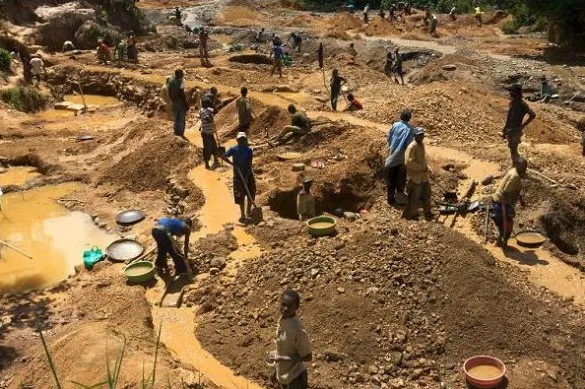
Ghana's campaign against illegal mining must be reframed to centre the protection of trafficking victims trapped within galamsey operations, migration and security officials have warned. Speaking at the 2026 World Day Against Trafficking in Persons commemoration in Aflao, Ketu South Municipality, Deputy Superintendent of Immigration Justice Kudzo Normeshie argued that current enforcement efforts focus narrowly on environmental damage and economic losses whilst ignoring the human cost of illicit mining.
The official, representing the International Centre for Safe Migration and the Handmaids of the Divine Redeemer Sisters' Foundation, highlighted a critical gap in Ghana's response strategy. Whilst task forces conduct raids on mining sites, enforcement operations without accompanying victim identification and protection systems risk scattering trafficking networks rather than dismantling them entirely. Remote galamsey sites, often beyond routine government oversight, have become epicentres of exploitation targeting women, girls and children forced into labour and trafficking.
The invisible victims in mining communities
Illegal mining operations deliberately establish themselves in isolated areas where state presence is minimal, making them ideal environments for traffickers to operate with impunity. The lack of structured protocols to identify victims, coupled with absent referral systems and reintegration support, has allowed trafficking networks to flourish alongside environmental devastation. Many vulnerable persons remain unidentified and unsupported even after enforcement operations disrupt mining activities.
Officials called for Ghana to adopt what they termed a "victim-centred approach" combining traditional anti-galamsey operations with dedicated trafficking response mechanisms. Their recommendations include establishing targeted identification and rescue strategies in mining-affected districts, expanding social welfare and security services in remote communities, and creating secure reporting channels where victims can disclose trafficking without fear of deportation or criminalisation.
Why it matters for Ghana
Ghana's illegal mining crisis has caused severe environmental damage to water bodies and agricultural land, but the human trafficking dimension remains largely invisible in policy responses. The overlap between galamsey and human trafficking reflects how criminal networks exploit Ghana's weak enforcement presence in rural areas to both plunder natural resources and trade in people. Addressing only the mining side whilst ignoring trafficking perpetuates cycles where victims are rescued from one operation only to be exploited in another.
Strengthening victim protection also serves Ghana's international obligations under trafficking protocols and reflects growing recognition that sustainable solutions to galamsey require addressing root causes of vulnerability. Rural communities, particularly those reliant on informal mining, house populations most susceptible to trafficking—unemployed youth, women in poverty, and children outside formal education. Enhanced welfare presence and economic alternatives could simultaneously weaken both mining and trafficking networks.
Recommended actions for government and partners
- Introduce mandatory victim identification training for security forces conducting anti-galamsey operations
- Establish safe reporting hotlines and confidential referral pathways in mining-affected districts
- Deploy dedicated social welfare teams alongside enforcement operations to identify and support trafficked persons
- Intensify investigations into trafficking networks operating within illegal mining supply chains
- Create economic reintegration programmes for trafficking survivors in mining communities
The call comes as Ghana intensifies its environmental response to galamsey following public pressure over water contamination. However, officials argue that enforcement without protection mechanisms may actually displace rather than defeat criminal networks operating within mining sites. A comprehensive approach requires government agencies, security forces, and civil society to work together identifying victims, prosecuting traffickers, and restoring dignity to those exploited within Ghana's illegal mining ecosystem.
Source: MyJoyOnline
Comments (0)
Be the first to comment.