
Ghana needs mandatory financial literacy in schools to fight fraud, economist warns
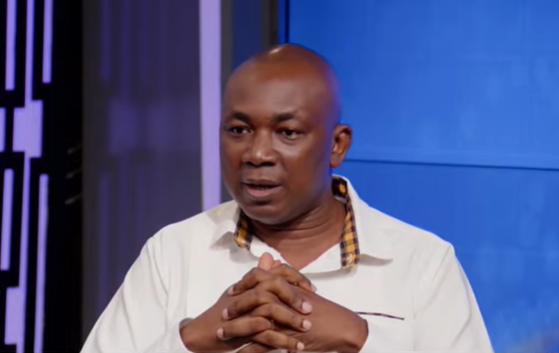

Economist Professor Godfred Alufar Bokpin has issued a stark warning: Ghana's approach to protecting citizens from financial fraud is fundamentally broken, and the solution starts with transforming how the nation educates its young people about money.
Speaking at a JoyNews-Hubtel dialogue on fraud's impact on Ghana's digital economy, Prof. Bokpin argued that financial literacy must become a mandatory, lifelong component of Ghana's education system — beginning in kindergarten and continuing throughout people's careers. His call goes beyond occasional awareness campaigns and targets a systemic overhaul that recognises financial knowledge as essential as reading and writing.
The case for financial education as national priority
Prof. Bokpin drew on a fundamental principle in finance: financial markets are inherently risky spaces that demand minimum knowledge standards from participants. This is not merely about preventing poor decisions; it is about recognising that an unprepared person entering financial markets is vulnerable to exploitation.
The professor noted that Ghana's current strategy is reactive rather than preventive. Institutions typically launch awareness campaigns only after problems emerge — when fraud cases are already damaging consumers and eroding trust in the financial system. This approach is inefficient and leaves ordinary Ghanaians exposed during the critical gap between financial inclusion and financial understanding.
Instead, Prof. Bokpin advocates for integrated, sequential financial education that builds knowledge progressively. A child learning basic budgeting concepts in primary school would move on to understanding savings, credit, and market mechanisms in secondary education. By adulthood, Ghanaians would have the foundational knowledge to navigate bank accounts, mobile money, investment products, and identify common fraud schemes.
Why it matters for Ghana
Ghana's digital economy is expanding rapidly. Mobile money platforms, online banking, and emerging fintech services are bringing financial access to millions of Ghanaians who previously had limited options. However, rapid financial inclusion without corresponding financial literacy creates a dangerous mismatch: more people have access to financial tools but lack the knowledge to use them safely.
Fraudsters exploit this gap systematically. They target digitally connected but financially naive users with schemes ranging from fake investment promises to SIM swap attacks. The cost is not just individual financial loss; it erodes confidence in Ghana's digital financial system and undermines broader economic development goals.
Prof. Bokpin also drew a parallel to digital literacy — a skill now considered non-negotiable for employment and full participation in the modern economy. Financial literacy deserves the same status. A person who is well-educated but financially illiterate faces barriers to building wealth, protecting assets, and making sound life decisions.
A coordinated national strategy needed
Perhaps most importantly, Prof. Bokpin called for coordinated action among all stakeholders — regulators, educational institutions, banks, fintech companies, and civil society organisations. Rather than competing awareness campaigns with inconsistent messaging, Ghana needs unified, reinforced communication about financial risks and best practices.
He also flagged a communication challenge: public education must meet Ghanaians where they are. With many citizens spending significant time online, financial literacy campaigns must increasingly use digital platforms, social media, and online channels rather than relying solely on physical events or traditional media.
Ghana's finance sector regulators and policymakers should take note. Building financial resilience is not the job of any single institution — it requires a whole-of-society approach anchored in education from the earliest ages.
Source: MyJoyOnline



Comments (0)
Be the first to comment.