Ghana needs clearer rules to separate genuine generosity from vote-buying, says Savannah Minister
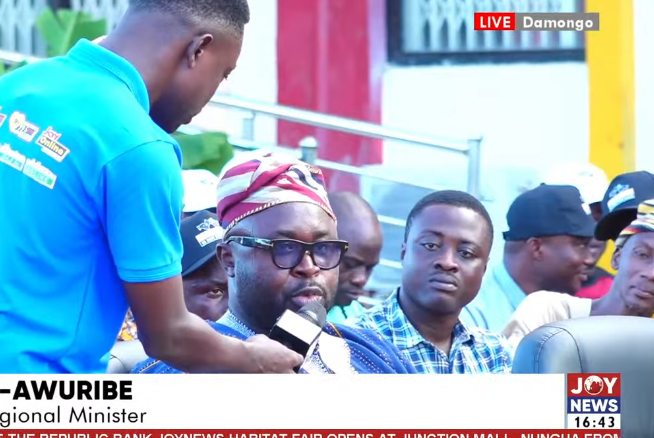
Ghana's electoral landscape faces a growing grey area between legitimate community support and illegal vote-buying, according to Savannah Regional Minister Salisu Be-Awuribe. Speaking to JoyNews in Damongo, the Regional Minister and chair of the Savannah Regional Security Council has called for clear, practical guidelines that would help distinguish genuine acts of generosity from attempts to unlawfully influence voters ahead of elections.
While acknowledging that Ghana's electoral laws already prohibit conduct intended to influence voters—under the Representation of the People's Law, 1992 (PNDCL 284)—Be-Awuribe stressed that the challenge lies in defining what behaviour actually crosses the line into criminal electoral misconduct. The conversation comes as vote-buying allegations grow more prominent in Ghanaian political discourse, raising questions about where politicians and communities should draw boundaries.
The Grey Zone Between Support and Inducement
Be-Awuribe explained that the difficulty is determining the precise moment when an act of support becomes an attempt to influence electoral decisions. He illustrated this through examples from his work as Regional Minister. When he visits communities seeking development projects or to strengthen relationships, locals often offer gifts such as yams, goats, and food as tokens of appreciation. These exchanges, he noted, may involve underlying intent but do not necessarily constitute vote-buying on their face.
The Minister highlighted that the distinction becomes clearer when intent is explicitly expressed. He noted that an isolated act of generosity—such as paying a constituent's school fees or medical bills—cannot alone determine whether someone is engaged in vote-buying. Instead, he argued, Ghana needs defined standards that examine patterns of behaviour and explicit electoral motivation.
Be-Awuribe observed that sudden changes in a politician's behaviour can signal electoral intent to communities. When someone previously unknown for regular community visits or financial assistance suddenly becomes generous and visible, residents often interpret this as a sign that the person intends to contest an election. Such behaviour changes, while not illegal in isolation, can create a cumulative impression that raises electoral law concerns.
Why it matters for Ghana
The debate over vote-buying remains one of Ghana's most contentious electoral integrity issues. As the country approaches elections, clearer guidelines would benefit multiple stakeholders. Electoral officials could enforce laws more consistently, politicians would understand which community engagement crosses into illegality, and voters could distinguish between legitimate representation and improper inducement.
The lack of practical clarity has allowed disputed interpretations of electoral law to persist. The PNDCL 284 prohibits attempts to induce voters, yet enforcement remains inconsistent because law enforcement agencies, courts, and political actors sometimes disagree on what conduct qualifies. Be-Awuribe's call reflects a broader institutional need: Ghana's electoral commission and legal framework must provide concrete examples and standards rather than relying solely on abstract legal language.
This also touches on governance and trust. Ghanaians' confidence in electoral fairness depends partly on whether rules are applied predictably and fairly. Ambiguous standards undermine both enforcement and public perception. Additionally, clearer guidelines would protect politicians from unfounded accusations while enabling legitimate prosecution of genuine electoral offences.
The Path Forward
Be-Awuribe stressed that electoral law violations carry legal consequences and should not be dismissed. However, he emphasised that Ghana must define which specific actions constitute prohibited conduct, moving beyond vague principles to practical distinctions.
The Electoral Commission and relevant stakeholders must work to develop these guidelines. Such efforts could include distinguishing between regular, consistent community engagement (which predates electoral campaigns) and sudden, concentrated financial assistance that appears timed to electoral periods. Guidelines might also differentiate between support provided at an individual's initiative and assistance explicitly tied to electoral appeals.
Until such clarity exists, Ghana's electoral environment will remain vulnerable to both genuine vote-buying and false accusations that undermine democratic trust. The Savannah Regional Minister's intervention adds institutional weight to calls for this critical reform.
Source: MyJoyOnline
-600x356.webp)

Comments (0)
Be the first to comment.