Ghana leads push for stronger African tax cooperation to boost development financing
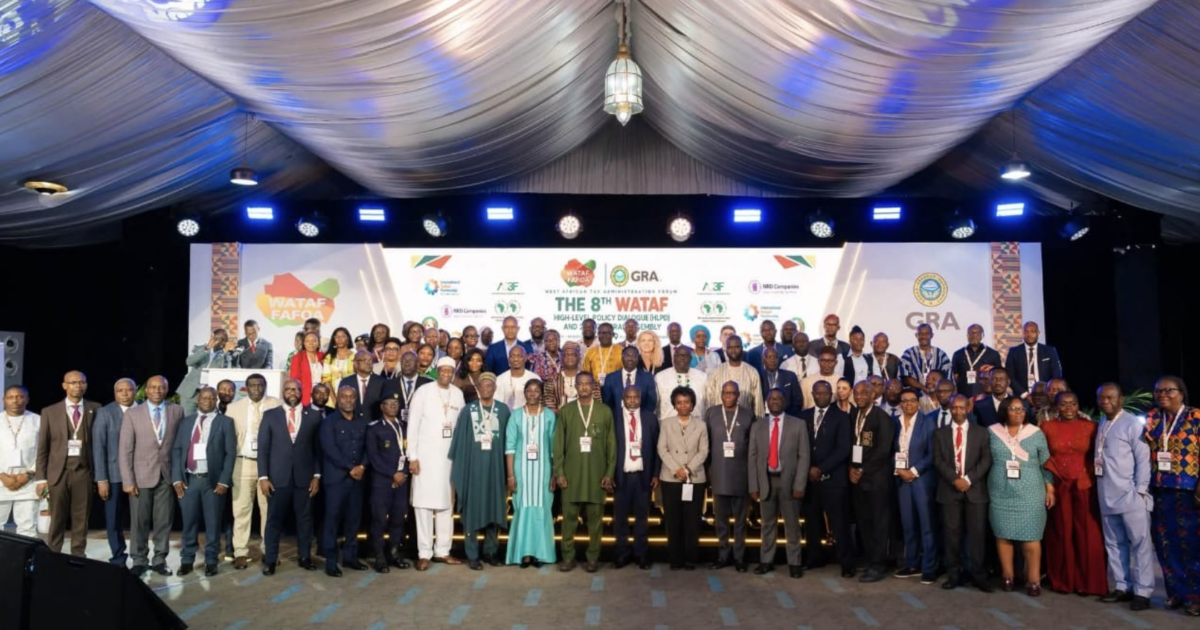
Ghana's Finance Minister Cassiel Ato Forson has called for strengthened tax cooperation across Africa, warning that individual nations can no longer operate in isolation as multinational businesses increasingly structure operations across borders and capital flows rapidly between jurisdictions.
Speaking at the opening of the 8th High-Level Policy Dialogue and 23rd General Assembly of the West African Tax Administration Forum (WATAF) in Accra this week, Forson emphasised that African governments and regional institutions must coordinate more effectively to protect their tax bases and secure the financing needed for continental development.
The tax challenge facing Africa
The Minister highlighted several emerging global tax issues that have become central to Africa's development agenda: base erosion and profit shifting (where multinational companies shift profits to low-tax jurisdictions), taxation of the digital economy, and the implementation of a global minimum tax agreed by international partners.
West Africa alone recorded real GDP growth of 4.8 per cent in 2025, with projections of 4.6 per cent for 2026, yet the region continues facing a significant development financing gap. Ghana Revenue Authority Commissioner-General Anthony Kwasi Sarpong noted that countries must mobilise domestic resources fairly, efficiently and sustainably to bridge this gap.
Tax administrations also face mounting challenges from illicit financial flows, tax evasion, trade under-invoicing and smuggling—all draining billions from government coffers that could fund education, healthcare and infrastructure.
Building African capacity and voice
Forson stressed that Africa must develop a stronger voice in international tax architecture and reduce excessive dependence on external technical expertise. The continent should invest in building indigenous tax administration capabilities, enabling African countries to negotiate from a position of strength when international tax standards are being set.
The Minister called on regional institutions to strengthen member countries' capacity to implement international tax standards whilst equipping them to protect legitimate tax bases. He urged tax administrations to establish mechanisms for sharing taxpayer intelligence, identifying cross-border tax risks and learning from successful compliance interventions across borders.
Why it matters for Ghana
For Ghana specifically, stronger regional tax cooperation offers critical benefits. As a country with significant natural resource revenues and growing digital economy activities, Ghana is particularly vulnerable to profit shifting and tax avoidance strategies employed by multinational corporations. A coordinated West African approach would make it harder for companies to exploit differences between national tax systems.
Additionally, Ghana's development financing needs—whether for infrastructure, healthcare or education—depend heavily on domestic revenue mobilisation. The GRA has been working to formalise informal economic activities and broaden the tax base, but these efforts are more effective when neighbouring countries pursue similar strategies and share information about cross-border tax risks.
Regional cooperation also positions Ghana to influence global tax policy negotiations rather than simply accepting standards set by wealthier nations. As Forson noted, African countries must collectively respond to emerging challenges in international taxation, ensuring that continental development priorities are considered in the design of global tax rules.
The WATAF dialogue represents a platform where West African nations can harmonise approaches, share best practices and build the institutional capacity needed to operate in an increasingly complex international tax environment.
Source: MyJoyOnline



Comments (0)
Be the first to comment.