
From Secret Military Courts to Public Tribunals: How Ghana's Parallel Justice System Evolved and Why It Matters Today
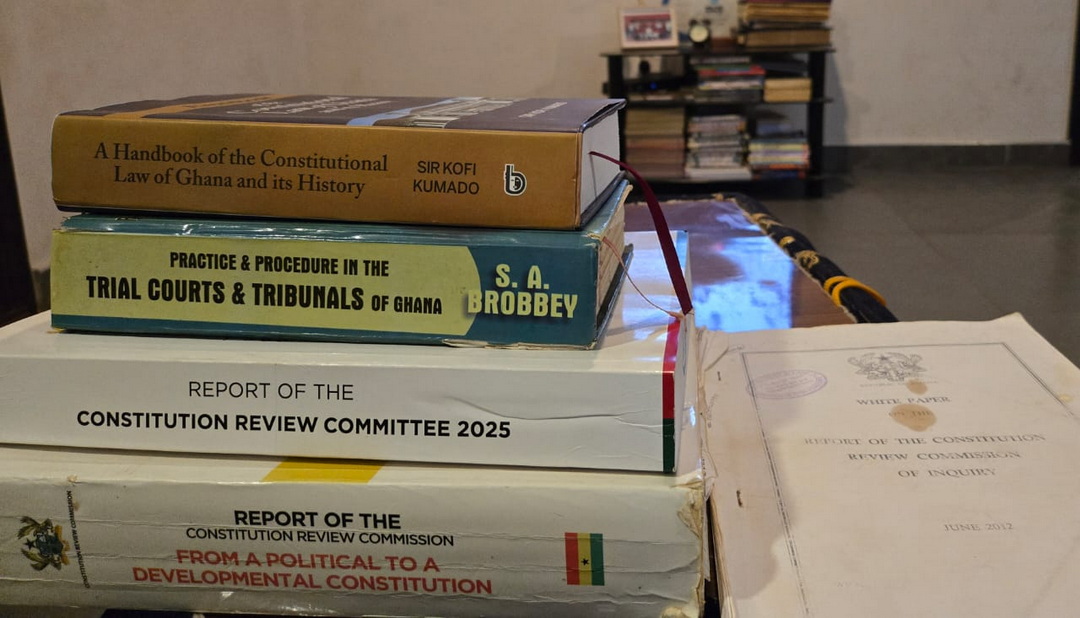
Ghana's approach to justice delivery has undergone profound transformations over the past four decades, shaped largely by the country's turbulent political history. A critical but often overlooked chapter of this journey involves the rise and eventual integration of tribunal systems that operated independently from Ghana's traditional courts, creating a parallel—and deeply contested—mechanism for administering justice.
The modern tribunal system emerged during military rule. When the Armed Forces Revolutionary Council (AFRC) took power in June 1979, it established special courts through the Armed Forces Revolutionary Council (Special Courts) Decree to handle specific criminal offences. However, these courts operated in near-total secrecy. As legal scholar Justice Stephen Alan Brobbey documented, "Not much was known of the special courts or who actually sat to try cases there. The operations and procedures of these courts were also shrouded in mystery, but people were known to have been fined, imprisoned, executed or had their properties confiscated by orders from those courts." There was no right of appeal, and decisions were final and absolute—a stark departure from established principles of fair trial and due process.
The PNDC Era: Tribunals at Their Peak
The tribunal system reached its most expansive and controversial form under the Provisional National Defence Council (PNDC) regime. In 1982, the government introduced the Public Tribunals Law, establishing an entirely separate four-tier pyramid of justice institutions: National, Regional, District, and Community Public Tribunals. These operated completely parallel to Ghana's traditional court hierarchy, creating what amounted to two competing justice systems within one country.
The PNDC's rationale was rooted in deep distrust of the traditional judiciary, which military leaders viewed as elitist, slow, and disconnected from revolutionary ideals. The new tribunals promised swift justice and a more populist approach. Some citizens initially welcomed the speed and accessibility these bodies offered. However, the legal community and human rights organisations roundly condemned them for lacking structural independence, transparency, and adherence to fundamental legal protections. As Justice Brobbey noted, "Until the enactment of Act 459, the courts and the public tribunals operated parallel to one another as two distinct and separate adjudicating institutions. No appeals or reviews in one system could be taken up in the other system."
Why This Matters for Ghana
Understanding this history is essential for contemporary Ghana. The tribunal system's evolution reflects fundamental tensions in the country's post-independence journey: the struggle between efficiency and due process, between populist appeals and institutional integrity, and between military and civilian visions of justice. The public tribunals became deeply unpopular as Ghana transitioned to constitutional democracy, with successive constitutional reviews recommending their total abolition.
The Fourth Republic's 1992 Constitution marked a decisive policy shift. This framework reflected a national consensus that unified judicial oversight and protection of fundamental rights must take precedence over the speed and populism that tribunals promised. The integration that followed represented Ghanaians' collective decision that justice systems, whatever their form, must operate within democratic constraints and be accountable to law rather than to political expediency.
Recent developments, including the passage of the Tribunals Bill 2026, signal ongoing evolution in how Ghana balances access to justice with protection of rights. However, the historical lesson remains clear: judicial systems established outside transparent constitutional frameworks, however well-intentioned, ultimately undermine the rule of law and public confidence in justice institutions. Ghana's tribunal saga offers crucial insights not only for Ghana's own legal future but for any nation grappling with how to deliver swift, accessible justice while maintaining democratic accountability.
Source: MyJoyOnline


Comments (0)
Be the first to comment.