Ellembelle MP calls for Nkrumah's pan-African legacy to shape Ghana's future

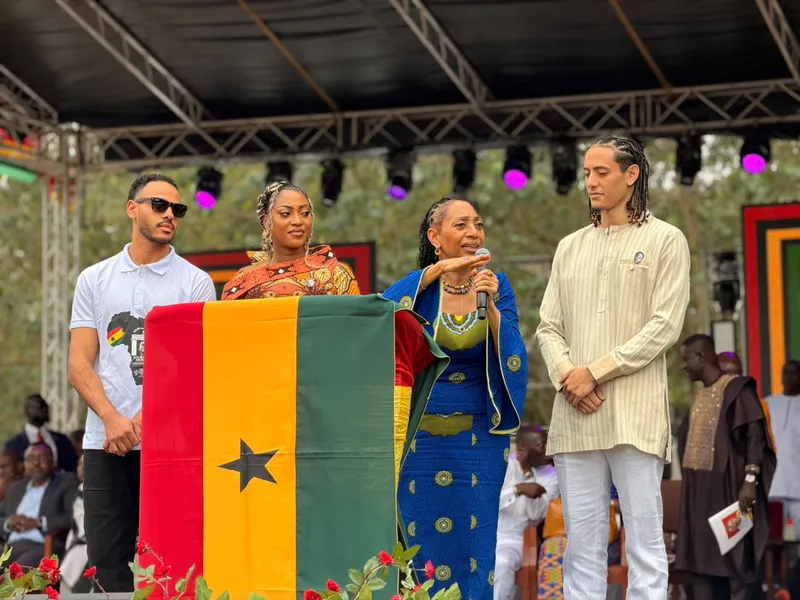
Ghana's vision for continental leadership and national development must be rooted in the ideals championed by Kwame Nkrumah, according to Armah-Kofi Buah, Member of Parliament for Ellembelle and Convener of NkrumahFest. Speaking at the 2026 edition of the festival held in Nkroful, the Ellembelle District of the Western Region, Mr Buah emphasised that Nkrumah's philosophy of pan-Africanism and self-reliance remains deeply relevant to contemporary challenges facing Ghana and the African continent.
Nkrumah's Enduring Legacy
Kwame Nkrumah, Ghana's first President and founding father of independent Ghana, pioneered the concept of pan-Africanism—a movement advocating for the political and economic union of African nations. His vision extended beyond Ghana's borders, seeking to unite the continent against colonial exploitation and build stronger African institutions. Nearly seven decades after Ghana's independence in 1957, Nkrumah's core principles of unity, self-determination, and African-centred development remain cornerstones of continental discourse.
NkrumahFest, held annually in Nkroful—Nkrumah's birthplace—serves as a platform for scholars, policymakers, and citizens to reflect on the former leader's contributions and their applicability to modern governance. The festival has grown into an important cultural and intellectual event that attracts participants from across Ghana and beyond, making it a significant space for dialogue on Africa's developmental trajectory.
Why it matters for Ghana
At a time when Ghana faces economic pressures, infrastructure deficits, and the need to strengthen regional stability through organisations such as ECOWAS, revisiting Nkrumah's framework offers both philosophical and practical guidance. His emphasis on industrial development, education, and regional cooperation directly addresses contemporary policy debates in Ghana's corridors of power.
Nkrumah's vision of a united Africa with coordinated economic systems also resonates with current discussions about intra-African trade, the African Continental Free Trade Area (AfCFTA), and collective defence against external economic pressures. For Ghana specifically, which seeks to play a leadership role in West Africa, drawing on Nkrumah's institutional and diplomatic insights could inform strategies for regional influence and continental engagement.
Moreover, Nkrumah's conviction that African nations must prioritise education and technological advancement as pathways to independence and prosperity speaks directly to Ghana's human capital development challenges. His call for African self-reliance—reducing dependency on foreign capital and expertise—remains pertinent as Ghana navigates debt sustainability and seeks sustainable alternatives to extractive industries.
Sustaining the conversation
The invitation from political leaders like Mr Buah for Ghanaians to engage with Nkrumah's ideas suggests that his legacy should inform—not dominate—contemporary policymaking. While some of Nkrumah's approaches have been critiqued by historians and political scientists, his foundational work on African independence and institutional development is widely acknowledged as transformative.
Events such as NkrumahFest provide opportunities for younger generations of Ghanaians to understand the historical context of their nation's development and to assess which aspects of that legacy can be adapted for present circumstances. As Ghana commemorates its 70+ years of independence and confronts complex regional security, economic, and governance challenges, reflection on founding principles—rather than uncritical repetition—can sharpen national discourse.
The MP's call underscores a broader recognition that national progress and African unity require both institutional reform and ideological consistency grounded in proven historical frameworks.
Source: 3News


Comments (0)
Be the first to comment.