ECG warns Ghanaians of meter scams and fake MoMo payment demands
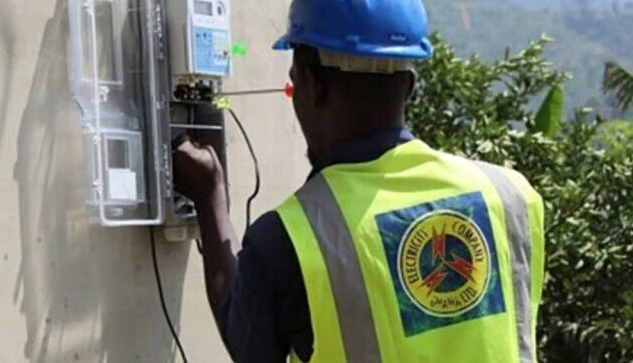
The Electricity Company of Ghana (ECG) has issued a stern warning to its millions of customers after a surge in scams targeting households and businesses across the country. Fraudsters are exploiting public trust in the utility provider by posing as ECG staff and demanding mobile money payments or offering metres for sale through unofficial channels.
Dr Charles Nii Ayiku Ayiku, ECG's General Manager for External Communications, outlined two primary schemes currently circulating that have defrauded numerous Ghanaians. The first involves individuals impersonating ECG employees or authorised agents, advertising new metres for purchase via WhatsApp, TikTok and other social media platforms. Victims are promised quick installation and competitive pricing, only to have the fraudster disappear after payment is made. In some cases, customers receive unregistered metres, which ECG classifies as illegal connections and subjects to disconnection.
The second scam typically begins with an unsolicited phone call from someone claiming to represent ECG. The caller informs the customer that their metre is ready for collection or installation, then directs them to pay an activation or processing fee into a personal mobile money account. Once the payment is sent, the scammer ceases all contact.
How to protect yourself
Dr Ayiku emphasised that ECG operates an entirely cashless system and never sells metres through individuals or intermediaries. All legitimate transactions must flow through two official channels: the ECG Power App or the USSD code *226#. Money transferred to personal MoMo numbers never reaches ECG's accounts and will not reflect on customer bills.
The ECG spokesperson advised customers to adopt several protective habits. Never transfer money to a MoMo number provided by a caller, regardless of their claimed affiliation with ECG. Avoid purchasing metres from individuals, online advertisements or private contacts entirely. Always verify staff credentials by requesting an official ECG identity card before allowing anyone access to your home or business. When in doubt about a call's legitimacy, end the conversation immediately and report the number to both ECG and the Ghana Police Service.
Dr Ayiku stressed that scammers succeed by creating artificial urgency, pressuring victims to pay before they have time to verify claims. Customers who take a moment to cross-check information through official ECG channels can easily avoid these traps.
Why it matters for Ghana
These scams represent a significant threat to ordinary Ghanaians, particularly those less familiar with digital payment systems or eager to obtain new electrical connections quickly. As Ghana's electricity infrastructure expands and more customers rely on digital billing, criminals are adapting their tactics to exploit these systems. The scams erode public confidence in ECG services and divert money from households already managing tight budgets. For ECG itself, widespread fraud complicates revenue collection and customer management, affecting the utility's ability to maintain infrastructure and service quality across the country. By educating the public and directing users to official payment channels, ECG aims to protect both citizens and the integrity of Ghana's electrical system.
Source: Ameyaw Debrah


Comments (0)
Be the first to comment.