Development Bank Ghana Launches Major Lending Push for Female Entrepreneurs to Close Finance Gap
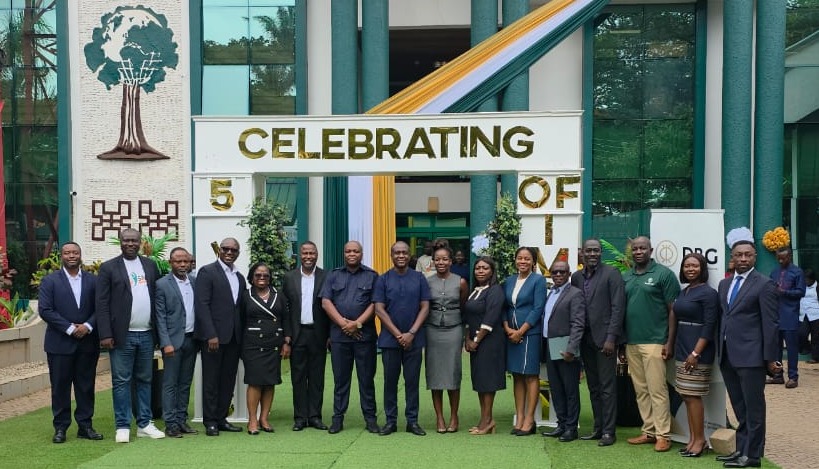
The Development Bank of Ghana (DBG) has launched a dedicated lending programme specifically designed to unlock finance for women-led businesses, recognising female entrepreneurs as a critical but underserved engine of economic growth. The initiative, rolled out through DBG's network of partner financial institutions, addresses long-standing barriers that have prevented Ghanaian women from accessing the capital they need to scale their enterprises.
Speaking at the programme's unveiling during DBG's fifth-anniversary celebrations, Chief Executive Officer Professor Randolph Nsor-Ambala stressed that expanding women's access to finance should be understood as an economic strategy, not a charitable gesture. He highlighted the paradox facing Ghana: despite women's substantial contributions to the national economy, they continue to face significant structural obstacles when seeking credit.
Breaking Down the Barriers
The DBG chief identified three key constraints preventing women entrepreneurs from accessing loans: stringent collateralisation requirements, formalisation challenges and insufficient technical support. Many women lack the assets or documentation lenders traditionally demand, creating a catch-22 where growing businesses cannot access the finance needed to formalise operations.
Deputy Chief Executive Michael Mensah-Baah underscored that lending to women entrepreneurs delivers measurable economic returns. "The returns benefit households, and women contribute immensely to household wealth," he noted. Research consistently shows that when women gain access to credit, their businesses generate stronger employment outcomes and boost household incomes, creating ripple effects across communities.
The new programme operates through DBG's existing partner financial institutions, leveraging their local presence and client relationships. This structure allows the bank to reach female entrepreneurs across Ghana without requiring them to navigate a separate, unfamiliar application process.
Why It Matters for Ghana
Ghana's economic growth depends heavily on private sector expansion, particularly among small and medium-sized enterprises (SMEs). Women-owned businesses represent a largely untapped reservoir of entrepreneurial energy. Since its inception, DBG has disbursed over GH¢2.5 billion to approximately 1,000 businesses and created 41,000 jobs. Notably, more than half of the businesses DBG has supported are already women-led—demonstrating both demand and track record of success.
By formalising support for female entrepreneurs, DBG is addressing a supply-side problem: many women-led businesses fail not from lack of viability but from lack of accessible capital at critical growth moments. The new programme aims to change that equation, enabling female-owned enterprises to expand production, hire workers and contribute more substantially to national output.
The timing is significant as Ghana seeks sustainable economic transformation beyond short-term political cycles. Professor Nsor-Ambala emphasised that building resilient, privately-owned businesses creates development that outlasts changing administrations. Stronger women-led businesses mean stronger household economies and more stable communities.
Early Results and Next Steps
Entrepreneurs who have already benefited from DBG financing through partner institutions shared stories of business expansion and job creation. These testimonies validate the approach: when barriers fall away, women entrepreneurs deliver results. The new dedicated programme formalises this success by removing additional friction points and signalling institutional commitment to women's economic participation.
DBG's structure—working through established financial institutions rather than replacing them—also builds capacity within Ghana's banking sector to serve this market segment more effectively. Over time, this should make women's lending a standard business practice rather than a special initiative.
Source: MyJoyOnline



Comments (0)
Be the first to comment.