Democracy Under Scrutiny: Prof Bokpin Urges Ghana to Move Beyond Party Politics in Defending Free Speech
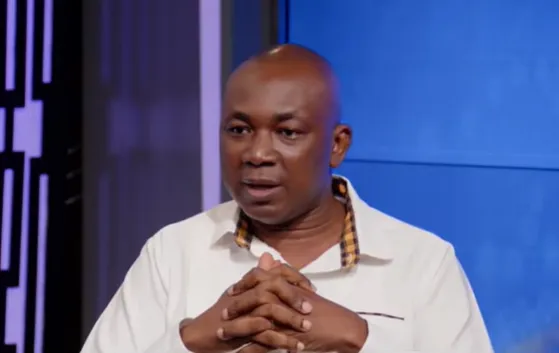
Ghana's democracy faces threats that go far beyond the usual partisan exchanges between the National Democratic Congress (NDC) and New Patriotic Party (NPP), according to economist and Professor of Finance Godfred Bokpin, who has urged the nation to engage in a more substantive examination of institutional independence and freedom of expression.
Speaking on JoyNews' Newsfile programme on Saturday, August 8, Prof Bokpin argued that Ghanaians have become accustomed to dismissing concerns about democratic erosion as merely political score-settling between the two major parties. However, he contended that the country possesses sufficient historical experience under both NDC and NPP governments to objectively assess whether genuine patterns of democratic backsliding exist.
Moving Beyond Partisan Accusations
Prof Bokpin emphasised that Ghana's debate on democratic threats must transcend the typical "I do you, you do me" cycle of accusations and counter-accusations that characterises electoral periods. Instead, he proposed that citizens and institutions examine the evidence impartially to determine whether emerging patterns could genuinely undermine Ghana's democratic foundations.
"We've seen how the NDC behaves when they are in opposition. We've seen how the NPP behaves when they are in opposition and also when they are in power," he noted, suggesting that comparative analysis of both parties' conduct across different political contexts could yield valuable insights into systemic vulnerabilities.
The professor specifically highlighted concerns about how political interests have increasingly penetrated public discourse across all platforms, from traditional media to social networks. He observed that political narratives now extend well beyond established political figures to ordinary citizens who amplify or contest messaging through TikTok, Facebook, and other social media channels.
The Social Media Democracy Problem
Prof Bokpin raised alarm about the pervasiveness of political influence throughout the information ecosystem. "If you look at the entire value chain, you see the politics all the way through to TikTok, Facebook, comments that people make and all of that," he explained. This saturation of political messaging in everyday discourse risks creating an environment where citizens' interpretations of events and institutions become increasingly determined by political loyalty rather than evidence.
The concern reflects a broader global challenge: as social media becomes a primary news source for many Ghanaians, particularly younger citizens, the distinction between objective information and politically-motivated narratives grows increasingly blurred. When citizens are exposed to algorithmically-curated content that reinforces existing political beliefs, the foundation for rational democratic deliberation erodes.
Why It Matters for Ghana
Ghana has long positioned itself as a beacon of democratic stability in West Africa, with a track record of relatively peaceful power transfers and competitive elections. However, Prof Bokpin's intervention suggests that this stability may be masking subtle but significant erosions in the quality of democratic institutions and public discourse.
The issues he raises—including threats to free speech, institutional independence, and public confidence in democratic governance—directly affect Ghana's ability to function as a stable democracy. When citizens lose faith in institutions because they perceive them as politicised, or when political loyalties distort citizens' ability to evaluate information objectively, democratic processes themselves become compromised.
For Ghana's future, Prof Bokpin's call for objective, evidence-based examination of these threats represents an important challenge to the political establishment and civil society. Rather than allowing democratic concerns to be dismissed as partisan opportunism, the nation must create space for serious institutional and academic scrutiny of whether Ghana's democratic safeguards remain robust. This conversation becomes increasingly urgent as Ghana navigates complex electoral cycles and faces pressure from both global and regional political trends that can undermine democratic norms.
Source: MyJoyOnline



Comments (0)
Be the first to comment.