
COPTI President Sounds Alarm: Ghana's TVET Sector Starved of Tools, Trainers and Infrastructure


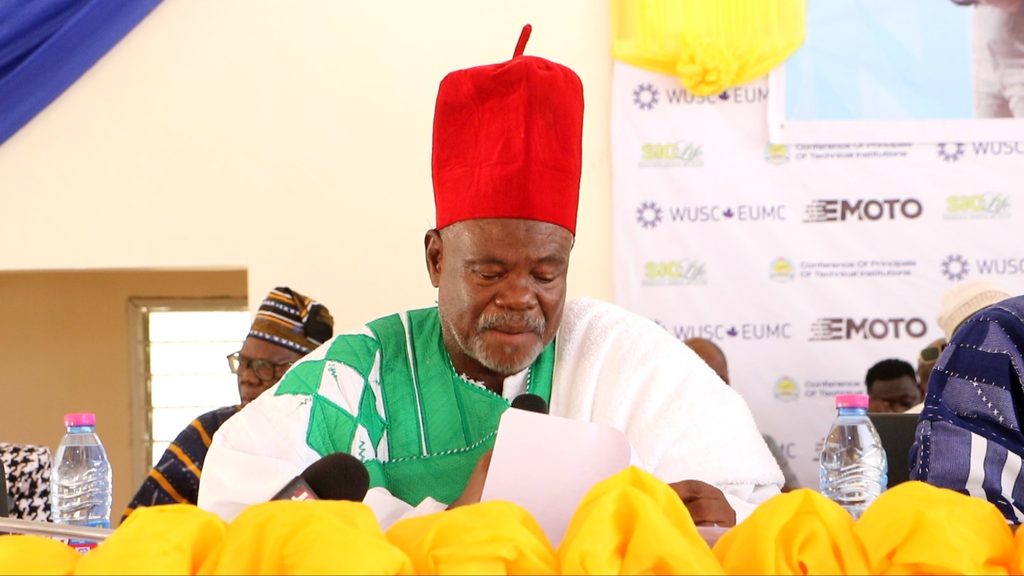
The President of the Council of Polytechnic Teachers International (COPTI) has issued a strong warning that Ghana's Technical and Vocational Education and Training (TVET) sector is in urgent need of serious investment, cautioning that persistent gaps in infrastructure, equipment and qualified trainers are quietly eroding the country's capacity to produce job-ready graduates.
The call comes at a time when Ghana's government and development partners have repeatedly emphasised TVET as a cornerstone of youth employment and industrial development — yet the lived reality inside many technical institutions tells a starkly different story.
A Sector Under Pressure
At the heart of the COPTI President's concerns is the state of workshops and practical learning facilities across TVET institutions. Many of these spaces either lack modern equipment altogether or rely on outdated machinery that bears little resemblance to what students will encounter in the actual workplace. This disconnect is particularly damaging because TVET, by its very nature, is built around hands-on, competency-based training — meaning that without functioning tools and proper environments, the entire model is compromised.
Beyond physical infrastructure, the shortage of qualified and experienced TVET teachers remains a stubborn challenge. Technical education requires instructors who not only understand theory but have genuine, up-to-date industry experience. Where such teachers are scarce, students graduate with qualifications on paper but limited confidence and competence in practice — an outcome that satisfies neither employers nor the learners themselves.
These combined shortfalls, the COPTI President stressed, continue to undermine competency-based training and restrict institutions' ability to deliver the practical skills that industry demands.
Why It Matters for Ghana
Ghana faces a well-documented youth unemployment crisis, with a significant proportion of young people unable to find stable work despite holding some form of qualification. TVET has long been positioned as a key solution — a faster, more practical pathway into employment compared to the traditional university route, and one better aligned with the needs of sectors such as construction, manufacturing, agribusiness, automotive repair and the creative industries.
The government's broader industrialisation agenda, including efforts to grow domestic manufacturing and reduce dependence on imports, also depends heavily on a technically skilled workforce. Without that workforce, factories, workshops and enterprises cannot operate at full capacity, and Ghana's ambitions for value-added production remain difficult to achieve.
Furthermore, Ghana's TVET graduates increasingly seek opportunities across the ECOWAS region and beyond. If their training does not meet regional or international standards — partly because they trained on obsolete equipment with undertrained instructors — their competitiveness abroad is weakened, limiting remittance flows and professional mobility that benefit Ghanaian families.
What Needs to Happen
The COPTI President's appeal points to several clear areas requiring urgent government and private sector attention:
- Modernising workshops: Institutions need regular infusions of up-to-date tools and machinery that reflect current industry standards, not equipment donated a decade ago.
- Attracting and retaining skilled teachers: Competitive conditions of service, continuous professional development and industry partnerships can help bring experienced practitioners into the classroom.
- Sustained public funding: Sporadic or inadequate budget allocations cannot support the long-term infrastructure upgrades that TVET institutions require.
- Private sector engagement: Businesses that benefit from technically trained workers should be active partners in equipping institutions and co-designing curricula.
Ghana has made policy commitments to elevating TVET in recent years, including through the TVET Service established under the Ministry of Education. However, policy intent and budgetary reality have not always aligned. The COPTI President's intervention is a timely reminder that without concrete, funded action, the country risks producing another generation of graduates ill-equipped for the economy's real demands — and squandering one of its most promising tools for tackling youth unemployment.
Source: 3News




Comments (0)
Be the first to comment.