Climate crisis deepens conflict risk across West Africa: why Ghana must rethink peacebuilding strategy
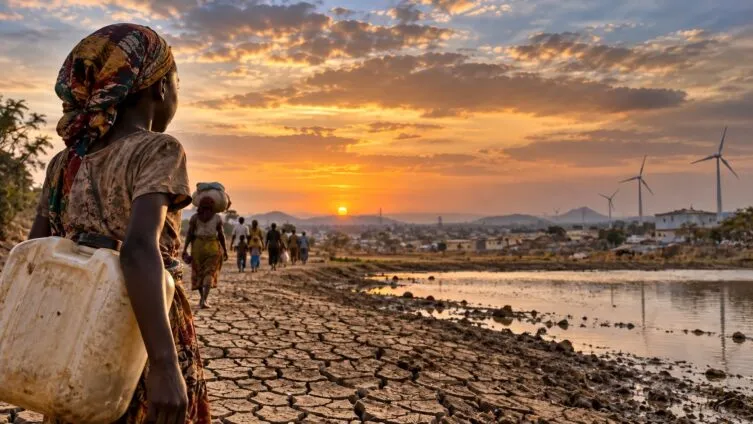
The security challenges facing Ghana and West Africa are increasingly rooted not in political ideology alone, but in scarcity—of water, arable land and reliable harvests. As climate change accelerates droughts, floods and erratic rainfall patterns across the Sahel and coastal regions, competition for basic resources is reshaping conflict dynamics in ways traditional diplomacy has struggled to address.
The connection is not automatic. Climate stress does not inevitably spark conflict. Yet in communities already fractured by underlying tensions, environmental pressure becomes a multiplier. When farmland degrades, water sources dwindle and harvests fail, the social fabric frays faster. For countries like Ghana, where agriculture employs millions and water security is critical to industrial output and household survival, this poses a clear and present challenge.
Water, borders and cooperation opportunities
Water illustrates the complexity. Major river systems—including the Volta, which supplies Ghana's hydroelectric power and supports millions downstream—cross national boundaries. In times of scarcity, demand from upstream nations, agricultural zones and growing urban populations creates genuine competition. Yet history shows this need not lead to confrontation. Effective transnational water-sharing agreements can transform shared resources into reasons for cooperation rather than conflict. The West African region has frameworks in place, but they require regular updating and stronger enforcement as climate impacts accelerate.
Food security presents an equally pressing concern. Ghana's agricultural sector, a backbone of the economy and livelihoods for rural populations, faces mounting pressure from erratic weather. When harvests fail or become unpredictable, household food prices spike, rural incomes collapse and desperation drives migration into urban centres or across borders. Displaced communities place strain on host areas, stretching already-limited services and employment opportunities. Without proactive investment in climate-resilient farming, water infrastructure and income diversification, these pressures will continue to compound social instability.
Why it matters for Ghana: rethinking peace as resource management
For decades, peacebuilding in the region has centred on diplomatic negotiations, political settlements and security sector reform. These remain vital. But Ghana's policymakers must recognise that lasting stability cannot be divorced from people's material security. Communities facing chronic water shortages, land degradation or food insecurity are inherently more vulnerable to manipulation by armed groups, more likely to migrate involuntarily and more susceptible to inter-communal tension over shrinking resources.
This reframing has practical implications. Government strategy should shift toward preventive action: identifying resource vulnerabilities before they escalate into full-blown crises, working with local communities to manage land and water equitably, and investing in infrastructure that builds climate resilience. The private sector—from agribusiness to energy companies—can accelerate this by backing sustainable agriculture, renewable energy projects and water-efficient systems.
Ghana also sits within a regional ecosystem. Cross-border displacement, resource competition and climate impacts in Mali, Burkina Faso, Niger and northern coastal zones directly affect Ghanaian security and stability. Regional cooperation frameworks must evolve to address these environmental drivers explicitly.
A broader security conversation
The fundamental insight is simple but often overlooked: security and development are inseparable. Building peace in coming years will require more than negotiating ceasefires or disarming combatants. It demands that governments, civil society and international partners invest in the conditions that allow communities to survive and thrive—clean water, productive land, predictable food supplies and economic opportunity.
For Ghana, this is not abstract policy debate. It is urgent reality shaping which districts face water stress, which farming communities migrate, and where social cohesion is most fragile. Integrating climate resilience, resource management and livelihood protection into peacebuilding strategy is no longer optional; it is foundational to national security.
Source: The Ghana Report


.jpg)
Comments (0)
Be the first to comment.