
China's $54bn banking injection signals global economic shifts affecting Ghana's trade partners
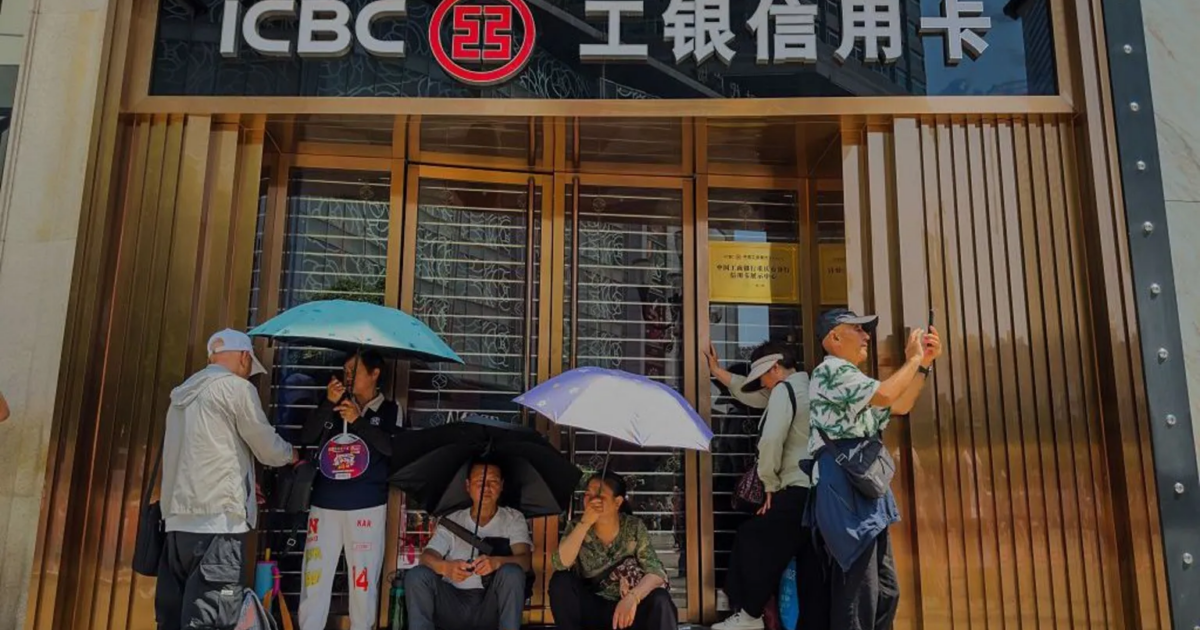

China has announced a massive 360 billion yuan ($53.6bn) injection into eight state-owned banks and insurance companies, marking the latest intervention by Beijing to stabilise its financial system and revive its slowing economy. The cash injection, led by China's finance ministry, will be distributed among three major lenders and five insurers, including the Industrial and Commercial Bank of China, the Agricultural Bank of China, and the China Export-Credit Insurance Corporation.
The move reflects mounting concerns in Beijing about economic stagnation. China's gross domestic product grew by just 4.3% in the second quarter of 2024, falling short of the government's annual target and dropping from 5% growth in the first quarter. The slowdown has been attributed to weak domestic demand, ongoing trade tensions with the West, geopolitical pressures including the Iran conflict, and structural challenges such as an ageing population and years-long property market decline.
Why it matters for Ghana
China's economic struggles have direct implications for Ghana and other African nations heavily dependent on trade with Beijing. Ghana exports significant quantities of cocoa, minerals, and agricultural products to Chinese markets, whilst Chinese investment and loans have funded major infrastructure projects across the country. A slowdown in Chinese demand typically translates into lower commodity prices and reduced import demand, squeezing export revenues for resource-rich African economies.
Furthermore, Ghana has substantial debt obligations to Chinese creditors from infrastructure financing. Economic weakness in China could affect the terms of future lending and investment flows to the continent. The $54bn stabilisation package suggests Beijing recognises the seriousness of its economic challenges and is attempting to prevent further deterioration, but any prolonged slowdown would likely ripple through African supply chains and investment patterns.
Beijing's strategy and global uncertainty
State officials argue the capital injection will enable banks to expand credit availability to the broader economy whilst strengthening their resilience against external shocks. President Xi Jinping has consistently prioritised financial stability as essential to national security, reflecting concerns about systemic risk in a slowing economy.
China's decision to lower its annual growth target to 4.5%-5% in March—the lowest since 1991—signalled official acknowledgement of pre-existing economic weakness. The announcement came as Beijing faced compounding pressures: shrinking workforce demographics, a stalled property sector, and escalating technology and trade competition with the United States.
For Ghanaian policymakers and businesses, the broader message is that global economic uncertainty remains elevated. Chinese capital, which has been a significant driver of development projects in Ghana and across West Africa, may become more selective and cautious. Companies reliant on Chinese markets or financing should anticipate tighter conditions and more stringent risk assessments from Chinese lenders.
Source: MyJoyOnline



Comments (0)
Be the first to comment.