
Africa's Economic Integration, Not Migration Controls, Holds Key to Continental Prosperity
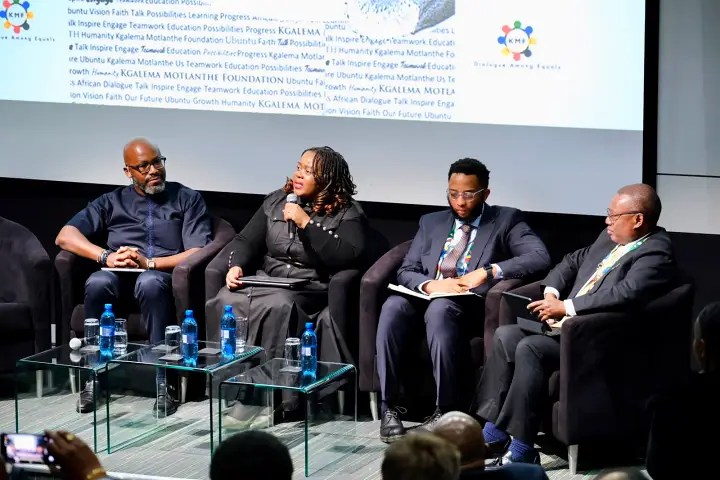

Africa's pathway to long-term prosperity lies not in restrictive migration policies but in creating genuine economic opportunities across the continent and strengthening regional integration, according to MTN Group President and CEO Ralph Mupita, speaking at the Kgalema Motlanthe Foundation Winter Seminar.
Mupita's remarks challenged the prevailing narrative around migration in African policy debates. Rather than treating migration as a crisis to be managed through border controls, he framed it as a symptom of deeper structural economic imbalances that demand systemic solutions.
"The future of Africa will not be determined by the borders that separate us, but by the economic opportunities that connect us," Mupita said. "If our discussion ends with the language of crisis around migration, we will have treated the symptom and missed the deeper challenge. People move because opportunity is unevenly distributed."
The Real Challenge: Building Inclusive Economies
Mupita outlined the infrastructure required for Africa to convert its demographic advantage into economic growth. According to him, governments must establish predictable policy environments that attract private investment, whilst private sector actors deploy capital and resources to create productive jobs. He stressed that meaningful economic participation requires investment across five key areas: skills development, physical infrastructure, access to finance, functioning markets, and strong institutions.
Digital infrastructure emerged as particularly critical in his analysis. MTN, as a pan-African telecommunications company operating across dozens of nations, has positioned connectivity as foundational to economic inclusion. "Digital infrastructure and services have become increasingly important enablers of economic participation," Mupita noted, pointing to how networks connect people not just to each other, but to education, entrepreneurship, financial services, public services, and markets.
The implication is clear: in an increasingly digital economy, access to reliable telecommunications is no longer a luxury but a prerequisite for participating in the continental workforce and marketplace.
Why This Matters for Ghana and Africa
Ghana, as a regional economic hub and a country experiencing both significant internal migration and emigration, sits at the centre of this debate. Annually, thousands of Ghanaians migrate internally or leave for opportunities abroad—a reality that reflects genuine gaps in opportunity distribution across regions and sectors. Yet Mupita's argument suggests that rather than accepting this as inevitable, policymakers should focus on creating conditions where Ghanaians can build prosperous lives at home or move regionally with confidence.
The broader African context reinforces this urgency. According to United Nations data, Africa has the world's youngest population, with a median age below 20 years. This demographic dividend—if paired with job creation and skills training—could drive decades of growth. Conversely, without opportunity, the same young population faces limited choices and deepening inequality.
Regional integration, which Ghana has championed through ECOWAS, becomes essential under this framework. Removing barriers to trade, labour mobility, and investment across West Africa would theoretically allow people to find opportunity within the region rather than looking further afield. This requires not just government commitment but sustained private sector investment in sectors where Ghana and its neighbours have comparative advantages.
The Connectivity Imperative
Mupita's emphasis on digital infrastructure reflects a hard reality: Ghana's economic future depends heavily on broadband access, financial technology adoption, and digital skills. The nation's ability to attract remote work, support digital entrepreneurship, and integrate its informal sector into formal digital markets will significantly shape whether young Ghanaians see a viable future domestically.
For Ghana specifically, this message translates into policy priorities: strengthening technical and vocational education, reducing barriers to business formation, ensuring reliable power and internet infrastructure across regions, and creating investment frameworks that encourage both domestic and pan-African capital deployment.
The KMF seminar highlighted that addressing Africa's future requires moving beyond crisis rhetoric and toward constructive partnership between government, business, civil society, and academia—precisely the model Ghana must embrace to convert demographic potential into genuine prosperity.
Source: Ameyaw Debrah





Comments (0)
Be the first to comment.